This is the thirty-eighth in a Series of Reminiscences by E. R. Brown. Brown was born in Pulaski County on August 9, 1845. His writings are abstracted from the “Pulaski County Democrat” on microfilm housed in the Pulaski County Public Library, Winamac, Indiana. Find links to earlier entries at the end of this article.
Published in “Pulaski County Democrat,” December 31, 1922
I have referred in a previous article, and have also mentioned a time or two in public addresses, the matter which I now propose to relate in some detail, namely, that a regiment of mounted soldiers, fully equipped for aggressive warfare and thirsting for blood, visited this county in August of the year 1791!
I confess that when I first chanced upon this information, which was quite recently, it gripped me not a little. It not only imparted a touch of stirring romance to the history of the county of my birth and with which I have been so long and so intimately associated, some features of which I had regarded as rather prosaic, but it evidently involved also a locality most familiar to me from early childhood.
In fact the whole course of the long march made by this body of men, beginning in Frankfort, Ky., crossing the Ohio river where Cincinnati was afterwards located, coming up through what later became Ohio and Indiana to near where Logansport now is, thence down the Wabash on its northern side to the mouth of the Tippecanoe only detouring enough to come up and get mired in the Mud Creek slough, and finally returning to Frankfort from a point below Lafayette [not there then of course] by way of the “Falls of the Ohio” (Jeffersonville and Louisville) embraced a region of country which in common with many others of our citizens, I know more about than any other of equal size on the globe.
While having taken place so long ago, when the United States government was less than three years old and George Washington was in his first term as its first president, it really made truth seem stranger than fiction.
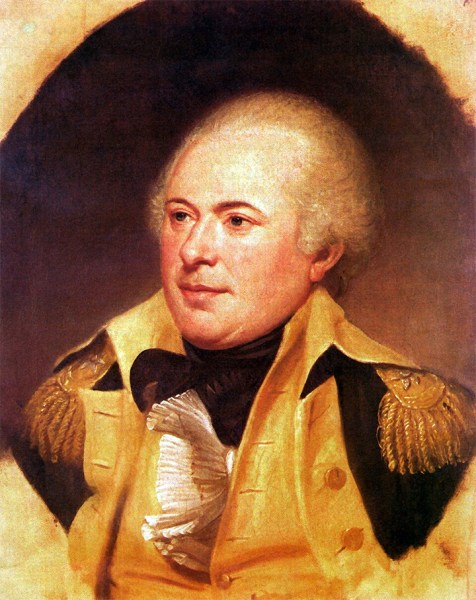
The facts of the case are embodied in the official report of the officer in charge of the expedition, Col. James Wilkinson, found not long ago among the old records in Washington and published in a volume chock full of interesting events, entitled “Readings in Indiana History” compiled and edited by a committee of the historical section of the State Teachers Association. The report as a whole would doubtless be of interest but to make this article more brief I will try to summarize its earlier statements, quoting only those bearing more directly upon the subject. [Digital access to book can be found here: https://catalog.hathitrust.org/Record/008652564.]
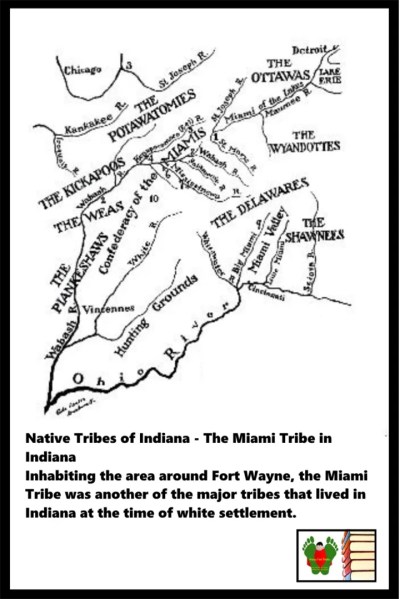
Col. Wilkinson quaintly dates his report “Frankfort on Kentucky, August 24, 1791”, and some of its points are that in acting in a subordinate capacity in an expedition which in June previously had also come from Frankfort and had raided Indian settlements lower down on the Wabash, including one near the mouth of the Tippecanoe (spelled Kethipecanunk), which was apparently the same as the one near which the battle was fought 20 years later, he had learned of a Miami Indian settlement on the Eel River near its mouth and of another Kickapoo settlement out on the prairie, perhaps in what is now Jasper or Newton county.
And all the Indians being then in a state of wild insurrection, ruthlessly torturing and murdering white settlers everywhere, burning their homes and carrying off women and children into a captivity worse than death, this officer had been dispatched with this second expedition to visit a like condign vengeance upon these other bloody savages. This he had already done on those near the mouth of the Eel River.
Finding most of its warriors absent, he had the day before dashed in among those remaining and killed four male Indians, two females and one child (he apologizes for the latter) with the loss of two soldiers killed and one wounded, he made prisoners of all he could find and utterly destroyed everything in sight.
Leaving that point in the evening (it has recently been determined as being some seven miles above Logansport) the expedition proceeded six miles west and encamped, its next object being to serve the Kickapoos in the same way. Here I quote the report: “Not being able to discover any path to a Kickapoo town, I marched by the road leading to Tippecanoe, in the hope of finding some diverging trace which might favor my design, I marched next morning at four o’clock. My course continued west till nine o’clock then turned to the northeast on a small hunting path and at a short distance I launched into the boundless prairies of the west with the intention to pursue the course until I could strike the road which leads from the Pottawatomies of Lake Michigan immediately to the town I sought.
With this view I pushed forward through bog after bog to the saddle skirts in mud and water, and after persevering for eight hours I found myself environed on all sides with morasses, which forbade my advancing and at the same time rendered it difficult for me to extricate my little army”…
”A chain of groves, extending in the direction of the Wabash at this time presented itself to my left. It was necessary that I should gain these groves and for this purpose I dismounted and, leading my horse through a bog to the armpits in mud and water, with great difficulty and fatigue, I accomplished my objective. Changing my course to south by west, I regained the Tippecanoe road at five o’clock and encamped on it at seven o’clock, after a march of 30 miles.”
If I had not had some experience in interpreting official reports of army officers and an early intimate knowledge of the locality he speaks about I would not be so certain that I understand this officer. When he says, “I now launched into the boundless prairie of the west” he unquestionably refers to the wide stretch of open country which once began not many miles from the Wabash in the western part of Cass county and practically extended to Mill Creek in this county.
As previously stated, he had in June before that seen something of the Grand prairie thinking it was part of the same. The fact which I have mentioned in a former article, that the Indians allowed no bushes to grow up anywhere and what scattering of trees had gotten a start were then fifty years younger than when the first white settlers came, would give him the impression that it was larger than it seemed to those coming later.
Anyway, there was no other prairie that can be considered and this gives us a starting point. It would seem to be true also beyond the possibility of a doubt that the course of this expedition after its direction was changed to the northwest was substantially parallel with the present line of the Pan Handle railway and from the distance it had come before the change in its direction must have been from two to three miles away from the railway.
The only question, therefore, remaining to be determined would be how far it came before being compelled to turn back and what that point is?
(To be continued next month)
Links to Earlier Articles
- Part one(Common Inconveniences) October 2018 newsletter.
- Part two (Land) June 2019 newsletter.
- Part three (Trees & Timber) November 2019 newsletter.
- Part four (The River) February 2020 newsletter.
Later editions are carried as separate posts.
- Part five (Public Roads)
- Part six (Schools)
- Part seven (Markets & Trading Points)
- Part eight (It’s Mills)
- Part nine (Wild Game)
- Part ten (Feathered Wild Game)
- Part eleven (Animal Pests & Birds of Prey)
- Part twelve (Fishing in the Early Days)
- Part thirteen (Wild Fruit)
- Part fourteen (Early Commerce on the Tippecanoe)
- Part fifteen (It’s Homes and Home Life)
- Part sixteen (House Raisings)
- Part seventeen(Clothing a Family)
- Part eighteen (Log Rollings)
- Part nineteenth (First Trip to Winamac)
- Part twenty (Grubbings and Wood Choppings)
- Part twenty-one (Apple Peelings)
- Part twenty-two (Sausage Makings)
- Part twenty-three (Parties and Amusements)
- Part twenty-four (Early Wheat Raisings)
- Part twenty-five (Quilting Parties)
- Part twenty-six (Early Religious Practices)
- Part twenty-seven (Early Church Buildings)
- Part twenty-eight (Early Clergymen)
- Part twenty-nine (Early Funerals)
- Part thirty (Cold Winters and Wet Summers)
- Part thirty-one (The Morals of Early Settlers)
- Part thirty-two (Its Wet Lands)
- Part thirty-three (Early Sickness)
- Part thirty-four (Changes in People)
- Part thirty-five (Historical Markers)
- Part thirty-six (Early Operation of Pulaski Mills)
- Part thirty-seven (The Pulaski Dam)