This is the thirty-fourth in a Series of Reminiscences by E. R. Brown. Brown was born in Pulaski County on August 9, 1845. His writings are abstracted from the “Pulaski County Democrat” on microfilm housed in the Pulaski County Public Library, Winamac, Indiana. Find links to earlier entries at the end of this article.
Published in “Pulaski County Democrat,” October 19, 1922
 All the marked changes in this county in the last seventy years have not been material or physical changes: that is pertaining to such things as can be seen with the eyes and handled with the hands. There have also been marvelous changes along other lines, in the language used by people and in the views which they entertain about various subjects. We have heard much in recent years about America being a great melting pot. Certainly this county has done its full share in that way and the results have been very apparent to some of us.
Our early settlers had come from widely separated countries or localities or were the offspring of those who had done so. Near neighbors spoke different languages or dialects in their families, their inherited tradition and folklore were often strikingly unlike, sometimes directly the opposite; while the opinions and mental conceptions of many bearing upon various matters would probably be as surprising and curious to them now if they were living as they were to others at that time.
Even people from different sections of our own country often found it hard to understand each other because they called the same articles or actions by different names. If one said bring, another said fetch, another carry, and another tote, so some said hitch, some tie, and a few said hang. A multitude of similar instances might be cited.
It amused us youngsters whose parents were more to the manor born to hear a man in a nearby neighborhood tell his boys to “go and tote the beast (a horse) down to water, carry him back again and be sure to hang him good and tight in the stable.”
 When I was some ten years old we had relatives move out from the East and it was as much as a bargain for us to understand each other for a while. What confused us was a certain abbreviation they used, closely resembling a grunt, by which they meant yes. In our Hoosier dialect we had an abbreviation or grunt almost exactly like theirs, but with us it indicated a question, so when we really asked them a question and they replied with their grunt, meaning an affirmative answer, we understood them to ask us to repeat our question. And thus we wrangled.
But the greatest change of all has been the discontinuance of foreign speech. I have lived to see instances of those who in my youth could only use the English language in a limited way and with a marked foreign accent, come eventually to use it exclusively and even forget how to use the other language. It is really something of a surprise to me, much as I am convinced that it was the right thing to do, when I meet the children or grandchildren of those whom I formerly knew to be able to speak very little English and find them speaking it as perfectly in every way as my own children. But I glory in it. That is a part of real Americanism, all right.
As to peculiar beliefs along many lines and curious notions about a multitude of subjects, the pioneers sure had them. In their farm and garden work and in the planting and care of trees, vines and flowers many of them attached vital importance to the changes of the moon and the signs of the Zodiac. On no account would they do certain things when the moon was not in just the right quarter or the ‘sign’ was not just right.
 Some were guided in these matters by the church calendar. I have sometimes wondered whether there might not have been some basis of truth in some of these beliefs when applied to some narrow valley or restricted section in the old world where these good people or their ancestors had come from. But in this big country, so far away from mountain ranges or large bodies of water, they did not apply.
Be that as it may, the fact that their neighbors paid no attention whatever to such considerations and yet everything did equally well for them if not better did not seem to affect them in the least. Like the harmless old tradition, if it rains on Easter Sunday it will rain seven succeeding Sundays. No matter how often it fails it will be referred to anyway, as if it had never failed.
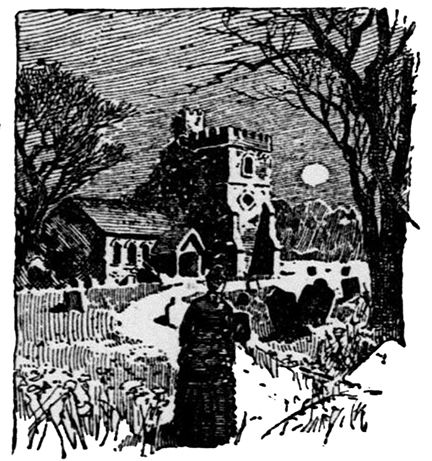
I would say that if a goodly proportion of our settlers did not believe in ghosts, goblins, spooks and the like they had enough faith that they existed to keep them in constant dread, when in certain dark lonely places. If they were told a certain empty house situated in thick woods or back off of a traveled road was haunted no earthly consideration would have induced them to go there alone, particularly at night. The same was true with respect to passing a graveyard at night or a dark gloomy day. Many shrank from going far into a dense forest alone night or day. When pressed about it they unblushingly confessed that it was because they were “afreared of spirits”.
To believe in and openly practice certain forms and odd concoctions for the curing of disease was not uncommon. One that I recall was that an old lady (and she had to be just so old) by taking certain measurements with the thumb and finger on a child and keeping careful count of them would cure it of certain ailments. Another cure had to do with a butcher knife in the hands of a man, but beyond the fact that he had to come and lay it on the body of a sick person, I have forgotten the rest, though I heard it often.
 At a somewhat recent period one of our physicians was attending to a very sick child. When at its bedside one day several neighboring women were present, most of them being free to say what they thought was the matter with the ailing child and what would cure it. Finally, one who was prominent in the community (and a worthy woman) said if they would get the heart of a black rooster and make a tea out of the inside lining of its heart, it would be a sure cure. I am not certain but there were other conditions about the rooster. It had to be hatched in a certain month, belong to a brood of just so many, etc.
I have never forgotten a conversation I had after I had grown up with an old gentleman, really with much to his credit, about muskrats. It was in the early fall, and he said we were to have a long, cold winter because the muskrats were building such a big house. Not so much because I doubted his conclusions, as that I wanted to understand him fully, I asked him whether it might not be because there were more muskrats to occupy the houses or more abundant material out of which to build them. I asked him also how it could be that an animal which evidently had no family traditions or recorded history and very limited memory, because he could be caught in the same trap his earliest ancestors had been caught in and even be caught more than once in the same trap himself, could know better about the future that we did after knowing what our ancestors as well as ourselves had learned. But nothing shook him in his belief. The fact that the following winter proved to be the mildest one ever known here probably had no more effect than what I said to him.
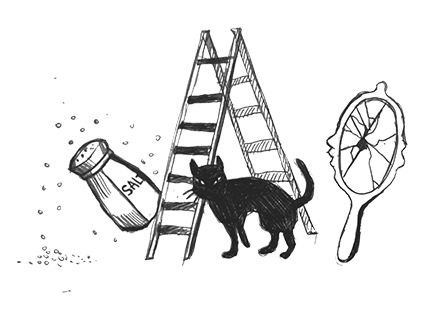
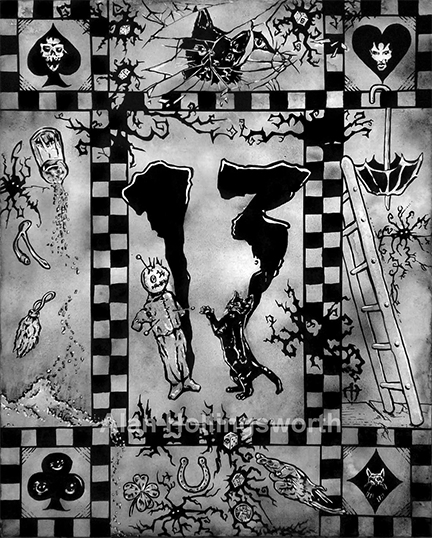 I really believe that in early days more people pounded on wood for luck, shied away from the number thirteen, hesitated about doing things on Friday, were careful not to open an umbrella in the house or see the new moon first over the left shoulder or through trees, prized a four leaf clover, took account of dreams and allowed a thousand and one other such matters to influence their lives than is the case at present, and we still have enough of it.
Links to Earlier Articles
- Part one(Common Inconveniences) October 2018 newsletter.
- Part two (Land) June 2019 newsletter.
- Part three (Trees & Timber) November 2019 newsletter.
- Part four (The River) February 2020 newsletter.
Later editions are carried as separate posts.
- Part five (Public Roads)
- Part six (Schools)
- Part seven (Markets & Trading Points)
- Part eight (It’s Mills)
- Part nine (Wild Game)
- Part ten (Feathered Wild Game)
- Part eleven (Animal Pests & Birds of Prey)
- Part twelve (Fishing in the Early Days)
- Part thirteen (Wild Fruit)
- Part fourteen (Early Commerce on the Tippecanoe)
- Part fifteen (It’s Homes and Home Life)
- Part sixteen (House Raisings)
- Part seventeen(Clothing a Family)
- Part eighteen (Log Rollings)
- Part nineteenth (First Trip to Winamac)
- Part twenty (Grubbings and Wood Choppings)
- Part twenty-one (Apple Peelings)
- Part twenty-two (Sausage Makings)
- Part twenty-three (Parties and Amusements)
- Part twenty-four (Early Wheat Raisings)
- Part twenty-five (Quilting Parties)
- Part twenty-six (Early Religious Practices)
- Part twenty-seven (Early Church Buildings)
- Part twenty-eight (Early Clergymen)
- Part twenty-nine (Early Funerals)
- Part thirty (Cold Winters and Wet Summers)
- Part thirty-one (The Morals of Early Settlers)
- Part thirty-two (Its Wet Lands)
- Part thirty-three (Early Sickness)