This is the thirty-second in a Series of Reminiscences by E. R. Brown. Brown was born in Pulaski County on August 9, 1845. His writings are abstracted from the “Pulaski County Democrat” on microfilm housed in the Pulaski County Public Library, Winamac, Indiana. Find links to earlier entries at the end of this article.
Published in “Pulaski County Democrat,” September 28, 1922
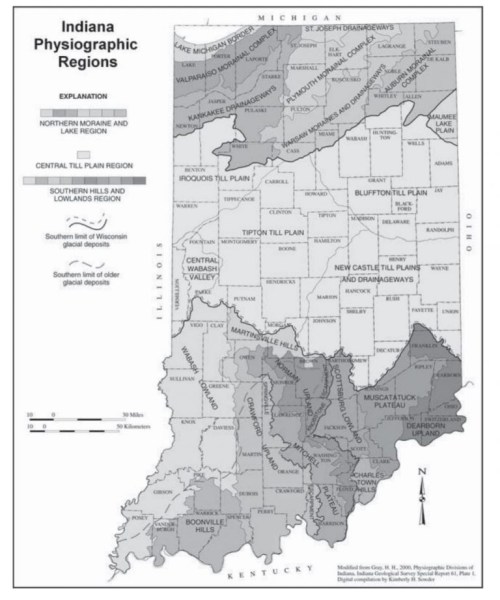
That the early development of this county as well as that of many others was greatly hampered and retarded by so much of the land being wet is perhaps well known. The way its struggling first settlers were mostly handicapped and disappointed in their efforts to make a living for their growing families, not to mention the accumulation of property and betterment of their condition, if clearly depicted, would be a sorry story. This continued to be true through the entire pioneer period and may still be true to some extent. It would be difficult to overstate its baleful effects in the earlier years.
There was a great deal of wet land in almost all of the counties of Indiana. The letters and diaries of all early travelers in the state and the published reminiscences of all its early settlers abound in reference to ponds, sloughs, soft miry roads and water courses hard to cross. And those conditions, though apparently no more serious at first, seemed to continue longer in the northern or northwestern part of the state than in some other sections.
While all the counties now known as being best for agriculture formerly had this incubus fastened upon them, those farther south and east seemed to rid themselves of it sooner. It may have been because the land was slightly more rolling there, and particularly because the streams have more fall and their beds are more below the surface of the country. That would afford individual landowners outlets without so much dependence upon others.
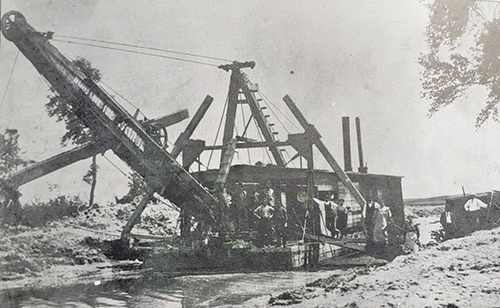
In some counties the mere removal of obstructions in the way of fallen timbers from the smaller water courses afforded helpful drainage while the cutting of the standing timbers and letting in the sunlight tended much toward drying the land. At all events, if farmers anywhere escaped the losses and discouragement from having their much needed crops drowned out, all their toll and pains left unrewarded and their families rendered destitute, they were fortunate indeed.
Naturally those living near the Tippecanoe and as a measure also those near the Monon and smaller streams, suffered less than those farther away. Yet few if any were entirely exempt. No quarter sections of good land could be found anywhere and not many good eighties upon which were not ponds where water mostly stood the year around, or which did not contain other tracts of considerable size where a heavy rain was liable to destroy, and year after year, did destroy, whatever crop was growing upon them.
Farther away from the streams the case was worse of course. In many instances where the soil was very productive and where in exceptional years fine crops were raised there would be seasons when almost no grain of any kind was gathered. The entire season’s outlay was a total disappointment and loss. A farmer would sow a field of wheat in the Fall, perhaps with some extra care and labor. It would come up and grow in the finest kind of way and often would pass the winter all right. But when the Spring rains came on they would be so persistent and excessive that when harvest came the poor farmer would get absolutely nothing. And all his neighbors shared more or less the same experience.
For a wheat crop to be destroyed after it was almost ripe was not uncommon, but it was common for the ground to be so wet as to prevent the gathering of the matured crop, causing the loss of a large portion of it. That other crops would fare no better will readily be seen. In fact, it was more noticeable with corn than with wheat. As a rule, more of it was planted. Maturing in so much less time than wheat there was less risk connected with it.
Corn has always been the poor man’s crop. As little as the Indians depended on agriculture, they raised some corn. The expense for seed is nominal, some part of it is soon ready for use and a little of it goes a long way. A few acres of poor corn will keep a family from starving for a year. But the disheartening sickening effects of a few heavy rains on those early corn fields will never be forgotten.
Some years the people living on some of the farms that are now noted for fine crops scarcely raised anything. At best they barely raised enough to keep body and soul together, as the saying was. Though they owned their farms, they were generally regarded as being very poor. The delinquent tax list uniformly contained their names. If anyone trusted them for any sum he was not likely to get it very soon. All the family wore scant clothing and if their tables contained enough to satisfy their appetites the food was of the plainest, cheapest variety. The dinner pails of their children attending school often contained almost nothing.
A reminiscent incident of early school life often recalled by an ever diminishing circle that I happen to know about when they meet at ever increasing intervals refers to one of those families on a wet farm, now recognized as one of the best. At a certain noon recess, it developed that every earthly thing which their dinner pain contained to satisfy the appetite of several well grown lad and lassies was a few stalks of raw rhubarb. What would otherwise be the melancholy feature of that situation is greatly relieved by the recollection of the hearty earnestness with which others insisted upon dividing what was in their pails with those less fortunate schoolmates.
It may add to the interest of the incident if it is related further that two of these indigent boys directly concerned a little later made long and most credible records in the War for the Union and being both spared, both became well-to-do and much respected citizens.
The fact is often referred to, very properly with pride, that no general appeal has ever been made anywhere for charitable help for Indiana farmers because of the failure of crops. While conditions here, caused by excessive and repeated rains were to some extent like those caused by a visitation of grasshoppers, hot winds, and drought in other states, our courageous, resourceful people always managed to squeeze through in some way, while most of them lived to secure help in carloads to those afflicted in these other ways.
Our fortunate rotation of crops doubtless helped out in those cases, as it has long proved to be such a help in other respects. If some crops drowned out all did not suffer to the same degree at the same time. Then the raising of some livestock, particularly of cattle, helped to save the day. The flat wet land made better pasture for them than more rolling dryer land might have been. Most of those owning mostly that kind of land soon saw this and took more and more advantage of it. Before relief came through drainage, the more progressive ones had largely abandoned all effort to raise grain, devoting their land to hay or pasture.
That probably accounted for a very strange fact, which was that when the opportunity for drainage finally came most of those owning the land which needed it most opposed drainage the most strenuously. Further than this, the older settlers, those who had been here the longest and knew the country best, as a rule had the least faith in drainage.
Of course there were exceptions in both cases, as it is said it requires the exception to prove the rule. As a matter of fact, for one of us old timers, no matter what our occupations, to foresee what drainage was to do for the country and take some advantage of it beyond what was really forced upon us by the drainage of our own land was very rare. That shows the beneficial effects of vision and “of such is the Kingdom of Heaven.”
Links to Earlier Articles
- Part one(Common Inconveniences) October 2018 newsletter.
- Part two (Land) June 2019 newsletter.
- Part three (Trees & Timber) November 2019 newsletter.
- Part four (The River) February 2020 newsletter.
Later editions are carried as separate posts.
- Part five (Public Roads)
- Part six (Schools)
- Part seven (Markets & Trading Points)
- Part eight (It’s Mills)
- Part nine (Wild Game)
- Part ten (Feathered Wild Game)
- Part eleven (Animal Pests & Birds of Prey)
- Part twelve (Fishing in the Early Days)
- Part thirteen (Wild Fruit)
- Part fourteen (Early Commerce on the Tippecanoe)
- Part fifteen (It’s Homes and Home Life)
- Part sixteen (House Raisings)
- Part seventeen(Clothing a Family)
- Part eighteen (Log Rollings)
- Part nineteenth (First Trip to Winamac)
- Part twenty (Grubbings and Wood Choppings)
- Part twenty-one (Apple Peelings)
- Part twenty-two (Sausage Makings)
- Part twenty-three (Parties and Amusements)
- Part twenty-four (Early Wheat Raisings)
- Part twenty-five (Quilting Parties)
- Part twenty-six (Early Religious Practices)
- Part twenty-seven (Early Church Buildings)
- Part twenty-eight (Early Clergymen)
- Part twenty-nine (Early Funerals)
- Part thirty (Cold Winters and Wet Summers)
- Part thirty-one (The Morals of Early Settlers)