This is the twenty-fifth in a Series of Reminiscences by E. R. Brown. Brown was born in Pulaski County on August 9, 1845. His writings are abstracted from the “Pulaski County Democrat” on microfilm housed in the Pulaski County Public Library, Winamac, Indiana. Find links to earlier entries at the end of this article.
Published in “Pulaski County Democrat,” July 20, 1922
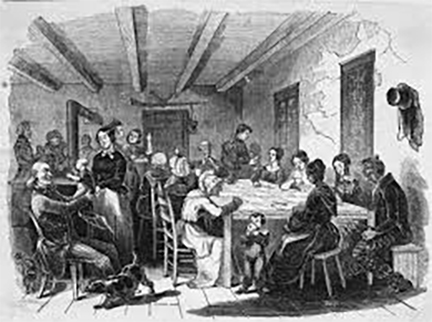
Our blessed Lord while in the flesh said, “The poor you always have with you”, and it is most certain that He might have said the same of quilting parties. But as a humble chronicler of a period, I must at least say that such parties were numerous at the time, and as their wonderful creations have subsequently graced innumerable county fairs and still serve as interesting keepsakes in many of our homes, souvenirs of the industry, patience and dexterity with the needle of dear good people long since vanished, I would fail of my duty if I did not mention them.
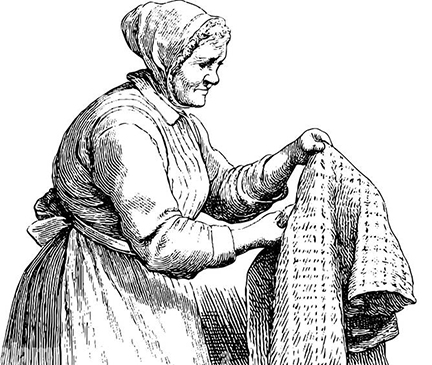
My recollection is that there were no closed seasons to these quiltings, and owing doubtless to the scant population, distances were largely ignored also. The number of miles which women of that time thought nothing of going on foot, would astonish some people of this enterprising age, particularly those who honestly think four blocks is too far to walk to church more than once a day. The only other options at the time under consideration were the two-horse farm wagon or riding horseback. My mother preferred the latter and while she often walked a mile or two and back, to see her ride away resolutely perched on her own beast, with her fine leather side saddle brought with her to the county, bound for a quilting party, in both hot and cold weather, was nothing unusual. I am sure the same was true of many others, while still others rode in the wagons, sometimes from two to six miles in the same wagon with a woman driver, of course.
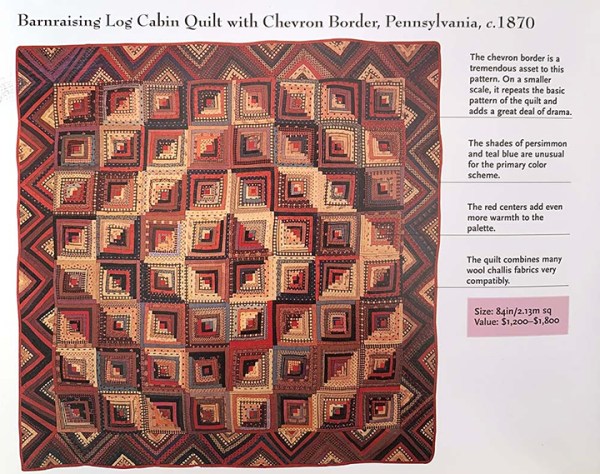
My understanding is that, as a rule, the work on such occasions consisted of the quilting proper, as the name would imply. That was surely tedious enough and made enormous demands on industry and perseverance, levying a heavy toll on time, carefulness and skill. An examination of any one of those early quilts will show how close together the seams commonly were, how regularly those distances were maintained and how dainty and precise the stitches. Quilting is now done sometimes by religious or benevolent societies of women for pay, the price depending on the thread used, two spools being the minimum, four hundred yards of thread to a quilt. But in many of these old quilts twelve or more spools were used. Think of what was involved in thus running almost three thousand yards of fine thread in such deliberate, perfect fashion. Not to mention the opportunity for talking and visiting it could afford.
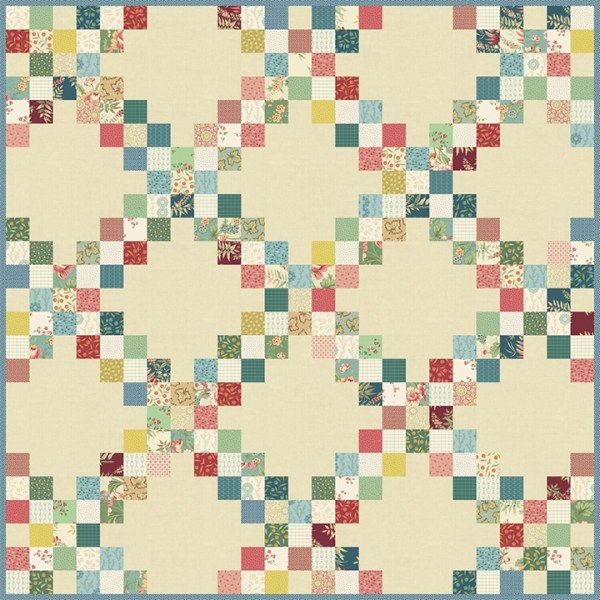
But another interesting consideration is that the almost infinite task of piecing the quilts had been done previously, the bewildering number of pieces being cut into squares, triangles, diamond and many other shapes, with wonderful precision as to sizes, then patiently sewed into blocks and joined together so as to form a curious and attractive whole. Every step had required the utmost painstaking care and exactness. That had been the almost endless spare-time of one or more of the family for a long period before the actual quilting party. Not infrequently a dear, delightful grandmother, with white frilled cap, seated in her favorite rocker by the open fireplace or at some cheerful window, had with frail, tremulous hands spent months and months that way.
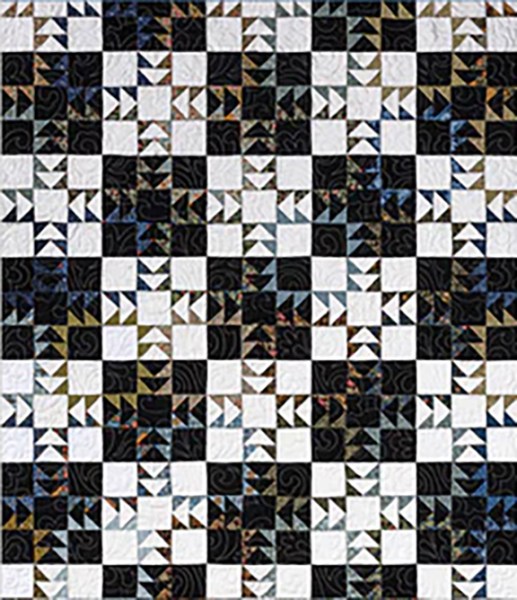
In preparing this article I have examined some of these old-time quilts with much interest. Many of the less elaborate contain more than two thousand pieces of cloth. Some are said to contain more than ten thousand different pieces. Their various designs were known by different names such as: Log Cabin, Irish Chain, Crow’s Foot, and many others. They are not only souvenirs now, but were often considered so when first made, not infrequently very touching ones. They sometimes contained cuttings from almost every garment ever worn, on any occasion by any member of the family or family connection, old or young, including also those worn by neighbors and friends. Naturally a sight of many of those cuttings would recall tender scenes and associations. I consider that we are fortunate in having in our family two of the plainer variety of these keep-sakes both made by valued land friends after they were more than eighty.
Links to Earlier Articles
- Part one (Common Inconveniences) October 2018 newsletter.
- Part two (Land) June 2019 newsletter.
- Part three (Trees & Timber) November 2019 newsletter.
- Part four (The River) February 2020 newsletter.
Later editions are carried as separate posts.
- Part five (Public Roads)
- Part six (Schools)
- Part seven (Markets & Trading Points)
- Part eight (It’s Mills)
- Part nine (Wild Game)
- Part ten (Feathered Wild Game)
- Part eleven (Animal Pests & Birds of Prey)
- Part twelve (Fishing in the Early Days)
- Part thirteen (Wild Fruit)
- Part fourteen (Early Commerce on the Tippecanoe)
- Part fifteen (It’s Homes and Home Life)
- Part sixteen (House Raisings)
- Part seventeen (Clothing a Family)
- Part eighteen (Log Rollings)
- Part nineteenth (First Trip to Winamac)
- Part twenty (Grubbings and Wood Choppings)
- Part twenty-one (Apple Peelings)
- Part twenty-two (Sausage Makings)
- Part twenty-three (Parties and Amusements)
- Part twenty-four (Early Wheat Raisings)