The October and November e-newsletters will focus on the Civil War, and how it affected Indiana.
This month, we’ll focus not on a man from Pulaski County, but a man whose personal records made it here. A copy of the following letter was in documents that were donated to the Pulaski County Historical Society by Zera Hansell Howe of Medaryville, Ind.
Mrs. Howe was a preeminent historian of Pulaski County people, places, and things.
Letter from Harpers Ferry
Camp near Harpers Ferry, October 5th, 1862
My Dear Aunt
I have sat down to drop you a few lines in answer to yours of 28 of last month which came to hand yesterday and you don’t know how glad I was to receive it. It does me good to hear from you all.
You wanted to know If I could give you any information about E [illegible, possibly Elijah] Wilkinson. I cannot give any more than I have written here to fore. I went all over the Battlefield and I could not find the remains of him anywhere as to who Buried the dead I don’t know any of there names only those that I took with myself and when we got out on the field there was a square of men that they call here in the army Pianeers [see *] whose business it is to Bury the dead after a Batel. And they had a great many buried when we got to the field. We did not find any of Company Ms men but from what I could ascertain he was not in slaying [unknown] they described to me that was where company A fought and they were both sargents which was Wm Alens [?] & Noal Aley. It might have been that Elijah was wounded before he was taken and if he was Probably he is in their hands yet they have some of our Regiment at Linet Burg [unknown] that is wounded and I heard again that there was some at Gordonsville perhaps he is at one or the other places and maybe he be attendant on the wounded if he is not hurt himself. Our surgeon just came from Richmond a few days ago he sees that there is a good many of our army that is there a great many is a starving to death he was made a prisoner of war for awhile but not any length of time he reports that they Prisoners is Treated hard and don’t get much to eat he sed by hard barging one day he got the overseer of the Prison to bring him some soup whilst he was stirring it up he stirred up two dead mice that had got in to the soup and he said that it was just half enough to peel the hair from the tails and legs he throwed soup mice bowl and all on the flower and he said that the officer came and gave them a good cursing for it he said that was the way the boys was treated generally.
Aunt Liza you don’t have any idea how much hard suffering I have had to endure in the last three weeks all most night and day I had to go trying to make the Wounded Comfortable it all way falls to my lot to do the wounded up after the battle for one week I had nearly 300 wounds to address and you can guess how much time I had to sit down and mighty little help I had I got relieved last Thursday and then I came to the Regiment I suppose that you would like to know what kind of a place I buried John in it is in a small grove of timber I dug a Grave about 3 ½ feet deep and laid him in it and then I got some plank and sat up by the side of him and took one and covered him with it and then I took and lay the dirt over him this I done my self some of the seventh Ind Boys [see **] helped me carry him to his grave they helped me to dig the Grave and lay him in and then I done the rest myself. You may all think that it was Pretty hard for a Brother to Bury a Brother But it is more Satisfaction To me and perhaps to all Inquiring friends for to know that he is dead and Buried than to not know where he is I know where he now lays and I can rest at peace and know his fate.
Aunt I never saw a Prettier smile on any Bodies Countenance in my life than was on his he smiled as if the God of heaven had visit him in affection Captain said to give his love to you all & Father’s family to I have no War news to wright at this time for you can hear more of what is a going on than I can tell you you get the papers and regular Aunt Liza I would like to see you all very much and eat peaches and apples and sagho [?] Molasses with you and talk of things that I have Witness since I came to War
Aunt I think that you Folks out at home might send a poor boy in Maryland a can of nice Molasses I have not seen Samuel Waln For a long time the last time I saw him he was Fat and Looked well George Tincher he is well and [illegible] and all the rest of the Boys is well and so am I myself and Hope that these few lines may Find you all well I must close Giv my love to Grand Father and Grand Mother and all the rest of inquiring Friends Please Write soon and often so no more but still Remain your dear Nephew until Death
David Hansell to Aunt Elizabeth J. Wilkinson and all the rest of the connections and Friends
* During the American Civil War, there was no single dedicated permanent corps for mortuary affairs. Instead, the soldiers assigned to this grim task were simply called a burial detail or detail men, drawn from nearby infantry units, specialized engineering units like Pioneer Brigades, or-particularly in the Union Army—African American laborers and contrabands traveling with the troops.
** The 7th Indiana Infantry Regiment was formed and organized in Indianapolis, Indiana. It was first raised in April 1861 for three months of service and later reorganized for a three-year term in September 1861.
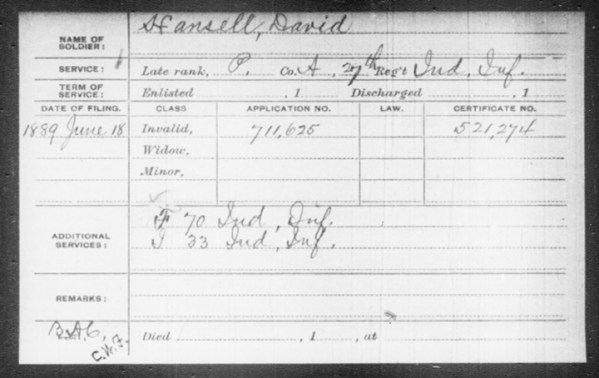
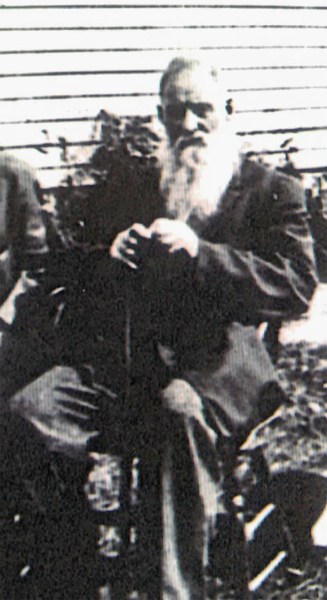
Dr. David Hansell
Dr. David Hansell was located in FindAGrave: https://www.findagrave.com/memorial/35014276/david-hansell
Private, Co. A. 27th Indiana Infantry. Enlisted September 1, 1861 at Indianapolis, Indiana. Transferred to Co. F, 70th Indiana Infantry on January 12, 1864 and then Co. I, 33rd Indiana Infantry. Discharged July 21, 1865.
Birth: 28 Dec 1840, Putnam County, Indiana, USA
Death: 27 Apr 1934 (aged 93), Indiana, USA
Burial: Vinzant Cemetery, Parke County, Indiana, USA
“Aunt Liza”
This Dr. Hansell had an Aunt Elizabeth J. Wilkinson, also located in FindAGrave: https://www.findagrave.com/memorial/119197929/elizabeth_jane-wilkinson
Military Headstones
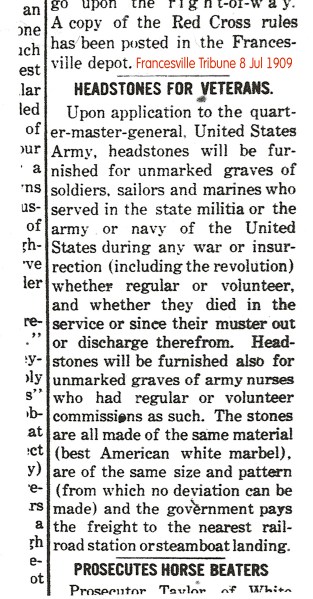
OQMG Form 693 is a historical Office of the Quartermaster General application form used mid-20th century to request government-furnished military headstones for deceased veterans. Today, these legacy forms serve as valuable genealogical and historical records for past burials, while current applications are processed via modern VA forms.
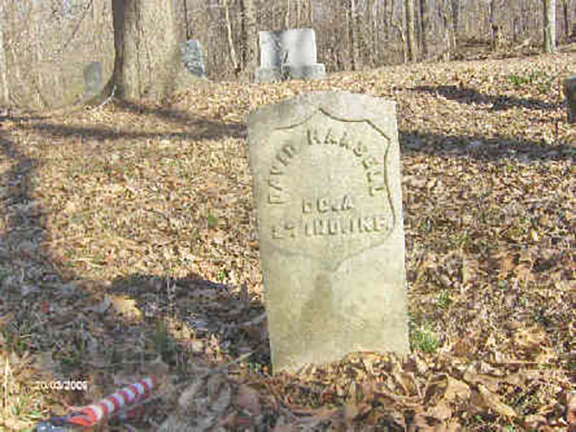
Understanding OQMG Form 693

- Historical Document: Used by the U.S. Army Quartermaster Corps to track applications for headstones in non-federal and private cemeteries.
- Archival Value: Historic F693 applications contain details on veteran service, death dates, and requested inscriptions. They are referenced by researchers or families to verify original grave data or correct errors on older markers.
- Transition of Records: The military headstone program transitioned from the Department of the Army to the Veterans Administration (now the Department of Veterans Affairs) in 1973.