Information taken from the Star City Centennial Booklet, 1959, and a variety of web searches.
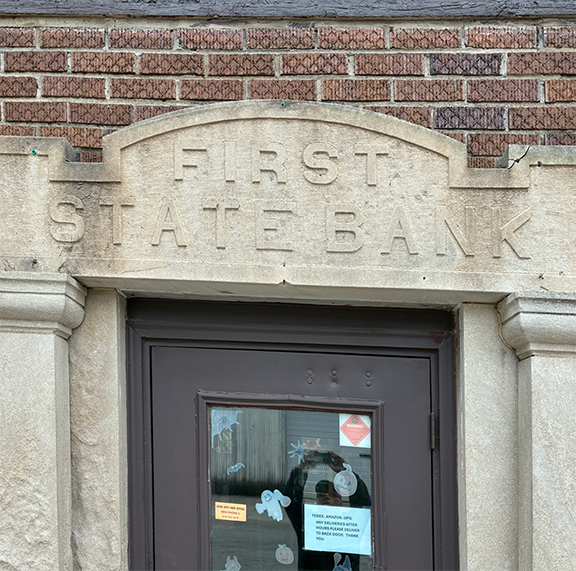
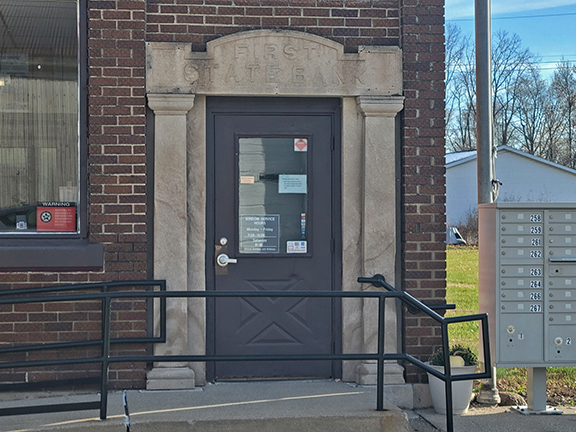
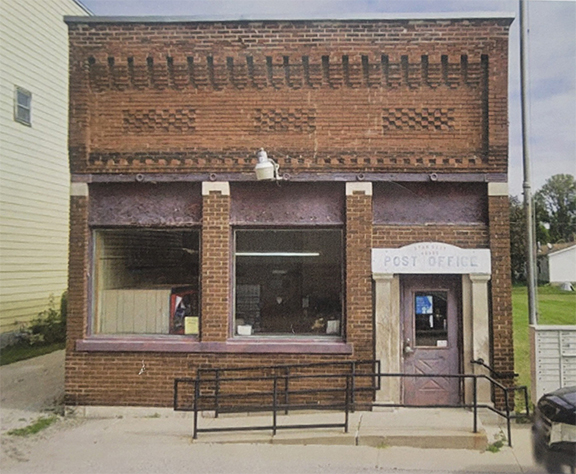 This article is the result of an idea formed when renovation work uncovered the name of a bank underneath the façade of the Star City Post Office. The article was going to be about the building itself, but we can’t write about one thing without uncovering other interesting tidbits of information.
We’re first going to talk about the roots of the Post Office itself.
The United States Post Office
From https://postalmuseum.si.edu/the-growth-of-the-postal-service
Between 1789, when the federal government began operations, and 1861, when civil war broke out, the United States grew dramatically. Its territory extended into the Midwest in 1787 through the Northwest Ordinance, reached down the Mississippi River and west to the Rocky Mountains after the Louisiana Purchase in 1803, and stretched to the Pacific coast by the 1840s. The country’s population grew from 3.9 million people in 1790 to 31.4 million in 1860.
The Post Office Department grew too. The number of Post Offices increased from 75 in 1790 to 28,498 in 1860. Post roads increased from 59,473 miles at the beginning of 1819 to 84,860 by the end of 1823. By the end of 1819, the Department served citizens in 22 states, including the newest states of Illinois and Alabama.
These new territories and states, as well as established communities, pressed the Post Office Department for more routes and faster delivery. The Department met these needs by expanding its service and developing faster ways to move mail.
In 1828, there were 7,530 Post Offices and 29,956 postal employees, mail contractors, and carriers, which made the Department the largest employer in the executive branch. By 1831, postal employees accounted for 76 percent of the civilian federal workforce. Postmasters outnumbered soldiers 8,764 to 6,332 and were the most widespread representatives of the federal government.
Two Mile Prairie
In essence, “Two Mile Prairie” refered to undeveloped prairie land that existed before the establishment of communities, a common feature of Indiana’s Old Northwest Territory. It was essentially farmland before settlement and organized townships formed around railroad development. As a part of the U.S. Postal Service expansion, a post office was opened in this area in 1857, in the home of John Nichols.
In 1859, a short distance south of the Two Mile Prairie post office, the first home was built in a town that was platted to be named Scarborough.
Scarborough / Star City
The town formed quickly after the first home was built, because the railroad was coming through. Due to the name’s unpopularity, a vote was taken and the name was changed to Star City in 1861. The post office was established shortly after, in1862.
In the 19th century, post offices were often run by postmasters out of homes, general stores, hotels, or taverns, rather than a dedicated government building. The Star City post office would likely have operated in a similar fashion in its early days.
While John Nichols ran the first area post office from his home in Two Mile Prairie, William Stewart became the first postmaster in Star City. He was succeeded by D. W. Brown, Hugh Smith, Jacob Wirick, C. W. Mull, Ray Geyer, Charles King, and Burl King, who was the postmaster during the Star City Centennial in 1959.
The Current Building
The building was built in 1906. It was originally used for furniture and undertaking.
In 1907, Ruben Minton and W.L. Bott started the First State Bank, Mr. Minton as President and Mr. Bott as Cashier. They purchased and moved into the building in 1915.

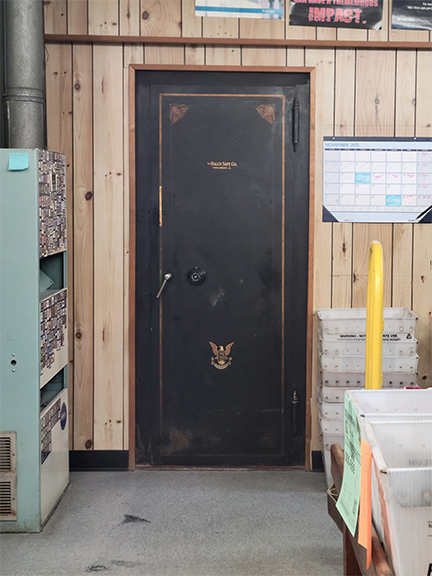
Pictured are A. P. Wirick and George Kistler about 1920. The safe seen in the picture was loaded bodily into a truck one night by burglars and carted off. It was found later in the Calumet River with a hold burned through the back through which about $3,000 in cash was removed. The building was remodeled with a solid stone front and the door built into the south corner of the building. A larger safe was installed that could not be taken through the door.
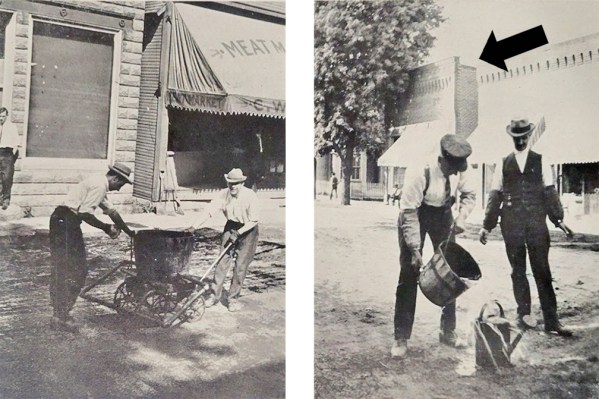
Postmaster Ray Geyer and Barber Joe Burke rig up and operate their own oiling device. [Presumably, this is the building in which the post office was held at the time.] Such work became necessary when the horseless carriage began paddling up unaccustomed dust. A more primitive but perhaps more economical method was adopted in adjacent area by Bank President R. B. Minton and cashier Billy Bott, right. [Black arrow points out the building that was, in this photo, the First State Bank.]
After the bank was closed the post office was moved into the building. The date when that happened is not known by this writer.
Bullet Holes
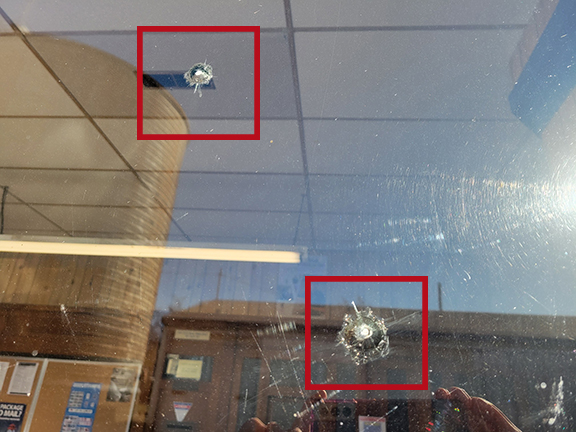
The bullet holes from a long-ago bank robbery are still present in the Post Office.