Local Artist
 This article was posted on June 30, 2025, from Ink Free News, a daily digital newspaper for northern Indiana. The link can be found HERE.
Article by Laurie Lechlitner, InkFree News.
KEWANNA — “I can remember when a barn was more important than the house,” stated Don Kegarise, Kewanna.
“I spent a lot of time on my grandma’s and uncle’s farm when I was growing up. I loved sticking my hand in that big grain bin. Then I’d feel the wheat and smell it. I grew up on natural food. I think that’s why I’m 97 and still living. That’s part of the reason I enjoy painting old barns and other farm and nature scenes. I love sharing my legacy with upcoming generations through art.”
Growing up during the Great Depression helped develop Kegarise into the person he is today.
“Sometimes I feel sorry for kids today. They have ample food and clothes and take those things for granted. But during the Depression, we appreciated everything we had and took good care of it. Some of us didn’t know where our next meal was coming from. We were fortunate to have a garden with fresh food. My mother canned and cooked homemade meals.”
Kegarise was one of 12 children. “We learned to be resourceful growing up in those hard times. Can you imagine supporting 12 children with no income? We were very poor but somehow managed.”
His fondest memory was watching the airplanes fly over his house. “The airplane was my first love. Because there weren’t very many planes in the sky, our family stopped what we were doing to watch them fly over our home when we heard them in the sky, even if it was supper time.”
It was Kegarise’s dream to fly an airplane. “I wanted to be a certified pilot. So, at 16, I mowed yards and did other odd jobs to pay for flying lessons at the airport. On the days of my lessons, I’d hitchhike to the airport. Then there was the day I finally soloed. I was still only 16, and flying at 3,000 feet all by myself was the best feeling on earth. I did a couple loops in the air to celebrate.”
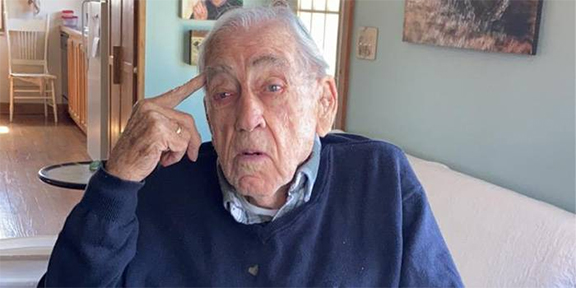
Kegarise has been a widower for 1 1/2 years. “My wife Kathy was an artist too. She was also a photographer. We’d drive the back roads and she’d take photos with her camera. We eventually painted them in acrylics.”
In 2000, when Kathy’s health required the Kegarises to move to the country, Kathy designed their new home in Kewanna. “I’m a cabinet maker. We pretty much designed and built the house ourselves. I made the bedroom suit, and various other furniture. What memories.”
A battle with shingles infected Kegarise’s left eye and he lost his sight in it. “Then I developed macular degeneration in my right eye. Now I’m legally blind.”
However, being legally blind has not stopped him from painting. “One of the VA representatives made me a setup using a camera and a TV screen. Now I can enlarge the photo and get the fine details. My daughter Andra has arranged my color pallets and labeled the paints on top so I can choose the colors I’m using.” Right now, Kegarise is working on a heron in a body of water.
Being a self-taught artist, who has grown famous for his work, Kegarise encourages others to try painting. “I’ve taught many artists through the years. Those who really want to paint are the successful ones.”
Featured at the Historical Society Museum:
Original Dentzel Carousel & The First Ferris Wheel

The Original Dentzel Carousel
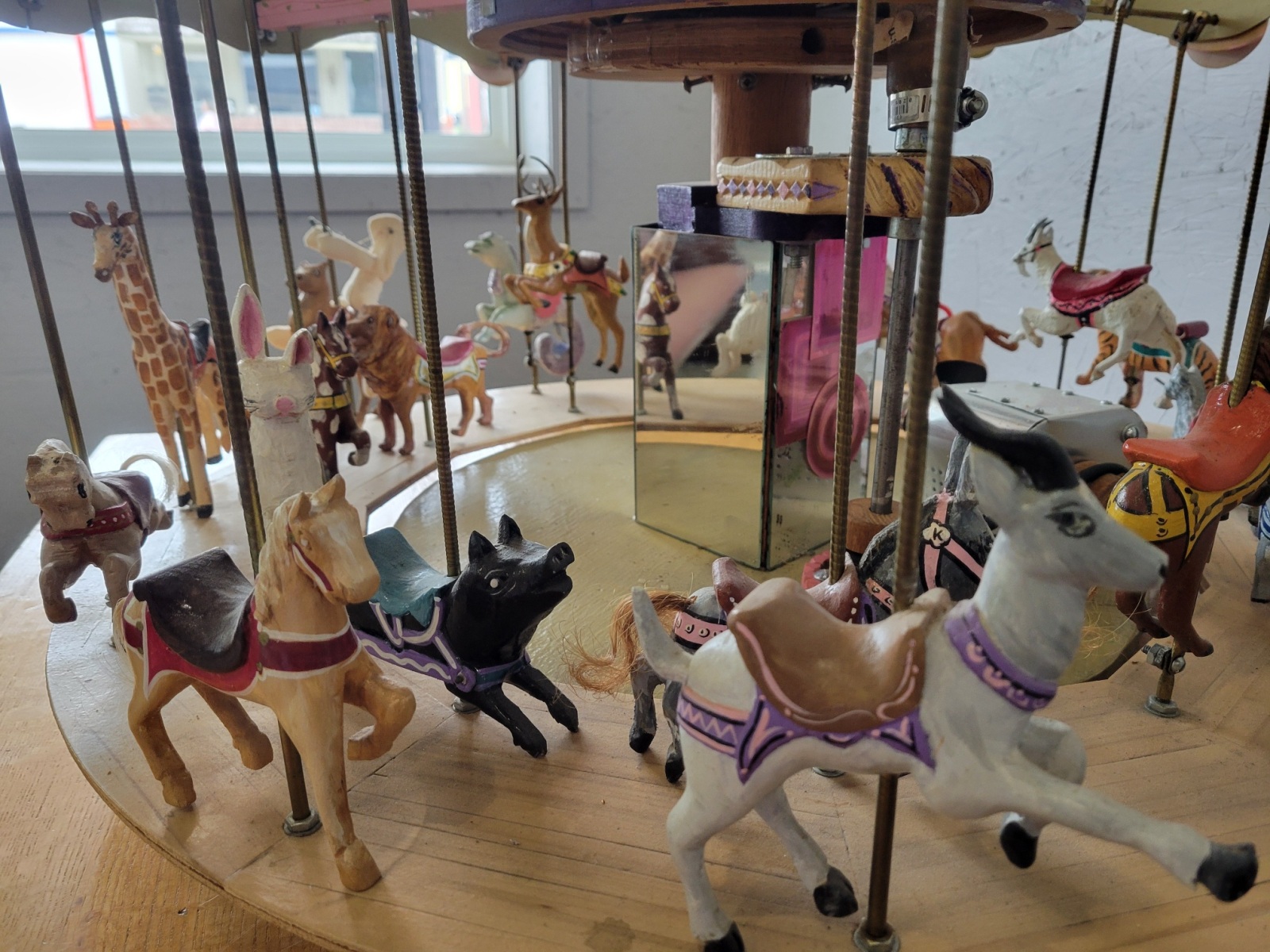
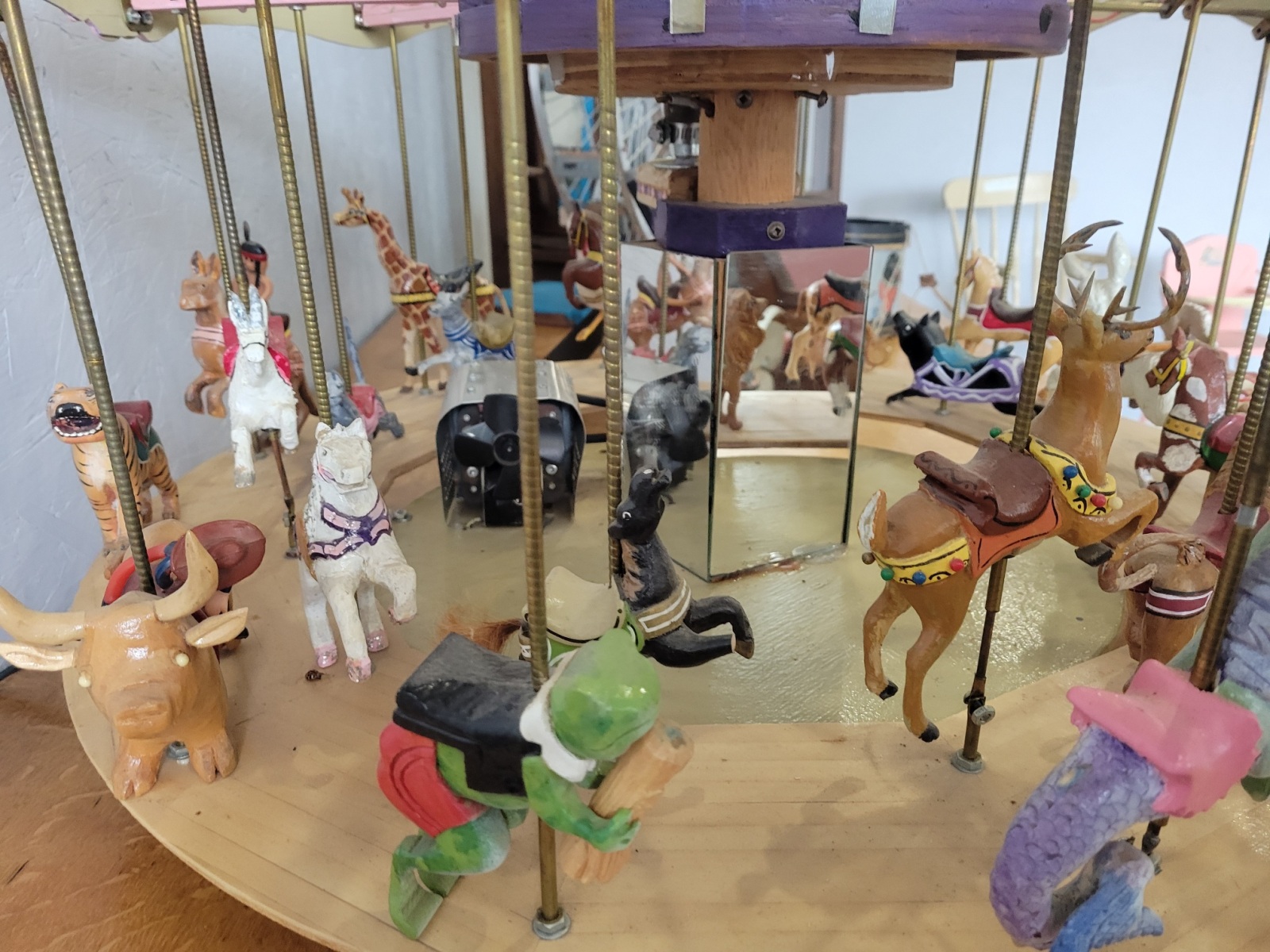
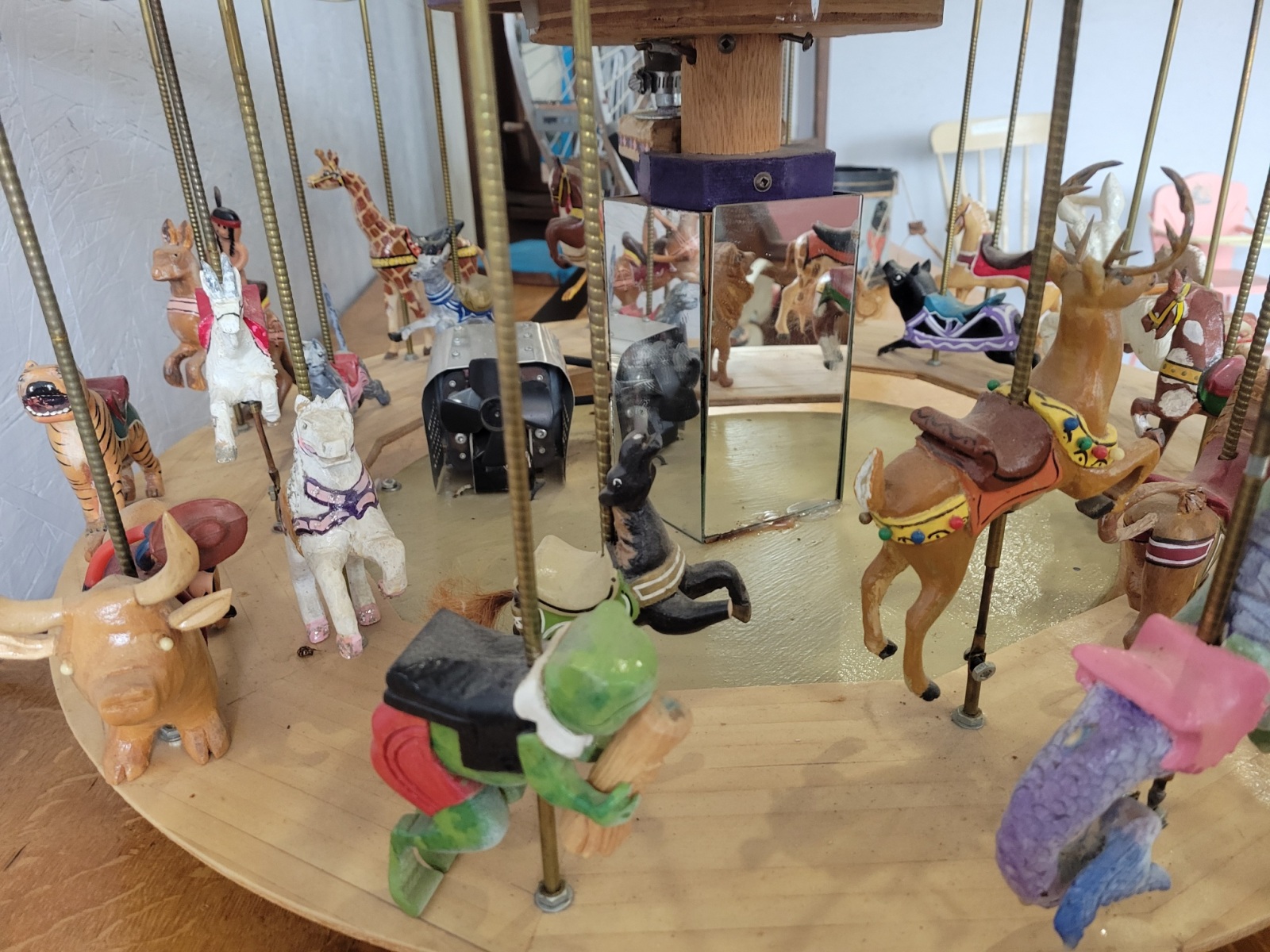
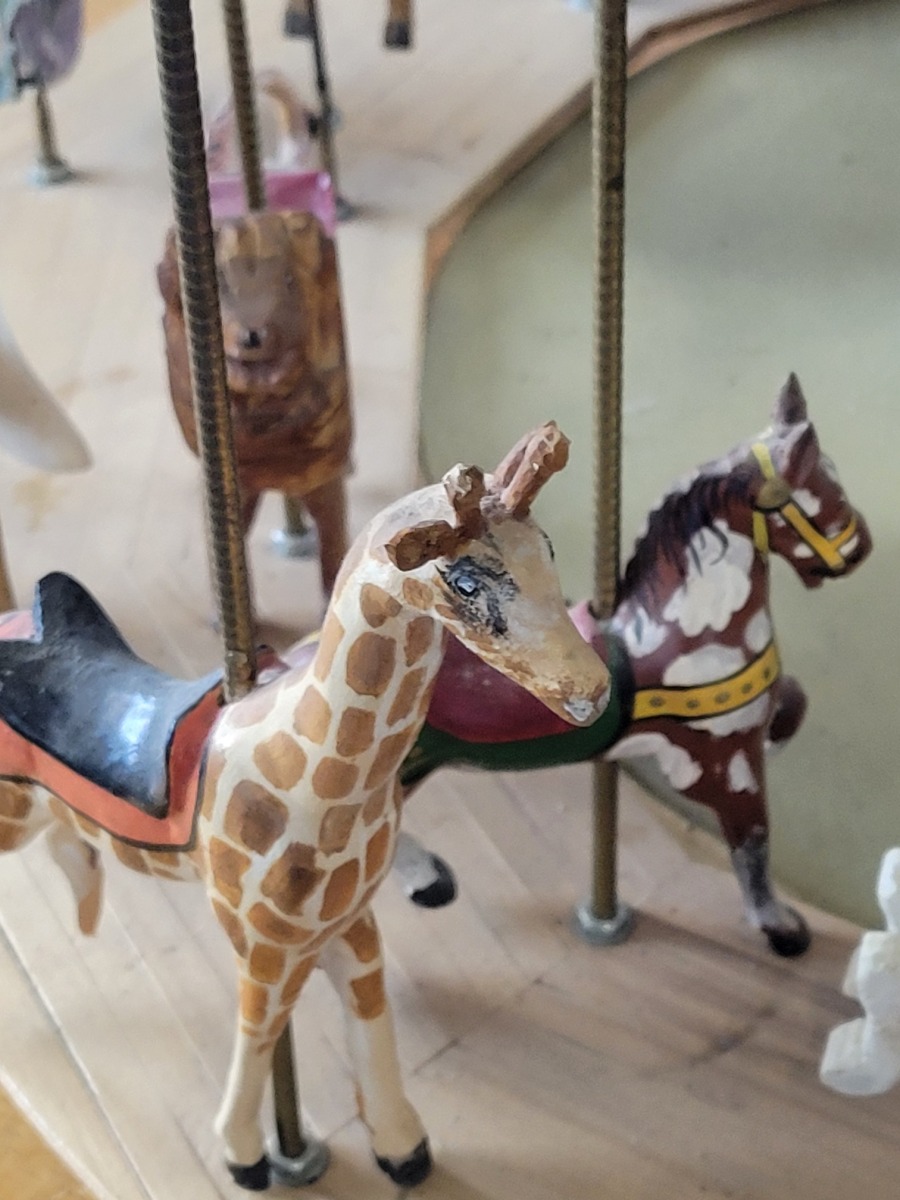
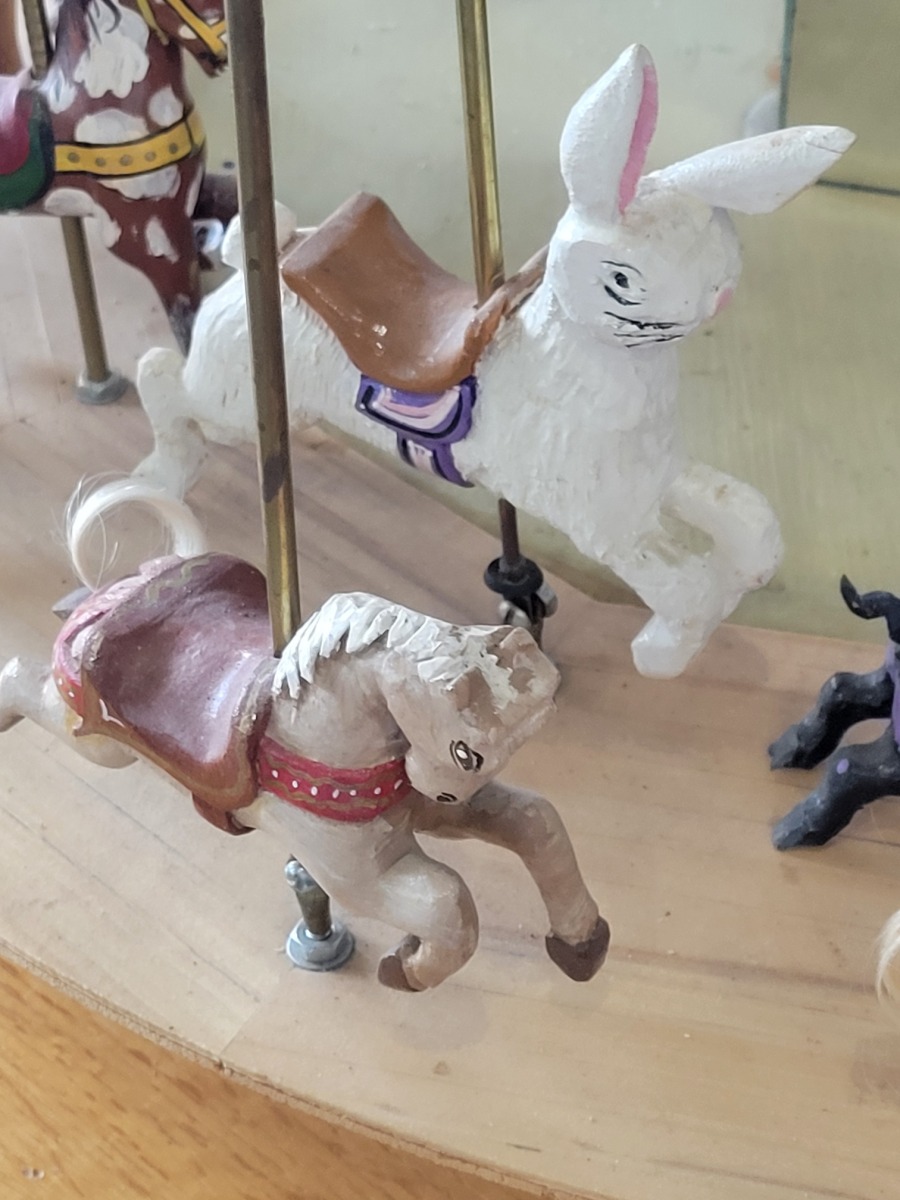
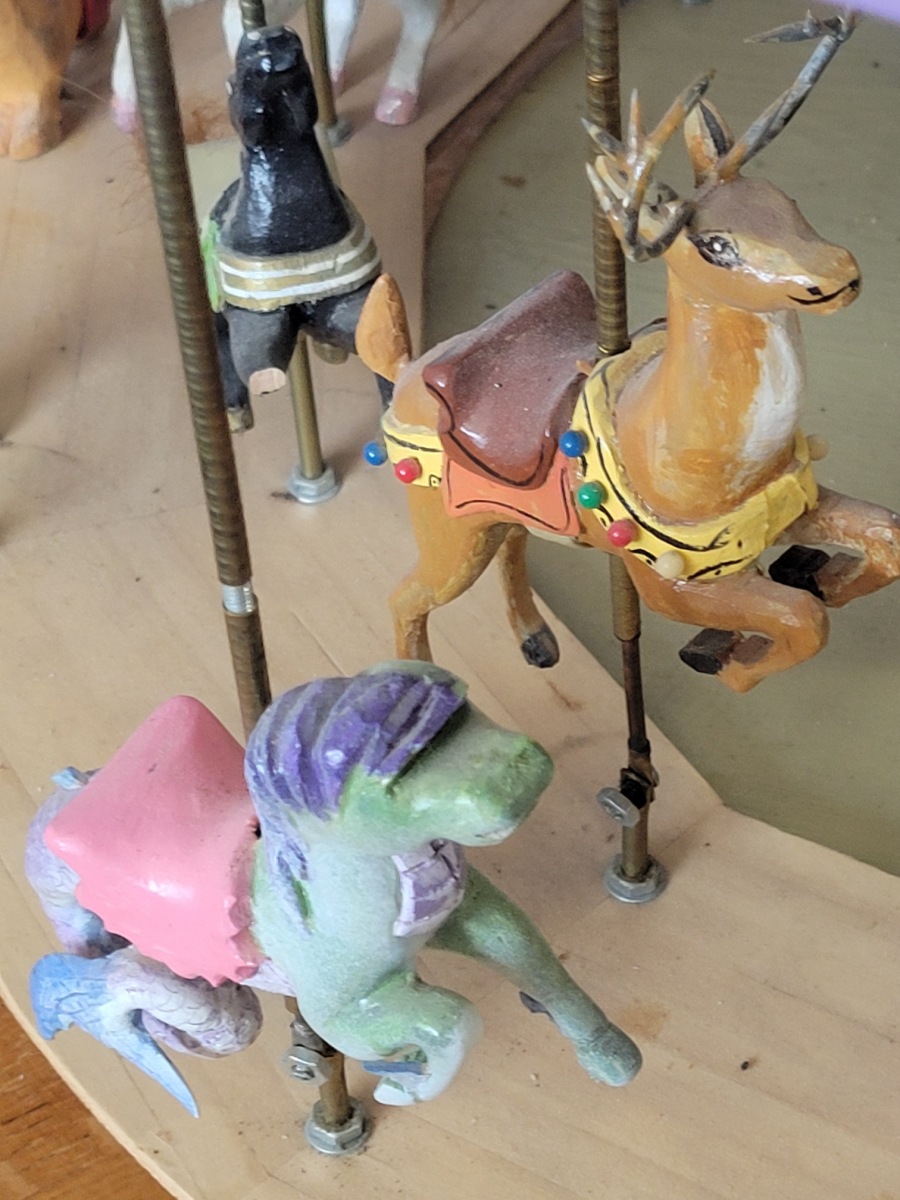
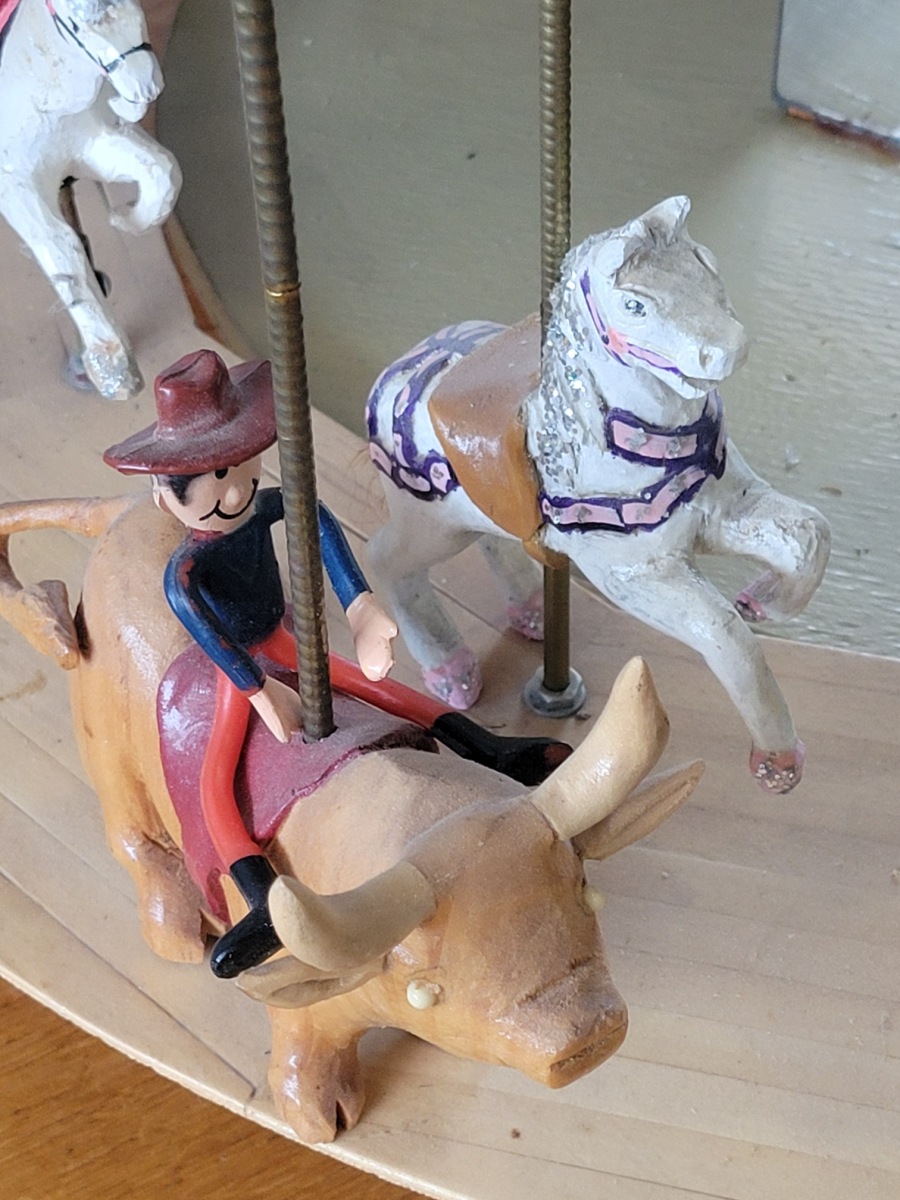
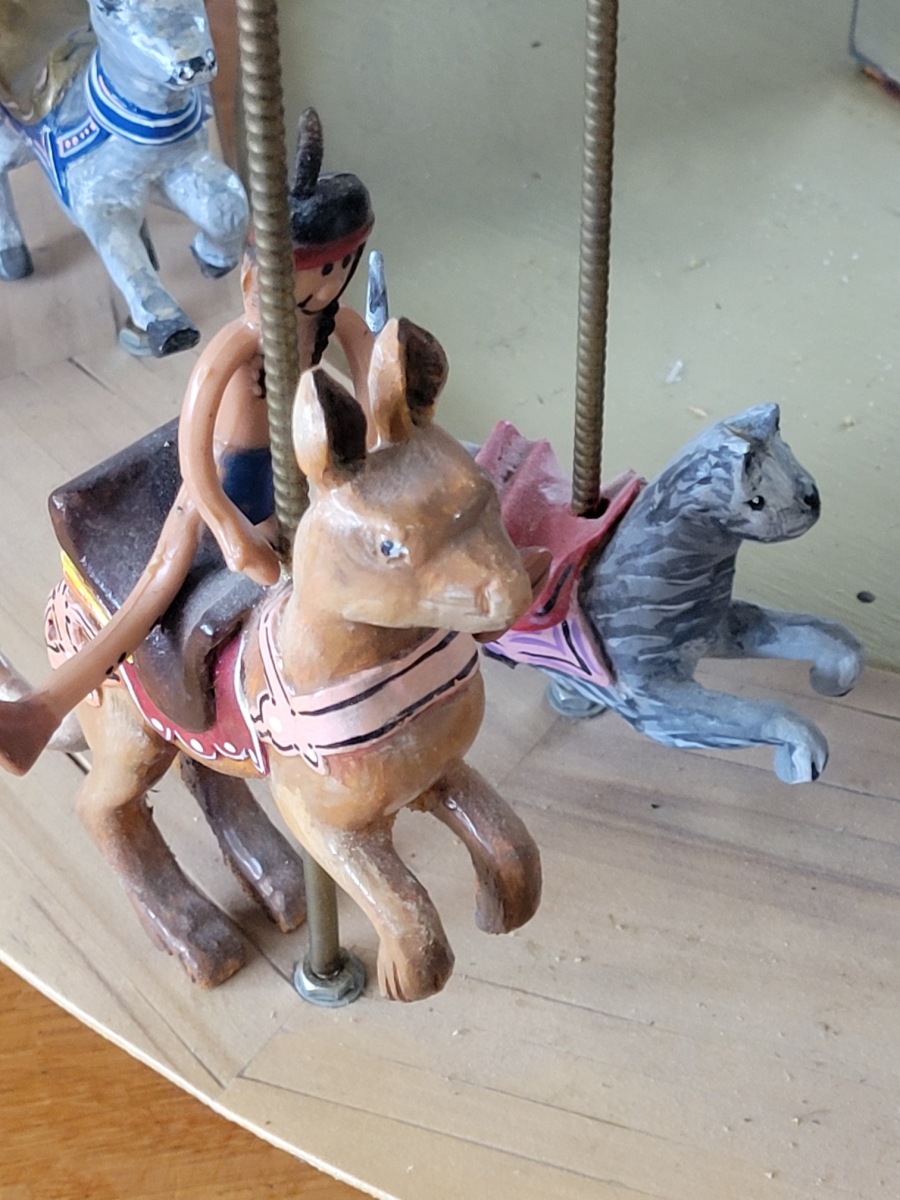
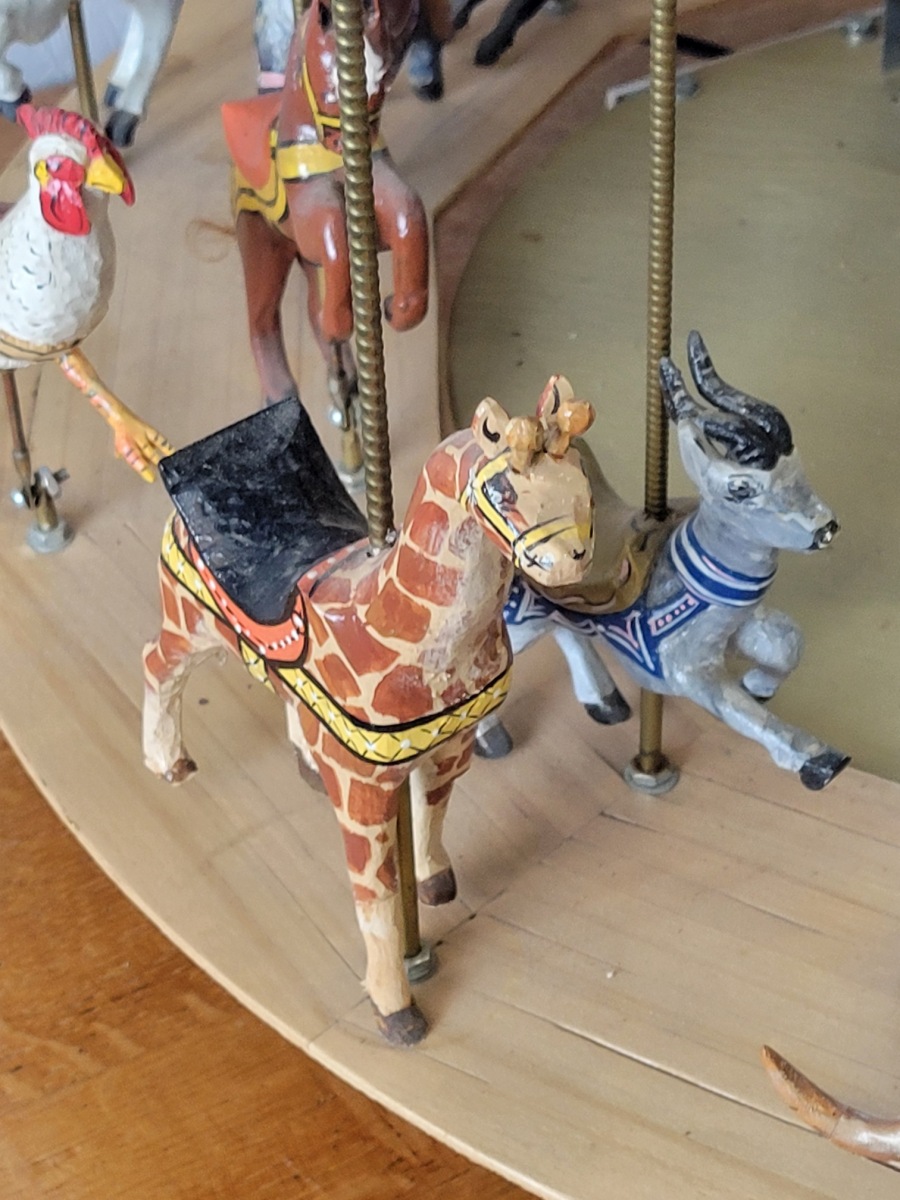
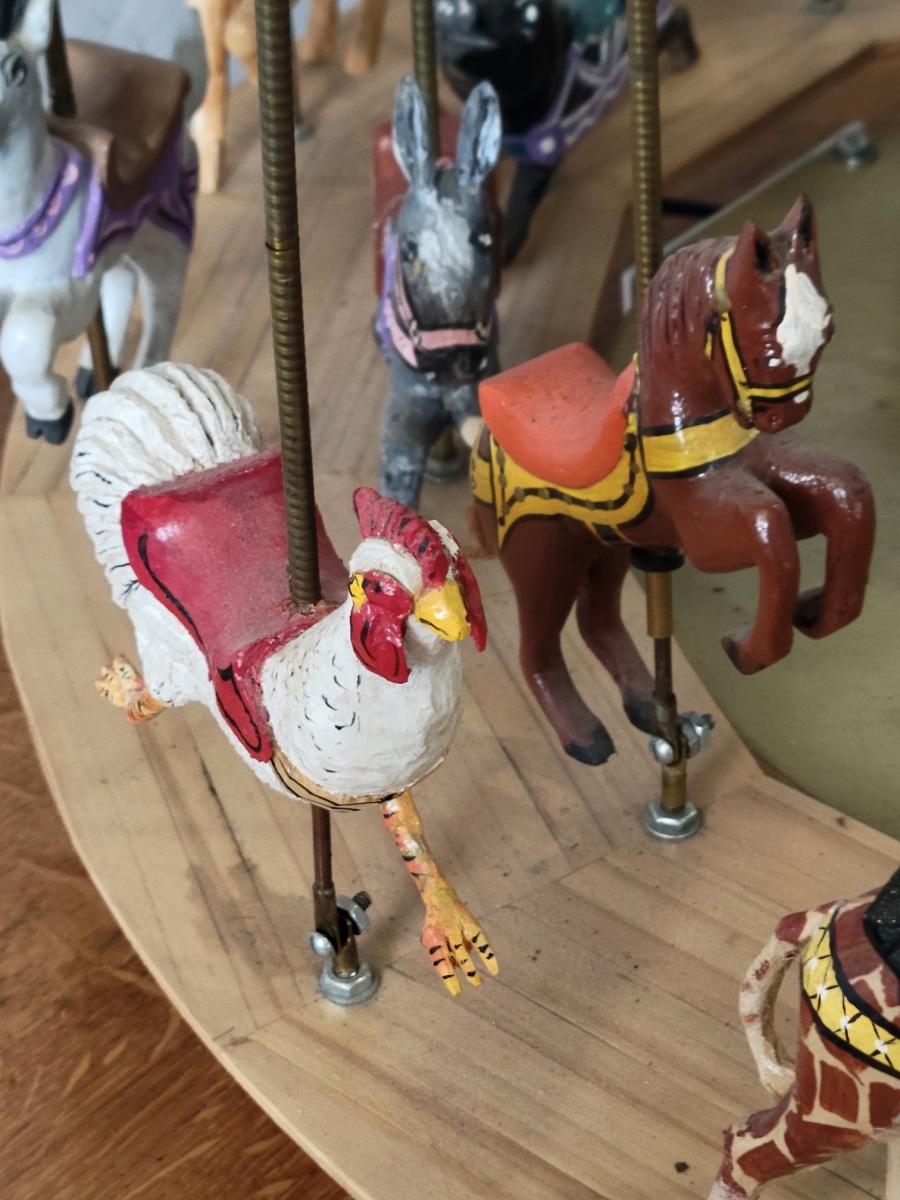
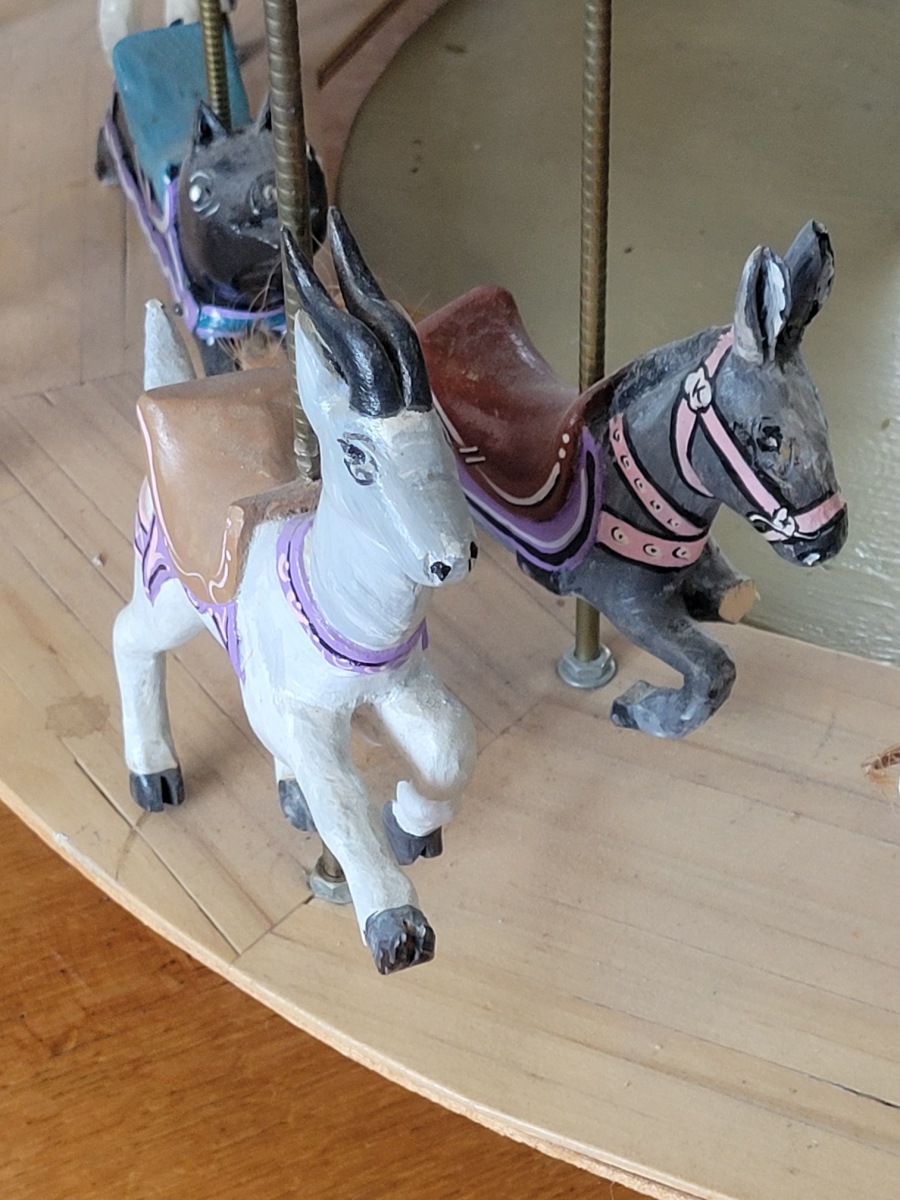
One of Don’s most well-known pieces of work is a replica of the Dentzel Carousel from Riverside Park in Logansport. Our museum is honored to have an earlier work, a replicat of Dentzel’s original carousel, or at least, a carousel that features some of Dentzel’s earliest work.
Gustav Dentzel was one of the carousel pioneers and his carousels (although made some 150 years ago) are still considered works of art and ingenuity. Some are still in working order even today. He was born around 1844 in Kreuznach, Germany. His father, Michael Dentzel, had a carousel ride, and he traveled around southwest Germany with it and his whole family. During the off-season, they would make wagons, carousel animals, and mechanisms out of wood.
When Gustav was 20, his father sent him and his brothers to the United States – along with one carousel – to try their luck. This was probably the first carousel on the western hemisphere. By 1867, Gustav founded the Dentzal Factory (or the Dentzel Carousel Company) in Germantown, Pennsylvania.
After his death in 1909, his sons continued his work. The factory was in operation until 1928, making two or three carousels a year. They carved carousel seats in the shape of different animals by hand. Seats were made of poplar or basswood and in the shapes of horses, bears, greyhounds, pigs, dears, frogs, giraffes, rabbits, cats, ostriches, mules, tigers and lions. Although the Factory worked for some 60 years, their detailed style varied very little and remained consistent. The rest of the parts of the carousel, which were also made by Dentzel Factory, had oil paintings on them.
The gallary below notes the whimsical nature of Dentzel’s creatures, as recreated by the talented hand of Don Kegarise.
The First Ferris Wheel
Today, hundreds of Ferris wheels tower over cities and fairgrounds around the world. But today’s wheels are very different from the original wheel, which originated in Chicago during the World’s Fair of 1893. The Ferris wheel owes its famous design to George Washington Gale Ferris Jr., a structural engineer who was born in Galesburg, Illinois and later relocated to Pittsburgh, Pennsylvania, who inspected steel for the fair. Ferris brought the idea for an enormous metal wheel to Daniel Burnham, the fair’s lead architect, after Burnham requested an iconic structure. Burnham and his peers hoped that it could rival the Eiffel Tower, which had been built for the 1889 Exposition Universelle in Paris.
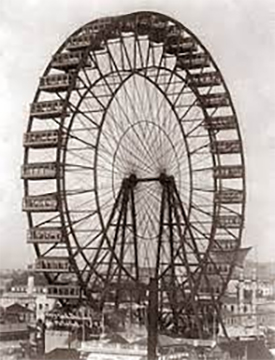 Of the numerous proposals for Chicago’s spectacle attraction, nothing captured the imagination quite like the “Chicago Wheel.” Ferris’s enormous vertical structure, which rotated around a center axle, featured 36 gondolas capable of holding up to 60 people each—for a total capacity of 2,160 people. It was not the first amusement wheel, but the use of a reduced steel framework had Burnham doubting a structure of this scale could ever work. After spending much of his own money on safety studies, Ferris finally convinced Burnham that the structure was possible. In 1893, Ferris completed the attraction and the Ferris wheel was born.

Soaring to a height of 264 feet, the original Ferris wheel offered fairgoers a 10- to 20-minute ride unlike anything they’d experienced before. For many, the Ferris wheel took them as high up as they’d ever been—and the views did not disappoint. As passengers traveled through the air, they could see out over Lake Michigan and glimpse new vistas of the city itself. In all, more than 1.4 million people paid the 50-cent fee to take a ride on the wheel. Despite the popularity of the attraction, the Ferris wheel met with a string of financial issues after the fair. It was disassembled and moved to North Clark Street, where it operated from 1895 to 1903. The wheel was then sold and rebuilt in St. Louis, Missouri, for the 1904 World’s Fair. Finally, in May of 1906, a demolition company used 200 pounds of dynamite to destroy the wheel. Its remnants were sold for scrap metal.
Don’s replica of the first Ferris Wheel is built to scale. The cars – 36 of them – were as large as today’s school buses. Each car could hold up to 60 people. The Ferris Wheel would stop six times to unload and load people on one revolution and then make one revolution without stopping. The Ferris Wheel operated much like the wheel of a bicycle; an outer rim of steel rotated around a central hub and axle to which it was connected by tension spokes.
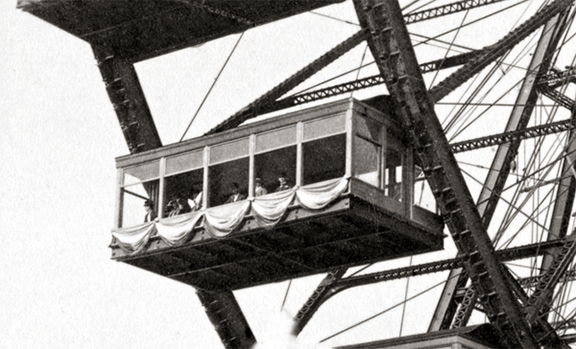
Don’s replica includes cars filled with rocks, so if the wheel is turned, the roll of the replica’s cars are approximately what the real thing would have been.
Detailed Photos of the Kegarise Carousel & Ferris Wheel
Click on the thumbnails to see full-sized photos.








The Trapper’s Cabin
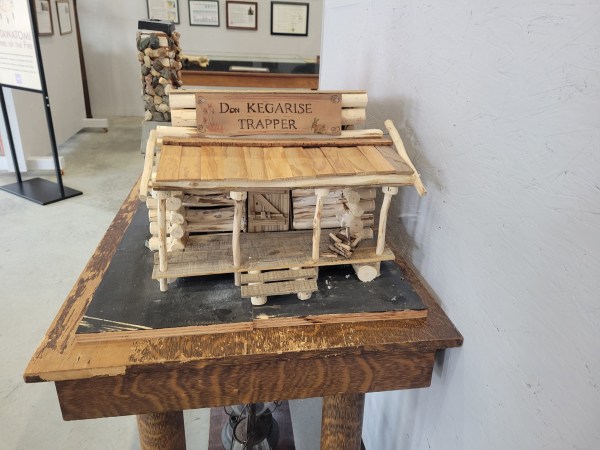

Don constructed this replica of a trapper’s cabin from items found at his own home, including willow trees and rocks. He researched the history and built the cabin to scale. Here are the historical aspects of a typical trapper’s cabin.
- Trappers built their cabins using simple tools and natural materials from the surrounding area.
- Trapper’s cabins were compact and included a bunk bed, table, and small wood-burning stove for cooking and heating. They also had shelves for storing supplies and dishes.
- Trappers built their main cabins near their home base, and built more temporary shelters along their traplines for overnight stays.
- In the winter, trappers stayed close to their camps and built solid shelters to keep warm and dry. They hunted for food, wood, and water, but did not hunt for furs.
- Trappers carried steel traps and used snowshoes and toboggans to move around in the snow and transport furs and supplies.
- In the summer, trappers hunted game and fish, and relaxed more than during the hunting season. They also held their annual rendezvous during the summer.
Sketches of Historic Structures
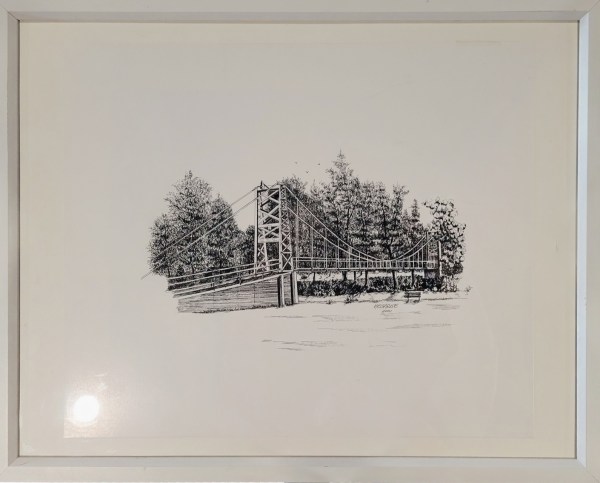
 Don was well-known for sketching historic buildings in the area. We have been blessed to have the two featured here, and this writer also has a sketch of the Pulaski County Courthouse. Don and Kathy, his wife, were generous in donating these sketches to a variety of not-for-profit organizations for use in fundraising.
Painting
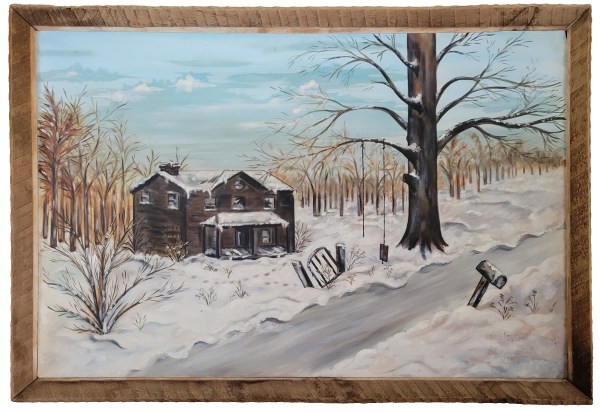 This painting is from the 1960s. It hung for a while in a gallery in Pennsylvania, and is a typical scene of an abandoned rural home in a rural area like Pulaski County.
Obituary
Don passed away before the Historical Society Museum opened. We would like to honor him by placing his obituary here, from Rans Mortuary.
Donald R. Kegarise, 97, of Kewanna, passed away peacefully at home, surrounded by his family, on Thursday, June 12, 2025, at 12:08am.
Don was born on June 7, 1928, in Frizzleburg, Pennsylvania, to the late Arthur and Sarah (Shaw) Kegarise. He was raised in New Castle, Pennsylvania, the second-youngest of twelve children and, in his words, was the “last man standing.”
From an early age, Don displayed determination and ambition. He delivered newspapers and mowed lawns to pay for flying lessons, earning his private pilot’s license at just 18. That same year, he graduated from New Castle High School and joined the U.S. Army. He proudly served in Korea and was honorably discharged in 1947.
Over the years, Don lived a full and varied life. He held numerous positions, primarily in engineering and sales, which eventually led him to relocate to Winamac. It was there he met and married Kathleen Czech in 1974. Together, they purchased and lovingly remodeled a home in Kewanna, where they raised their three children.
While working as a tool and die maker at Small Parts in Logansport, Don also pursued his passion for art. He became known for painting saw blades but also created pen and ink drawings, signs, carvings, and watercolors. He taught art classes and remained deeply involved in the local art community. In 2015, he and his wife were honored as Fulton County Artists of the Year. His work has been featured in many regional exhibits, including one currently on display at the Fulton County Public Library.
Don was also an avid bicyclist and logged countless miles over the years. Following his retirement, he once rode from Indiana to his childhood home in Pennsylvania—a journey that exemplified his adventurous spirit.
In retirement, Don and Kathy built a home just outside Kewanna, a place they cherished and carefully maintained. Don even used a portable sawmill to mill lumber from nearby trees, crafting custom doors and trim for their home with his own hands.
Throughout his life, Don remained grounded in his belief in the power of positive thinking and the conviction that everything he needed would arrive at just the right moment.
He is survived by his daughters, Andra Kegarise and Aryn Leach (Brett); his son, John Kegarise (Shannon) of Culver; and grandchildren Madison White (Ben McKown), Olivia Freels (David Ralph), Conner Freels, Morgan Kegarise, Lindsey Kegarise, Nichole Kegarise, Porter Kegarise, and Damon Kegarise.
He was preceded in death by his beloved wife, Kathy; one grandson; his parents; and all eleven of his siblings.
The family extends heartfelt gratitude to Fred Bauman, whose daily calls were a constant source of comfort, and to Dottie Boyce, whose regular lunches and companionship brought Don great joy. Your friendship during the past year and a half, especially as he mourned the loss of his wife, meant more than words can express.
A special thank you is also extended to the hospice nurses and caregivers, whose support and responsiveness brought peace and reassurance in Don’s final days.