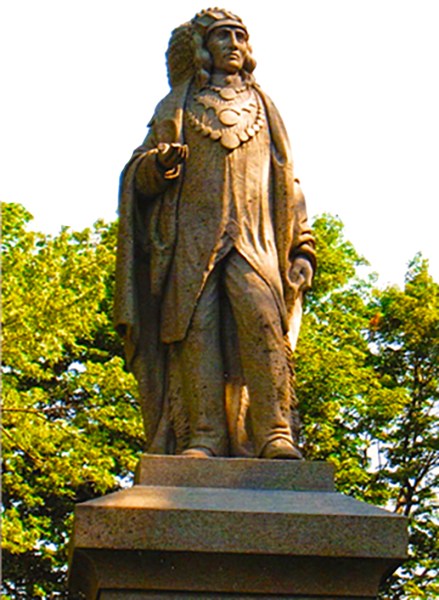
Indian removals in Indiana followed a series of the land cession treaties made between 1795 and 1846 that led to the removal of most of the native tribes from Indiana. Some of the removals occurred prior to 1830, but most took place between 1830 and 1846.
The Lenape (Delaware), Piankashaw, Kickapoo, Wea, and Shawnee were removed in the 1820s and 1830s, but the Potawatomi and Miami removals in the 1830s and 1840s were more gradual and incomplete.
The Treaty of Yellow River (1836), one of Indiana’s more contentious treaties, broke the Treaty of Tippecanoe (1832) and offered the Potawatomi a pittance of what the 1832 treaty required: only $14,080 for two sections of Indiana land. In addition, they were required to vacate their land in Indiana within two years.
Chief Menominee and seventeen others refused to accept the terms of the sale, refusing even to take part in the negotiations. They did not recognize the treaty’s authority over their band.
Menominee’s name and mark appear on several land cession treaties, including the Treaty of St. Mary’s (1818), the Treaty of Mississinewas (1826), the Treaty of Tippecanoe (1832), and a treaty signed on December 16, 1834. But of the Yellow River Treaty, Chief Menominee stated, “I have not signed any treaty and will not sign any. I am not going to leave my land, and I do not want to hear anything more about it.”
The federal government refused Menominee’s demands to honor the Treaty of Tippecanoe. The chief and his band were forced to leave the state in 1838.
(Liberally borrowed from Wikipedia)
- The Land, from the Ice Age to Europeans Coming Ashore
- The People, From Ice to Europeans Coming Ashore
- Europeans Arrive
- French Fur Trade & Beaver Wars
- Indian Wars Pre-Revolutionary War
- Indian Wars During Revolutionary War
- Indian Wars Post-Revolutionary War
- Indian Removals 1700 to 1840
- United States Takes Shape
- Indiana Takes Shape
- Pulaski County Takes Shape
- Treaty of the Tippecanoe 1832
- Yellow River Treaty 1834
- Trail of Death
- Chief Winamac
- Keepers of the Fire
- The 7 Fires of the Anishinaabe