By Karen Clem Fritz
Reprinted from Nov. 6, 1999 ExPRESS

PULASKI COUNTY WAS ONLY 22 years old when the War of the Rebellion, or the War Between the States (later to be more commonly known as the U.S. Civil War), broke out in April 1861.
At the time, Pulaski County had a population of just 5,700 men, women and children. But by the time the war ended four years later, the county had sent nearly 600 men to fight. At least 109 of these soldiers died, either from wounds or disease.
A national “veterans’ day” to honor these soldiers would not be established for another 50-plus years, although Memorial Day has its roots in the aftermath of the Civil War.
Soon after the war, however, an organization known as the Grand Army of the Republic (GAR) was founded for veterans of the Union Army. Posts were formed in Indiana, beginning in August of 1866. The GAR was a forerunner of today’s veterans organizations and was active in political and social issues regarding veterans, as well as providing a means for veterans to share memories and experiences with each other.
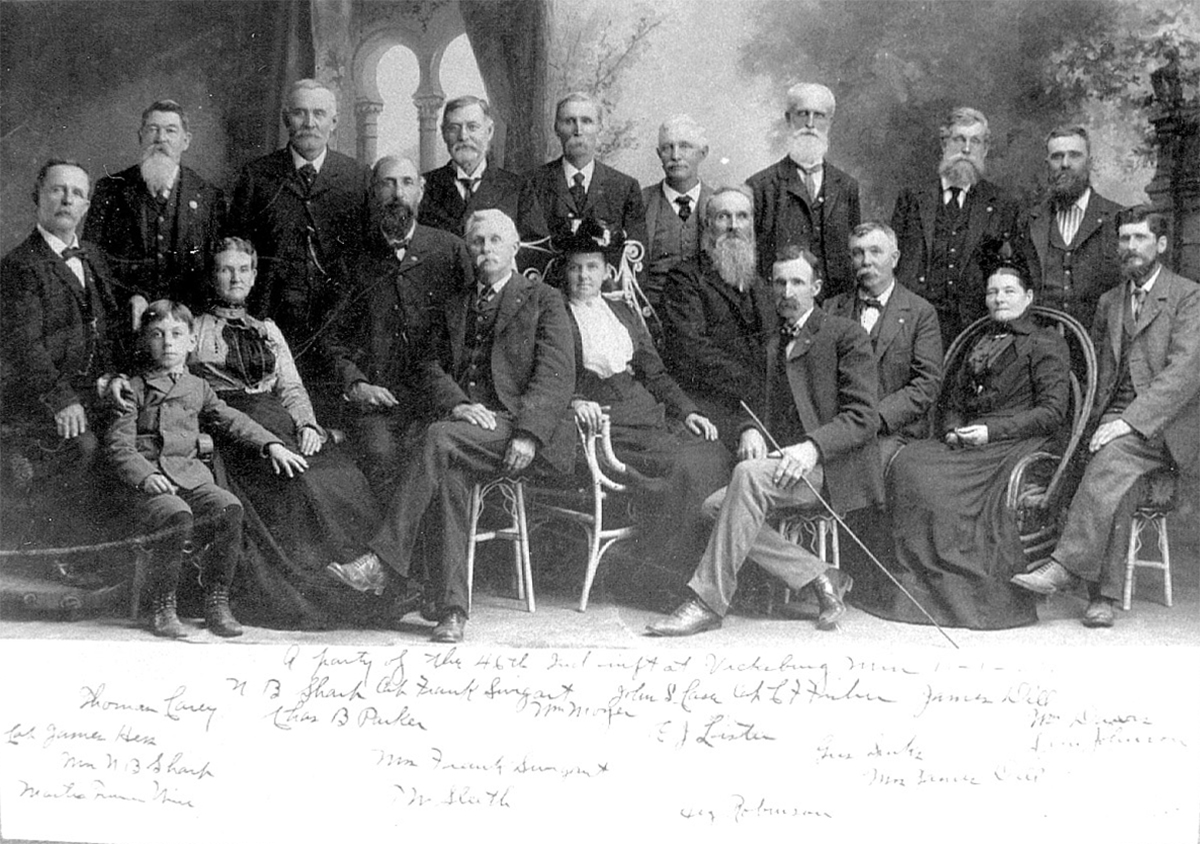
The organization grew slowly in its first 10 years. Chapters were not formed in Pulaski County until the early 1880s.
A GAR Post No. 41 was founded in Winamac in 1882 and continued until 1918, and some years later was again reinstated until 1936.
Also in 1882, the Henry S. Lane GAR Post No. 76 was founded in Francesville with 22 “comrades.” This post continued until 1915.
In November 1832, the C. L. Guild GAR Post No. 121 was formed in Medaryville, with 24 men “mustered” into membership. (Charles L. Guild was the first young man from the Medaryville community to lose his life in the War of the Rebellion. A 21-year-old resident of Gillam Township, he was killed at the Battle of Shiloh on April 7, 1862.) The Medaryville post continued until 1925.
In 1885, the Fahler GAR Post No. 397 was established in Star City. It was reorganized in 1903 and continued through 1915. The post is believed to be named for William Fahler, a Civil War veteran who died at home in January 1865.
Pulaski County soldiers served in 24 different Indiana regiments during the Civil War.

One of the largest groups of local soldiers served in Company H (most of whom were from Winamac, Star City and “Pulaskiville”) of the Indiana 46th Regiment Infantry of volunteers.
The entire 46th Regiment began holding annual reunions in 1885, and these events were faithfully chronicled in the Winamac newspapers of the day.
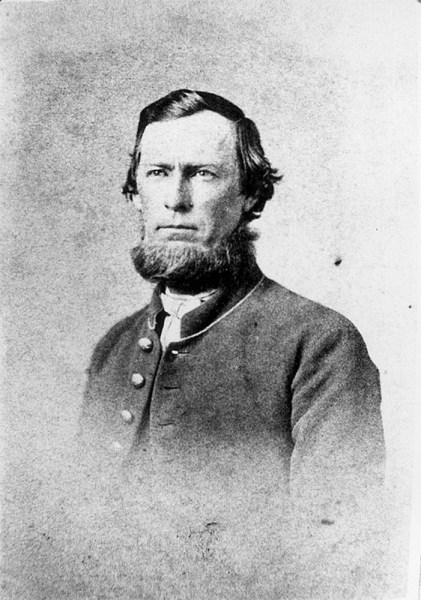
One hundred years ago, the 1899 reunion was held in Winamac with 73 veterans plus their family members attending. The main attraction of the two-day reunion was a “campfire” at Vurpillat’s opera house which attracted a standing-room-only crowd. The stage was decorated with a banner which read “An Honorable Peace.” The welcome address was given by Lt. George Burson of Winamac, and the response was given by Capt. Frank Swigert of Logansport.
Two years later, the 46th’s reunion was held in Vicksburg, Miss. The regiment had participated in the siege of Vicksburg in 1863. In May and June of that year, Maj. Gen Ulysses S. Grant’s armies had converged on the Mississippi River town, entrapping a Confederate army under Lt. General John Pemberton.
On July 4, the day after the fateful battle back east in Gettysburg, Vicksburg surrendered following a 47-day siege in what is regarded as one of the greatest campaigns of military history. The fall of Vicksburg effectively split the Confederacy in half as the Union gained control of the Mississippi River.
The war was almost six months old when the 46th Regiment was organized in Logansport in October 1861. Graham N. Fitch served as colonel. It was mustered into service two months later on December 11, and marched to Camp Wickliffe, Ky. where it remained until February.
Eventually the 46th was sent to Missouri where it joined with General Pope’s army and participated in the attack on New Madrid. Along with three other Indiana regiments, the 46th went to Riddle’s Point, under General Palmer, to cut off the “Rebel” communication with Island No. 10. While there, the regiment put up a battery at night and sustained itself against an attack by five Confederate gunboats for over an hour without being dislodged.
Next, the 46th moved on with General Pope and participated in the capture of Fort Pillow. It later occupied Memphis in June and then charged a “rebel works,” driving the enemy out, and capturing guns and prisoners. By November the regiment was on an expedition against Arkansas Post and was moving down the Tallahatchie and Coldwater rivers in Mississippi.
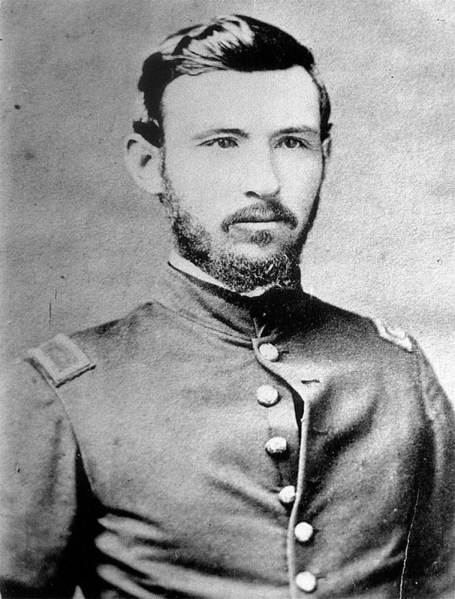
In February 1863, the 46th participated in engagements at Fort Pemberton under General Ross. As the regiment began its move toward Vicksburg, it was in the principal part of the engagement at Port Gibson and was in the advance brigade at Champion Hills. Here the 46th suffered severely, with one-fourth of its number who were engaged in battle killed or wounded.
At the Vicksburg siege, the 46th was in the trenches for 44 days. The day after Vicksburg’s fall, the regiment moved with General Sherman to attack General Joe Johnston’s forces at Jackson.
The regiment moved on to Natchez and then New Orleans where it was transferred to the Department of the Gulf. Next the 46th undertook an expedition through Louisiana and participated in the advance at Grand Coteau where it rendered material assistance to General Burbidge.
In December, the 46th returned to New Orleans, and in January 1864 the regiment members re-enlisted as veterans. In early spring the troops moved with General Bank’s army on the Red River expedition, then marched 302 miles to Sabine Crossroads where it participated in the disastrous battle of Mansfield in April. Here the 46th had joined the 1st Brigade, 3rd Division 13th Army Corp, losing 10 killed, 12 wounded and 77 captured. Reportedly, the prisoners captured at Mansfield were tortured for eight months at stockade prisons at Camp Ford and Camp Groce in Texas.
The following day, the 46th participated in the battle at Pleasant Hill where several more of its soldiers were killed. The regiment marched with Bank’s army in its retreat to the Mississippi. Here, with other members of the 13th Corps, the Confederates were held back from Alexandria while a dam was built. The 46th arrived in Morganza on the Mississippi in May, and by June 1864 had returned to New Orleans. The soldiers then returned to Indiana on a veterans furlough.

The work of the 46th was, by now, largely finished. The regiment spent the remainder of the war in Kentucky where at one point it resisted a Confederate invasion of that state at Lexington. Under General Burbidge, it marched on an expedition to Saltville and garrisoned Prestonsburg and Catlettsburg, Ky. The regiment then returned to Lexington where it remained until September 1865. The 46th was mustered out of service at Louisville Sept. 4, 1865, and returned to a public reception at the Capitol in Indianapolis on Sept. 6 where a few days later the soldiers were finally discharged.
ANOTHER LARGE GROUP of volunteers from across Pulaski County served in Company B of the 87th Indiana Regiment Infantry. A book about the 87th, A Stupendous Effort, was written in 1997 by Jack K. Overmyer, president of the Rochester Sentinel.
Former Pulaski County Historian Lynda Irving provided many of the research materials for this article, including troop listings and regiment histories from the 1869 report of W.H.H. Terrell, Indiana Adjutant General.