Per records from the Winamac Veterans of Foreign Wars (VFW) – Pfost Jones Post 1728 – Pulaski County lost seven servicemen in the Vietnam era. One other serviceman went unnoticed; he lost his life during the early years of the Vietnam era.
Died, Not in Battle:
- 1959: Captain Lyle Paul Burgess, U.S. Air Force, died in Kentucky (Star City, age 31) (For official U.S. Veterans Affairs records, the Viet Nam era began on November 1, 1955)
- 1966: Specialist Fourth Class Carl A. Smith, non-hostile accident in Germany (Star City, age 20).
Killed in Action in Vietnam were:
- 1967: 2nd Lieutenant Larry Gene Bonnell, HQ Co. 9 Division Artillery, US Army (Winamac, age 23)
- 1967: Aviation Antisubmarine Warfare Technician Second Class Robert Lee Crist, VP 4, Crew 10, US Navy (Winamac? Age 23)
- 1967: Captain Richard Weisell Podell, US Air Force (Winamac, age 28)
- 1968: Lance Corporal John William Parcel, 3rd Marine Amphibious Force, US Marine Corps (Winamac, age 21)
- 1971: 1st Lieutenant Stuart Marshall Binkley, 1193 Field Artillery Unit Commander, US Army (Star City, age 23)
Jerry Shank was the First to Die in Vietnam
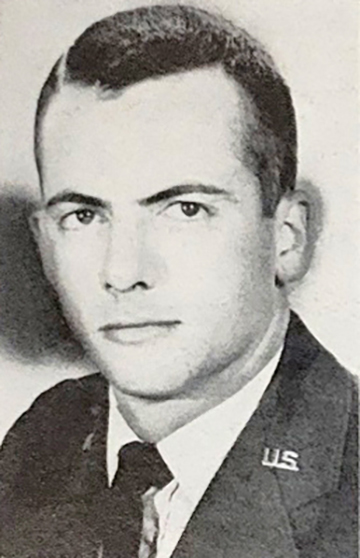
The first serviceman from Pulaski County to die in combat in Vietnam was Captain Edwin Gerald “Jerry” Shank, Jr., with the US Air Force. He died on March 24, 1964.
His story will be told through a writing from his mother and through his letters home. He didn’t mince words when writing to his beloved wife Connie. After his death, she released his letters to the press. They were published in the May 1964 issues of LIFE Magazine and U.S. News and World Report. That same month, the letters were read into the Congressional Record.
A Mother’s Heartbreak
Extrapolated from People of Pulaski County, 1983
Written by Gertrude Shank, July 1982
After eighteen years, it is a painful task for a mother to write a tribute to her son, who made the supreme sacrifice: giving his life for his country. Jerry made that sacrifice on March 24, 1964.
A 1959 graduate of the University of Notre Dame and father of four, he was killed when his plane crashed in enemy territory. But, it wasn’t the Viet Cong alone that killed Jerry; his plane killed him. Pilots on the same mission said the wings on Jerry’s plane flew off when he went into a dive.
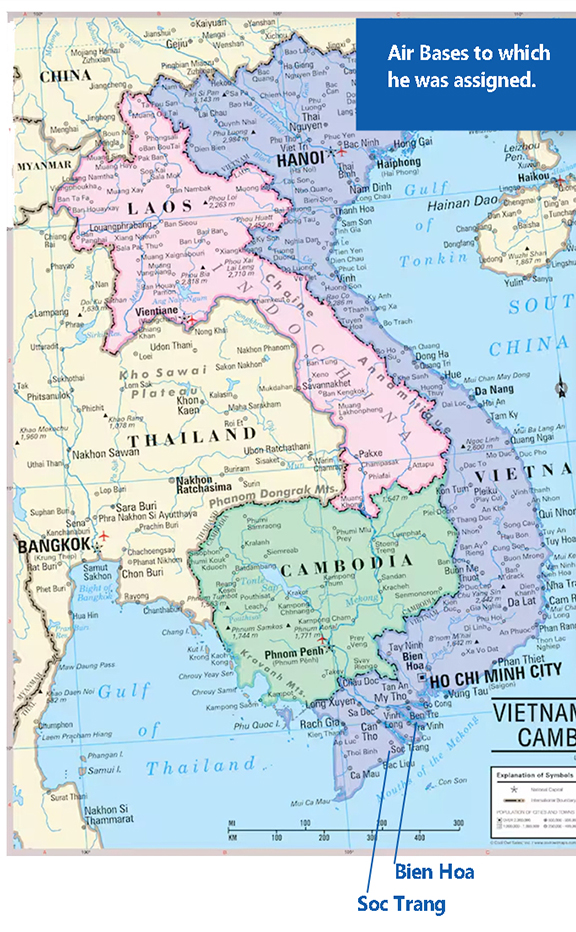
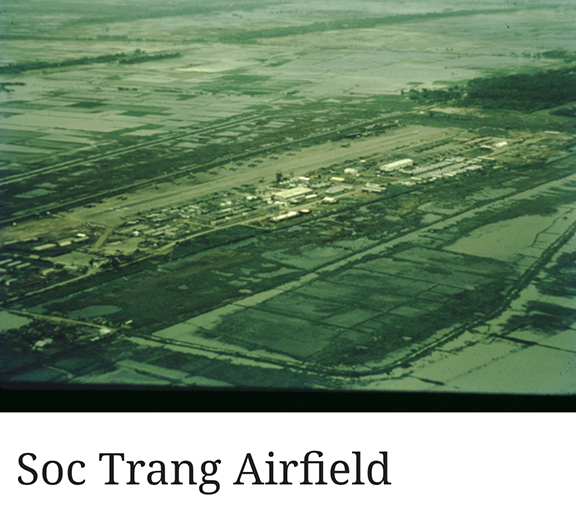
Jerry was sent to Viet Nam not for combat, but as an advisor to train the Vietnamese to fly. He died in a T-28, an aging propeller-driven trainer that was never meant for combat. Loaded with 500 pound bombs and napalm tanks, it could not indefinitely endure stresses of repeated dive bombing runs. Eventually, the wings came off. That happened to Jerry’s plane on his 86th mission, flying from Soc Trang Airfield on the Mekong Delta. His widow was left with four children: Bart, 5; Ann, 4; Susan, 2; and Patricia, whom he had never seen.
We are angry that our country, the most powerful nation on earth, sent him and other young men out to fight a ruthless, determined foe with equipment long past its prime. How do we know this? Jerry sent countless letters to his wife, Connie. They crackled with patriotism and frustration, pride and bitterness at the plight of 15,000 American “advisers” forgotten by their fellow citizens in “Viet Nam’s quiet War.” He wrote, “If they’d only give us good American airplanes with U.S. insignia on them (they were not permitted to fly the Stars and Stripes in Viet Nam) and really tackle this war, we could possibly win. If we keep up like we are going, we will definitely lose. How our government can lie to its own people – it’s something you wouldn’t think a Democratic Government could do.”
In another letter, he begged his father to try to do something about the situation. He suggested that possibly Dr. Halleck could be an instrument in influencing his brother, Congressman Charles Halleck, to wake up the U.S.
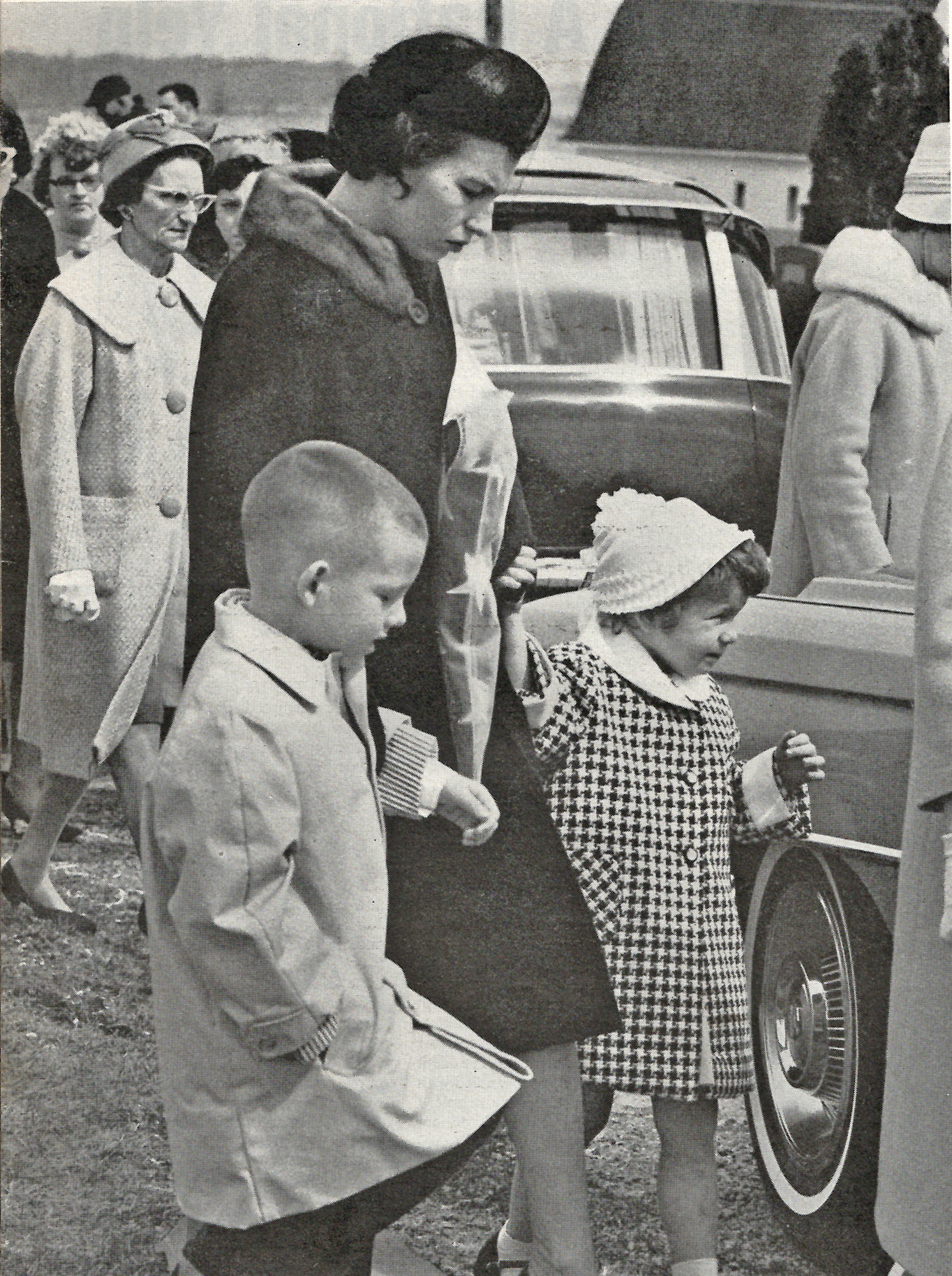
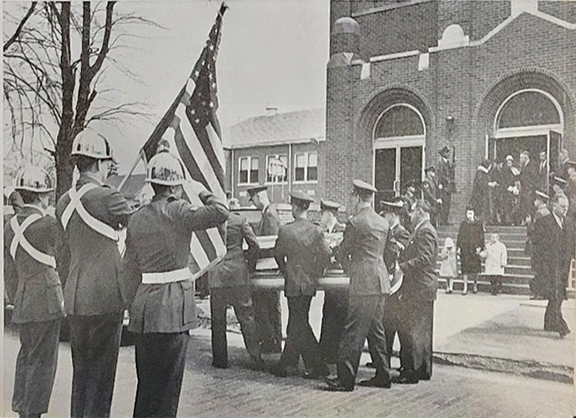
After the funeral, Connie released his letters to the press. Excerpts of the letters appeared in newspapers across the country, also in the May 1964 issues of Life Magazine and U.S. News and World Report. Also quoted was the Congressional Record, page A1709. These letters aroused the conscience of the nation.
At Bunker Hill on June 26, 1964, Jerry was posthumously awarded the Distinguished Flying Cross, the highest honor in the Air Force, for an earlier mission in which his plane was shot down. [The letter written by Capt. Shank on 30 December 1963, in the following pages, references this incident.]
The citation reads, “While escorting a transport aircraft in a T-28 fighter bomber, Captain Shank’s aircraft was struck in the fuel system by hostile ground fire. Although he was losing fuel rapidly, Captain Shank elected to attempt to fly to a nearby field which was secure for landing. Disregarding his personal safety and the possibility of an explosion in the fuel saturated cockpit, Captain Shank ingeniously kept his engine running after he exhausted his fuel by using the limited fuel trapped in the manifold. Gliding in from five miles out with a dead engine, Captain Shank was able to make a successful landing and saved his aircraft. The professional competence, aerial skill and devotion to duty displayed by Captain Shank reflect great credit upon himself and the United States Air Force.” Other medals awarded to him were Air Medal, Air Medal (First Oak Leaf Cluster), Air Medal (Second Oak Leaf Cluster), Purple Heart and Armed Forces Expeditionary Services Medal.
From The Wall of Faces
The list of citations from the wall of faces includes these photos, with explanations of what the medals and citations represent. Not included in that record is the Distinguished Flying Cross, which he was awarded.

We Fight and Die, but No One Cares
LIFE Magazine, May 1964

Along with reports out of South Vietnam last week of attack, counterattack and general foreboding, news was also being made by letters from a U.S. flyer who was killed there. The author was Air Force Captain Edwin G. Shank Jr., 27, one of a tiny band of Americans flying obsolescent T-28 trainers in support of ground attacks. The letters were addressed to his wife Connie, who was at home in Winamac, Ind., caring for their three children – and expecting a fourth.
Captain Shank’s letters were critical of the way the war was being conducted – the inferior equipment and unqualified personnel – and his criticisms were discussed in Congress and the press. But Captain Shank was also a lonely father trying to keep up the bonds with his family. Above all, he was a dedicated soldier who believed that his frustrating war had to be fought – and that American people did not know enough or care enough about it. On these pages, LIFE presents a full selection from Captain Shank’s last letters about his lonely war.
Thursday, 14 Nov 63
Dear Connie and Kids
Up to 12 missions now. All checked out for nite work and I’m second up for alert tonite. Had another 3 hr. flt. this morning. We escorted choppers back and forth to a landing zone where they put troops in the field. Then we went over and struck some suspicious areas.
We’re using equipment and bombs from WW II and it’s not too reliable. There are only about 6 maintenance men, 6 armament men and 11 pilots down here. We 23 run the whole T-28 war in the Mekong Delta. This will give you some idea of Uncle Sam’s part in the war. I goofed on my third mission out of here. I told you we had a real short runway. One approach is over trees and bushes and a couple of barbed wire fences. There is only one barbed wire fence now. I brought about 20 ft. of fence home with me.
23 Nov 63
Been real busy with the armament job. Got all kinds of problems – can’t get parts or books or charts describing the different bombs and systems. The Air Force hasn’t used any of this equipment since Korea, and everybody seems to have lost the books. Main problem is personnel – no good officers or NCOs over here that really know their business. Most of them are out of SAC and have dealt only with nuclear weapons. This doesn’t apply over here. What we need is someone from WW II. Some days it’s like beating your head against a brick wall.
27 Nov 63
Happy Thanksgiving – no different here than any other day. You know damn well where I’d like to be today.
First of all woke up Saturday to the news of Kennedy’s assassination. Such a terrible thing – the world is full of animals. Sunday all hell broke loose with the Vietcong. We had a big airborne operation against them – both choppers and parachutes. I’m up to 20 missions now and am real confident in myself. I feel like a veteran. I think I am older.
Although this is called a dirty little war and is far from the shores of the old USA, it’s a big mean war. We are getting beat. We are undermanned and under gunned. The US may say they are in this, but they don’t know. If the US would really put combat people in here, we could win and win fast.
Wednesday Nite, 4 Dec 63
It’s about 9:30 – I guess, broke my watch. But I’ll get it fixed next time into Saigon. Got my toe rot healed up and also my spider bite. I’m fully operational now.
I have debated for a week and a half now over telling you about Black Sunday – Nov. 24, 1963. I’m going to tell you, and if you don’t want to hear about these things again, well say so. You do have a right to know. Anyway, here is what I saw.
At 4:30 Frank Gerski and I took off after a fort under attack. Our airborne interpreter was very poor. The first target he said to hit was an area about the size of your dad’s farm. Well, this is much too large a target, but it’s all we had. After the first 2 bombs, we spotted the bad guys shooting at us. So Frank directed me in and I burned them with napalm. Then I spotted another bunch shooting great big bullets at me, so I told Frank to follow me in and shoot where I shot. Well, just as I had them in my gun sights my damn guns jammed. By now, dawn had broken. We were out of goodies and gas, so we came home, landing at around 0700.
We then got word that a big airlift of troops was taking place. Four of our T-28 birds went out – 2 to escort the choppers and 2 to soften up the landing zone. They came home about 2 hrs later – said it was pretty hot. 2 more birds took off to do the same thing for the second wave of choppers. 1 ½ hrs later they came home screaming “battle damage.” Just after the hurt birds landed 2 others took off – almost. I watched the first go, then waited for the second. But he didn’t make it. His engine quit just at take-off. Since the runway was short he didn’t have time to stop. Hit a hidden hole and tore a gear off. So now we’re down to 2 airplanes out of 6 and it’s my turn. We bombed like no one has ever bombed before – we literally obliterated about 600 acres of Vietcong woods and then came home.
The Vietcong hurt us bad. What they had done was pull into the little village and commit their usual atrocities. Headquarters thought they would teach this little group of Vietcong a lesson. But the crafty little bastards withdrew from the town into foxholes and bunkers they had been secretly building all week. So when the first wave of troops went in – thinking it was just a routine chase of Vietcong – they soon ran against the Vietcong wall.
We were lucky. No T-28 pilot received so much as a hangnail. We’ve got a tremendous esprit and we’re all skilled – so you can be proud of us. I am. There are no heroes over here, but there are a lot of fine men. America better not let us down. We’ve either got to get in all the way or get out. If we get out, the Vietcong will be in Saigon the next day.
I wouldn’t read this to the kids. They might not understand. You can understand now why I have a duty over here, why it’s a serious duty and no one could possibly shirk it. I believe in our cause – it’s just. We must win.
Saturday Nite, 21 Dec 63
Talked to a guy today – his wife had a baby at 7:30 Saigon time on the 19th and he heard about it today about 0900 – approx. 48 hours later. I still haven’t found out how you’ll get hold of me. I don’t even know where I’ll be. I’ll bet you are miserable by now. God, how I wish I could help you. I worry about the delivery – just know that I’m with you, only I can’t hold your hand. Have strength, Hon.
We got a briefing today on the total result of that operation on 24 November [Black Sunday]. The airpower got credit for 150-200 kills. No one can be sure, for the Vietcong carry off their dead and wounded. Anyway, there were still a lot of pieces left, and this is how we got the estimate.
No Army (Vietnamese or U.S.) troops engaged the enemy at all. It was strictly Air Force against ground. The Army was there with 1,500 troops, but the leaders kinda didn’t want to fight. After we had hurt them so bad, the army let them get away.
Anyway there were approx. 700 Vietcong dug in with three 50 cal antiaircraft guns and three 30 cal antiaircraft guns, plus many hundred with machine guns. They were waiting for us. But we hurt them even though we lost. We lost because we had them trapped and they got away.
Pretty quiet here tonight. Christmas is near, and nobody wants it to come, really.
Sunday Nite, 22 Dec 63
Opened Christmas presents tonite. Can’t put them in my suitcase, so I opened them. They meant a lot. It’s something for you instead of against you – love instead of hate and killing. Flew another mission today. I’m credited with destroying a 50 cal antiaircraft gun. I guess I’m a true killer. I have no sympathy, and I’m good. No sense being a gentleman about it, because it’s not appreciated. I’m not proud of killing. But I am proud of my skills. I’m telling you facts so you’ll know what I do. You have to know.
I talked to Major Lengfield tonite. I said, “I’m going to put in leave papers for February to see my wife and our new-born baby. Will you approve it?” He said, “Yes, but it will not be approved by headquarters; I can guarantee that.” I’m going to put it in anyway. All they can do is say no.
Oh, how I miss you. This life is too hard. I need softness and love.
Have faith in my love, and strengthen yourself with it for the baby. Don’t give up. I still may be there.
Monday Nite 30 Dec 63
Missed mass yesterday – many things happened. I’m up to 38 missions now – I’ve been pretty busy.
Well, here goes. I got shot down yesterday. We were escorting a C-123 and I picked up 3 slugs in my airplane. I made it to a field called Con Tho and landed safely. Me and the airplane are both OK – not a scratch except the 3 bullet holes. No sweat.
Thought I should tell you.
[Capt. Shank was posthumously awarded the Distinguished Flying Cross for this action.]
Friday Nite, 3 Jan 64
Missed supper. Com Deken and I were loading some napoleon [napalm] tonite for an evaluation tomorrow. I’ll try and explain the experiment. One of the airmen came up with the idea of putting chunks of charcoal into our napoleon tank. Napalm is gasoline which is jelled into a mass about the consistency of honey. When you drop it, it ignites and spreads fire about 200-300 ft. With charcoal in it, the charcoal is thrown another 200 ft., like a burning baseball, and does further damage to Vietcong houses.
Tomorrow 3 birds are going out with half their load straight napalm and the other half with charcoal in it (Madame Nhu cocktail). If higher headquarters thinks it’s alright, then they’ll buy us the charcoal. So far we’ve been buying it ourselves, or else “borrowing” it from the kitchen.
I’m going to hit the sack. It’s 1130 pm here now and 1030 am for you – about time for your favorite soap opera, “As The World Turns.” Wasn’t that it? How are things for those people? Same as last May or are they worse?
Tuesday Nite, 7 Jan 64
Got another letter today. You can’t possibly know what a letter does for morale.
Lost 2 guys today. One was a pretty good friend of mine. The only guess is – the airplane just came apart. B-26. 3rd or 4th that have done that now.
One more bit of good news. The guy who got emergency leave for their first baby. Just as he was getting on the airplane, they took him off because the commander changed his mind. Finally the guy went to the second in command over here and got ordinary leave – not emergency leave.
With ordinary leave it will take him forever to get across the Pacific. He’ll have to wait for available space. Then, if he can’t get back in time he’s AWOL. I don’t know what the US is doing. They tell you people that we’re just in training situations. But we’re at war. We are doing the flying and fighting. We are losing.
Let me write again – I’ll write happy. But honey, I’m so frustrated.
Thursday Nite, 9 Jan 64
Had a good target today finally. Felt like I really dealt a blow to the Vietcong. On my second bound I got a secondary explosion. This means that after my bomb exploded there was another explosion. It was either an ammo dump or a fuel storage area. It made a huge burning fireball. You really can’t tell when you roll in on a pass what is in the huts and trees you’re aiming at. Just lucky today, but I paid them back for shooting me down.
Wednesday, 15 Jan 64
Another B-26 went in yesterday. Nobody made it out. A couple of guys I knew pretty well bought the farm. I had met one guy’s wife – real nice and they had 2 kids.
We can no longer save face over here, for we have no face to save. We are more than ever fighting this war. The South Vietnamese T-28s used to come down here and fly missions with us. But lately, since we’ve been getting shot at so much, they moved up north. I kid you not. I can’t help wondering if you’re in the hospital tonight – or when you get this letter. If so, you know my prayers are with you as are my thoughts. I worry very much. I hope and pray you have a good delivery and you are strong. Please don’t think I’ve forgotten you during all those pains. God knows I’m with you as much as humanly possible.
Monday, 20 Jan 64
I’m back at Bien Hoa. Back for 2 weeks. Two long weeks, but they all add up towards the 52 I’ve got to spend over here. It’s really not 52 weeks. It’s closer to eternity. I’m over here to do the best job possible for my country – yet my country will do nothing for me or any of my buddies or even for itself. I’m sure nothing will be done over here until after the elections. Why? Because votes are more important than my life or any of my buddies’ lives. What gets me most is that they won’t tell you people what we do over here. I’ll bet you that anyone you talk to does not know that American pilots fight this war. We – me and my buddies – do everything. The Vietnamese “STUDENTS” we have on board are Airmen basics. They don’t even know their own serial numbers. The only reason they are on board is: in case we crash there is one American “advisor” and one Vietnamese “student.” They are sacrificial lambs. They’re a menace to have on board.
I got three letters from you today. Actually, 2 from you and 2 from the kids. Hope Bart’s party went alright. [Bart is Captain Shank’s five-year-old son.] Wish I could have been there. A birthday party is for kids and kids only. It gives them a chance to be big. It’s not for grownups. Hurrah for you for sticking by your guns.
Sunday Afternoon, 26 Jan 64
It’s a very lazy Sunday. At 1700 is church, and maybe tonite I’ll get out some more letters. I’m very behind. Sorry I wrote some bad letters, but you’re the only one I can express myself to. You need someone who will just absorb it and take it off your mind. Can’t say things like that to my buddies, for they’re experiencing the same emotions, I’m sure, and it just doesn’t help to bitch to each other. Anyway, I’m ready and willing to go up again now.
Bart’s right. Billy’s got a brother, so I think we should have one.
Friday, 31 Jan 64
Greetings from the Soc Trang duty officer. I should get relieved around 1500 to either fly or get a haircut – whichever comes first.
Not much word about the coup. From what we’ve got, this new general [Premier Nguyen Khanh] is pro-American.
President Johnson says we’re going to stay & win. I hope he’s right. We can’t keep up like we’ve been ‘cause we’re losing. Everyone over here seems unqualified for his job. Take me. I’m a multi-engine pilot, but I’m flying TAC fighters. We have no fighter pilot in our outfit.
Thursday, 6 Feb 64
I thought for sure today was the day. It was all I could think of last nite, so I’ve been expecting some kind of notification all day. It’s got to be soon now. What do you think at nite? Are you nervous?
Had another big chopper assault today, but we flew mostly escort. Pretty quiet assault – very few shots fired. I think they’re planned that way so that no Vietnamese soldiers get hurt. I’m serious. I’m pretty well convinced that these people only go into areas that are free of Vietcong. But the Vietnamese can still put up a good front to the U.S. so they can get more aid. It’s a known fact over here that the ARVN (South Vietnamese army units) don’t receive many casualties. You know how a cornered rat fights. Well, that’s the Vietcong. So the ARVN always leaves them a way free. This is fact, not rumor.
Thursday Nite, 6 Feb 64
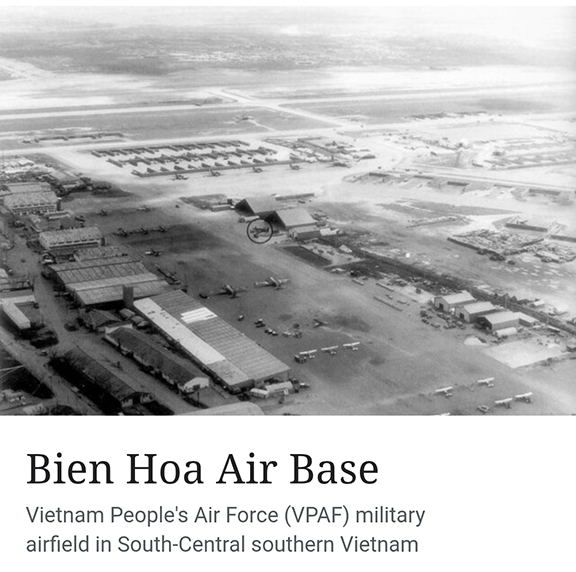 This is my second letter today, so before you read this read the other one. After the last letter – at about 6:30 – we scrambled after a fort under attack. We hit & hit good, but it got dark, so we headed up here for Bien Hoa. Pretty hot target and both of us got hit.
Coming in here to Bien Hoa, they warned us that the Vietcong were shooting at airplanes on the final approach.
Well, we made a tight, fast approach and held our lights – it was pitch black until almost over the end of the runway.
I forgot my gear and went skidding along in a shower of sparks down the runway. Airplane’s not hurt too bad. I’m not even scratched. My pride is terribly wounded.
I imagine everything will turn out alright. I still had enough wits to prevent the aircraft from burning or turning over.
Well, I wanted you to know. Don’t worry any more now. Now it’s someone else’s turn. I’m still coming home, so don’t get any wild ideas. You’re still married to the “World’s Greatest.”
All my love and prayers.
Saturday Nite, 9 Feb 64
 This will be a one-page letter. Because this is the last sheet of stationery I have.
I’m not in trouble Got up yesterday and flew another airplane. The only reprimand I got was taking me off lead status. That’s pretty good. My squadron CO picked me up after the crash and said, “When they put retractable gear on airplanes they knew that someday someone would forget.” That’s all he said. Everyone stuck behind me real good. Flew one mission yesterday and one today. Didn’t forget my gear, though. Boy, that was some ride – 100 mph on concrete in a lead sled.
Monday Evening, 17 Feb 64
I’m on alert now. We don’t usually pull nite alert here, but all B-26s are grounded, so we are the only strike force left. A B-26 crashed last week – another case of the wings just coming off.
I’m so anxious to see my new pretty little daughter. She’s probably home now. How does she like our home? I wished she missed me, too, but hell – she doesn’t even know I exist.
Have you got her in the crib, or is she in a bassinette? Is she sleeping with you, or by herself in the back room?
Friday Nite, 21 Feb 64
Haven’t felt much like writing. Tuesday evening Maj. Lengfield got shot down. He bellied his airplane in next to a special forces camp and got out without a scratch. The airplane burned completely up, though. Bernie Lukasik, one of his wingmen, kept the Vietcong away from the plane by using his prop. He was out of ammo, so all he could do was dust off the Vietcong with his prop. Took a lot of guts. We got pretty stoned that night in celebration of no one’s getting hurt. Next morning, Bernie Lukasik and Denny Sides took off for Soc Trang and had a strike on the way. Bernie was going in on his 7th strafing pass and never came out of it. That was 2 airplanes in 2 days. Kinda shook us up. Not only that, but the B-26s have been grounded since Monday. So the whole USAF fighter force is down to six airplanes. This should set an example of how much Uncle Sam cares. 6 airplanes might as well be none. [These incidents involving Bernie Lukasik, which he sometimes refers to as Luke, are noted in another section below.]
I imagine there has been something in the papers, and I thought I should explain. Needless to say, flying is down to nothing. They’re saving the T-28s for emergency action only. We’re changing our tactics now to decrease any chance of getting hit.
I miss you more than ever, and I will try to come home for a good long look at Patty. I hate to spread this mood to you. Have patience. Happy letters will come soon.
24 Feb 64
I make captain this Friday. I’ll be at Soc Trang, so I’ll be throwing my party down there. I’d like to pay for it by check ‘cause it would take too much of my green. Is this OK – can we afford it?
We’re down to 5 airplanes now. Five airplanes to fight the war – that’s just ridiculous. Tell this to my dad – let him know, too, how much the country is letting EVERYONE down. We over here are doing the best we possibly can; we fight and we die, but no one cares. They lie to my country about us – we really don’t officially exist. They’ve just got to help us and soon, or we are going to have another Dien Bien Phu. God help us.
You and the kids are my only motivating factor. I would love to be with you now, but I would not like to be back in combat after leaving you.
29 Feb 64 Sat. Morn.
I’m a captain now – put the new bars on yesterday. Had the big party early this morning. Then a flight of four hangovers. We had a reporter in no. 4 ship, and he got to watch an actual strike. We want somebody to tell our story over here.
Got a lot of pictures from the baptism. She sure is a cute little girl. I’d love to get my hands on her. Don’t feed her too much so she’ll still be tiny when I get home. Might just as well spoil her real good, too, so she’ll still need a lot of picking up when I get there.
We’ve got a new general in command now and he really sounds good. He has ordered B-57 (bombers, jet) to replace them [the B-26s] and he asked for immediate delivery. He’s also demanded that they replace our T-28 with the AD-6. This is a much more powerful single-engine dive bomber. It was designed for this type of work & has armor plating. We’re pretty excited. These were 3 of my main gripes. Morale has just gone up 100%. I think we’re going in the right direction. I sure hope so.
I’ve got 74 missions now. One more and I earn another Air Medal. I may go to Hong Kong Saturday. Don’t have to take leave that way and can save it for you and me. All the pictures dad sent are stuck together. They threw me in a shower last night and I got everything wet. Give all the kids a big love for me – their daddy is very lonely.
Friday Nite, 13 Mar 64
This is the second installment of a letter, so if you’ve opened this one first, put it away and open the other.
Kinda found out by grapevine that Luke Lukasik, the T-28 jock who got killed, was not shot down. He flew into the ground. This is terrible – but good. It means of the 3 T-28s which have been killed, only one was shot down – and even this is debatable. So I put more trust in the airplane. If it can take the beating, it increases our odds. [This incident regarding Luke Lukasik is referred to in a section yet to come. Also, it appears Shank is – at this point – unaware that the wing shear is a problem.]
I figure after my next 3 trips to Soc Trang I may get home for that visit.
Rumors are fast and furious. Nothing yet on B-57s. That thing you saw on TV is not true – B-26 should NEVER fly again. Even if rejuvenated. Also rumor that B-26 pilots will get instructions in another kind of single-engine dive bomber. All is still in the air – all rumors.
Well, I’ve really filled the pages tonite. I hope this makes up for my not writing for so long. Got to Hong Kong and just lived as if every day was my last. It’s an unexplainable mood, but I’m alright now. I can fight again for 3 or 4 months without a break – at least I think I can.
I wish I could have told you all these things in front of a roaring fire. It’s hard to be a man sometimes. I sure need your shoulder.
May God be with you and help you until I can come home.
Sunday Morning 22 Mar 64
My Dear Connie,
Forgot to tell you they put me back on lead status again. Been flying pretty heavy. We’ll soon be back up to 13 airplanes again. Hope these last for a while.
I miss you all very much, but time is passing and we’re almost halfway. I love you all.
Jerry and Daddy
Two days after he wrote this last letter home, Captain Shank was helping to bomb a Vietcong force some 10 miles from his own airbase when his T-28 came under heavy groundfire. The wing fell off his plane, and the T-28 crashed. Both Captain Shank and Tu Le Trung, the Vietnamese student pilot who was with him, were killed instantly.
U. S. News & World Report
May 25, 1964: People of the Week
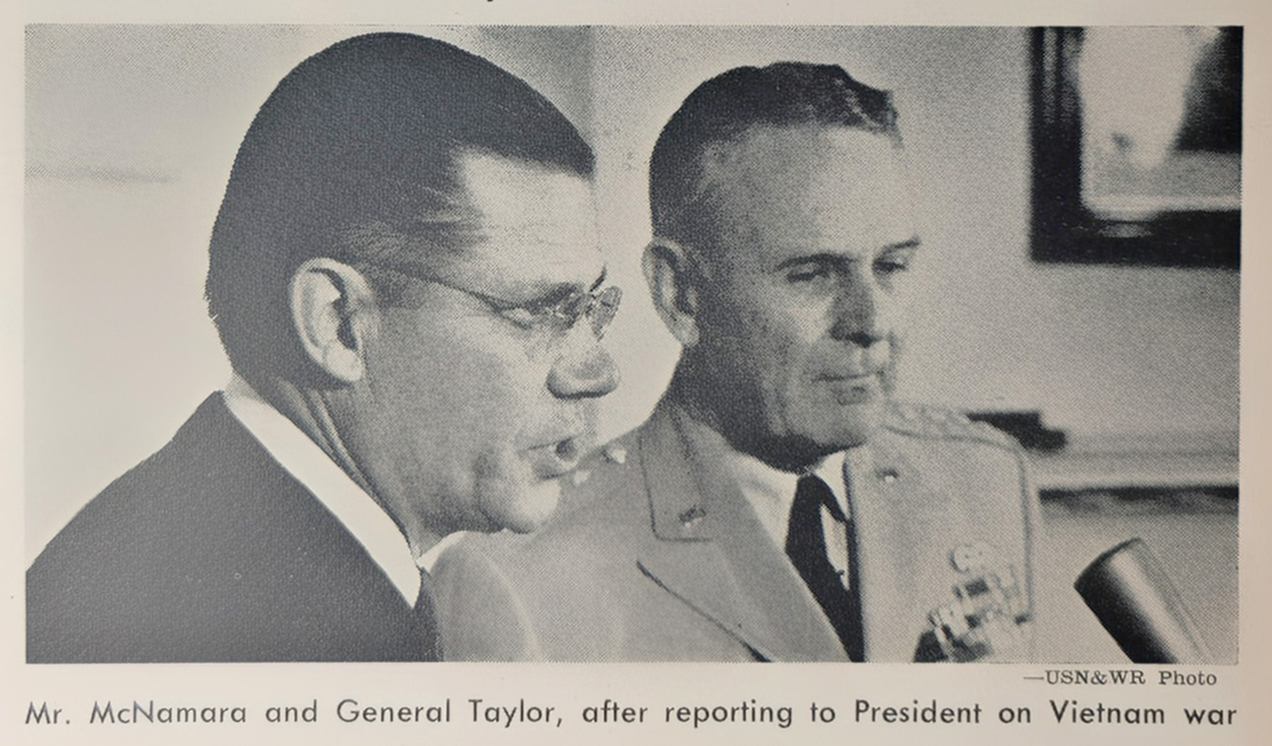
McNamara-Taylor Report: “A Long, Hard War” in Vietnam
From their latest inspection trip to South Vietnam, Defense Secretary Robert McNamara and the Joint Chiefs’ Chairman, Gen. Maxwell D. Taylor, brought home a mixed report.
- Communist guerrillas have stepped up their attacks.
- The Government of Maj. Gen. Nguyen Khanh is making progress, using strategy that will bring victory.
- But it will be “a long, hard war.”
Just how long, Secretary McNamara would not prophesy. He said that more U.S. personnel, for training purposes, may be needed. However, he said an extension of the fighting to North Vietnam, which backs and supplies the Viet Cong guerrillas, “is not indicated now.”
General Taylor had praise for the younger Vietnamese officers but said they need extensive training.
During their 36-hour stay in Saigon, extreme precautions were taken because of terrorist threats. Mr. McNamara rode through Saigon in a car heavily padded with shrapnel proof material.
The two trouble shooters reported to President Johnson upon their return. Also, Mr. McNamara scheduled meetings with congressional committees.
On Capital Hill, he could expect to face intensive questioning. The conduct of the war in South Vietnam has been coming under increasing fire. There are complaints that American pilots have been given dangerously old planes to fly. There are demands that the war be carried to North Vietnam. And there was a demand from Senator Wayne Morse (Dem.) of Oregon, that U.S. abandon its military effort in South Vietnam.
What The Pentagon Tells Congress About Vietnam
As Congress takes a hard look at the war in Vietnam: Pentagon, defending planes now in use, is promising more modern ones soon. Vietnamese training is to be stepped up. Still, at the front in Vietnam, questions remain unanswered.
The Defense Department has now put before Congress its answer to charges from the battlefield that Americans have been forced to fly antiquated planes in the anti-communist war in South Vietnam.
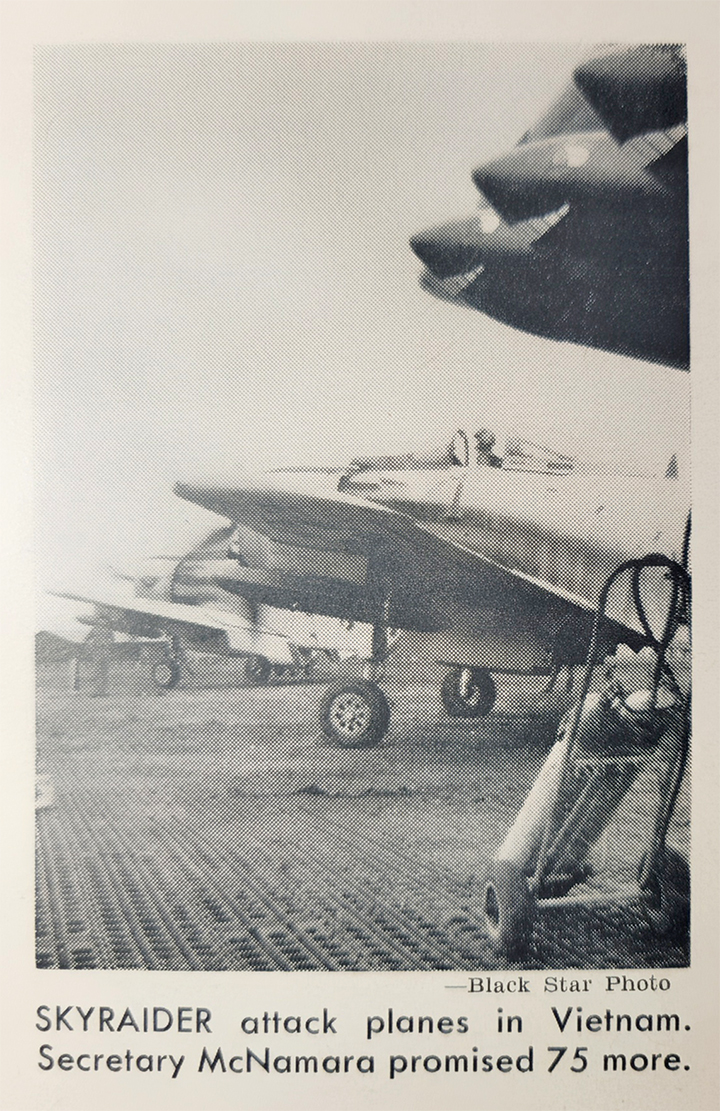
The answer given: 75 Skyraider attack planes – completely overhauled – are to be moved into the war zone starting in June.
The Skyraider is a single-engine propeller plane that was used extensively in the Korean War. It will replace T-28 and B-26 propeller planes that pilots have reported to be so worn out that some have lost wings in flight.
Secretary of Defense Robert McNamara announced the aircraft replacement plan in Saigon on May 13, while on his fifth trip to Vietnam as the Administration’s top expert on the war there.
Performance defended. On the same day, in Washington, the performance of the T-28s and B-26s was defended by Air Force Secretary Eugene M. Zuckert in a letter to Representative Carl Vinson (Dem.) of Georgia, who is chairman of the house Armed Services Committee.
Mr. Vinson’s Committee, which has been looking into complaints about plans and other weaponry provided by the Pentagon for the war in Vietnam, scheduled an appearance by Secretary McNamara on May 20.
The T-28 is a single-engine training plane. The B-26 is a two-engine bomber of World War II vintage. Both were “beefed up” for use in Vietnam.
The T-28 and B-26 aircraft were chosen for uses in Vietnam, wrote Mr. Zuckert, “because of the particular suitability of these aircraft to the Vietnamese environment and the mission at hand there.” He said that the planes had “performed outstandingly.”
Mr. Zuckert said that 41 B-26s and 31 T-28s had been sent to Vietnam and that all of them “were modified for combat operations, inspected, given major overhaul, and brought to ‘like new’ condition.”
The Zuckert letter in effect rejected pilots’ reports that a rash of crashes had resulted from wings snapping off the B-26s and T-28s. It stated, however, that “structural failure may have been a contributing factor” in the loss of three of the planes.
“There is no positive evidence of T-28 structural failure within design limits,” Mr. Zuckert wrote. “In one case, structural failure in a wing may have occurred as a result of extremely high stresses in excess of design limits during pull-up by a T-28 in an attack on a heavily defended target.”
As to the B-26s, Mr. Zuckert wrote that it was not until a wing snapped off a B-26 at Hurlburt Field in Florida in February of this year that there was “positive evidence” of structural failure in that type of aircraft.
Following the Florida crash, said Mr. Zuckert, the B-26s were grounded “to permit additional modification.”
Earlier this year, a McNamara aide had said that improved B-26s would be sent to Vietnam starting in March. Later this was rescheduled for June because of “slippage” in the program. No mention of the improved B-26s, however, was made by either Mr. Zuckert or Mr. McNamara in their May 13 statements.
Step-up in pilot training. Mr. McNamara indicated that training of Vietnamese pilots to fly the Skyraider planes was being stepped up. He said the number of pilots will be doubled – reportedly to a total of 800.
In Vietnam, U.S. military officials said that one version of the Skyraider – the Navy’s single-seat A-1H – was already in use by Vietnamese pilots and that 25 of the 75 planes promised by Mr. McNamara would be of that type.
The remaining 50 Skyraiders were reported to be the A-1E version, a two-seater that will be flown by American pilots with Vietnamese observers.
In Washington, Pentagon spokesmen were quoted as saying that the U-2 reconnaissance jet and the F-101 jet fighter had been used for reconnaissance missions in the Vietnamese war for the past two months. And some of the Air Force’s high officers are said to be urging the use of jet fighters for combat missions.
Use of jets, however, would violate the Geneva Accords, the agreement that is supposed to govern the war in Vietnam. The Accords forbid use of high-performance weapons and have been cited by the Pentagon as a prime reason for the reliance on B-26s and T-28s.
“Why not the best?” From the battlefront, a member of the staff of “U.S. News & World Report” wrote this: “The facts are that the Communists broke the Geneva Accords by building up their forces in South Vietnam. Then we violated them to give the Vietnamese – and our men – the weapons needed to fight Communist guerrillas. We have introduced rocket-shooting helicopters, troop-lifting helicopters, armored personnel carriers, armored river boats and other modern weapons. What Americans out here want to know is: Since neither we nor the Reds observe the Geneva Accords, why doesn’t the Pentagon provide the very best weapons and equipment?”
Answers to that and other questions about the war in South Vietnam now are being sought in Congress.
Full-Court Press to Repudiate Capt. Shank’s Letters as Published by LIFE Magazine
Representative Robert Sikes (FL), who later was reprimanded for using his office for personal gain (with military investments) entered into the record the full letter of Secretary Zuckert, refuting the information given by Captain Shank and other flyers. The text of the letter follows.
Department of the Air Force, Washington, May 13, 1964
Hon. Carl Vinson, Chairman, Committee on Armed Services, House of Representatives
Dear Mr. Chairman: Before he departed on his trip overseas. Secretary McNamara asked me to reply to your letter of May 5, to him, inquiring about equipment provided by the United States and used in the Republic of Vietnam. As indicated below, this equipment was selected with precise mission suitability in view, was carefully tested and improved prior to use in Vietnam, and has performed outstandingly ever since its assignment there.
Our country is committed to advising and training the Vietnamese for their fight against the Communist insurgency which seeks to take away their freedom. It is the Vietnamese who will determine the outcome, and the equipment we provide must fit their needs and skills. The war is being fought in a less developed land, where equipment must be suited to both the job and the facilities, and able to meet the unique problems encountered.
Any discussion of U.S. Air Force activities in Vietnam must begin with the activation of the Special Air Warfare Force which was started in 1961 to assist in countering Communist-inspired insurgencies. From this force was developed the 1st Air Commando Squadron which was deployed in Vietnam in November of the same year. Its mission then, as now, was to advise and train the Republic of Vietnam Air Force (VNAP). As a key element of this training function, American pilots in the squadron began at that time to fly the operational training missions which they continue to fly so effectively and bravely today.
When the Special Air Warfare Forces were organized, they were equipped with B-26 and T-28 aircraft because of the particular suitability of these aircraft to the Vietnamese environment and the mission at hand there. Both aircraft were relatively simple to maintain and were particularly well adapted to operating from undeveloped airfields.
Prior to being dispatched to Vietnam, the B-26 and T-28 aircraft were modified for combat operations, inspected, given major overhaul, and brought to “like new” condition.
At a cost in excess of $3 million, 31 T-28 aircraft were modified and overhauled as follows:
- Wing modification to assure structural integrity at 10,400 pounds maximum gross weight (increased from 7,000 pounds).
- Installation of self-sealing fuel tanks.
- Installation of six-sealing fuel tanks.
- Installation of six “hard points” on wing on which to carry ordnance (bomb racks for 500-, 250-,150-pound bombs, automatic gun chargers, gun pods for M-3 50-caliber machineguns, 2.75 rockets).
- Complete airframe overhaul, including corrosion control and repaint.
- Beefed up engine firewall to accommodate the H-1820-88 1,425-horsepower engine.
- Beefed up the nosewheel steering and the wheel assembly for rough terrain operation.
- Armor plate installed on seats and floor.
To validate the load-carrying capabilities of this aircraft for both the 3,000 and 4,000 pounds external load capacity wing, two wing static tests were accomplished at an additional cost of more than $1 million.
At a cost in excess of $5 million, 41 B-26 aircraft were modified and overhauled at Ogden air material area as follows:
- Complete airframe and engine overhaul.
- Replacement of all tubing and wiring.
- Replacement of fuel cells.
- Corrosion treatment.
- Removal and inspection of all wing attachment fittings. Inspection of the wing structure, ribs, stringers, and wing bulkheads for cracks, missing rivets, corrosion and repair as required.
- Propellers replaced.
- All armament was checked for condition, security, and serviceability.
- Flight tests were conducted by qualified personnel. Discrepancies noted were corrected.
Like the equipment, the men being assigned to Vietnam have received special attention. All pilots of the 1st Air Commando Squadron undergo an intensive 60-day training course at Hurlburt Air Force Base. The proficiency of all pilots is carefully evaluated. Each must meet and pass inspection by a special standardization board established to insure crew proficiency. When these men are sent to Vietnam, they are ready for the assignment.
The tour for pilots in South Vietnam has been increased within the past year from 5 to 12 months. During a 12-month tour a pilot will normally fly approximately 100-150 operational training sorties. Neither the length of the tour nor the number of sorties flown is considered excessive. To date the Air Force has experienced 19 fatalities in T-28 and B-26 aircraft resulting from actions by hostile forces and 6 fatalities in these aircraft from other causes. Three men are missing in action.
In Vietnam, our pilots have performed with marked skill and valor. Other Air Force men have contributed importantly to training the Vietnamese in radar, weather operations, photo processing, and air transport. For the mission assigned, the T-28 and B-26 aircraft have also performed outstandingly. Maintenance rates for these aircraft, under hard circumstances, have been comparable with the Air Force average.
The ordnance employed – primarily rockets, conventional bombs, and napalm – has given satisfactory performance, with expected reliability standards achieved.
In 1962 the 1st Air Commando Squadron supported the VNAF with an average of 375 operational training sorties per month. In 1963 this support was increased to an average of 750 sorties per month. During the 4,500 sorties flown in 1962, 4 strike aircraft were lost to hostile action; during the 9,000 sorties flown in 1963, 9 strike aircraft were lost. Due to the increased effectiveness of Vietcong antiaircraft fire, 6 aircraft have been lost to hostile action so far this year.
In three of these cases, one in 1963 and two in 1964, the precise cause of loss is not known, but it is possible that structural failure may have been a contributing factor. However, there is no positive evidence of T-28 structural failure within design limits. In one case, structural failure in a wing may have occurred as a result of extremely high stresses in excess of design limits during pullup by a T-28 in an attack on a heavily defended target. In the other two cases, it was impossible to determine the specific cause because efforts to obtain the entire wreckage were not successful, but ground fire was experienced in both cases.
In addition, five aircraft, two B-26s and three T-28s were lost to causes other than hostile action. Of the two B-26s, one indicated structural failure. The aircraft had been repaired for control difficulties. During the subsequent test flight, the tail section failed. Investigation indicated the aircraft was overstressed in flight. The other B-26 went down on a photo mission in deep water and the cause is unknown. The T-28 noncombat incidents are not attributable to structural failure.
The B-26 has been used for reconnaissance and bombardment and has clearly demonstrated its effectiveness. However, as a result of the accident investigation of B-26 crash in February of this year at Hurlburt Air Force Base, Fla., which gave the first positive evidence of an accident resulting from structural failure. Immediate action was taken restricting the flying of the aircraft. All of the B-26s have now been withdrawn from operational flying throughout the world, to permit additional modification.
The USAF initiated action in September 1963 to modify A-1E aircraft to replace the T-28 aircraft. The modifications involved extensive engineering and complete overhaul, which have been carried out as quickly as possible. The replacement of T-28s was programmed to occur as the VNAF transitioned from T-28 to A-1H aircraft, the single-seater counterpart of the A-1E. The first A-1E aircraft are enroute now and will arrive in Vietnam early in June. The overall effectiveness of our Air Force’s support of VNAF operations has become very clear:
First, by virtue of air operations the Vietcong do not enjoy their former freedom of movement.
Second, in the absence of roads, the air capability has provided a timely and vital communications asset.
Third, air cover of convoys and trains has reduced Vietcong ambushes.
Fourth, airpower now provides Vietnamese villages with a measure of security from Vietcong surprise attacks that could previously be resisted only passively or ineffectively.
Fifth, attacks on villages, day or night, frequently cease with the arrival of aircraft overhead.
Sixth, one characteristic of guerrilla operations is that initiative lies largely in the hands of the insurgents. Flexibility and speed of response are essential to counter this. Particularly in the Vietnamese environment, airpower offers a critical equalizing measure.
If you have any further questions, I would be pleased to provide any additional information you may desire.
Sincerely, Eugene M. Zuckert.
His Good Friend Lukasik
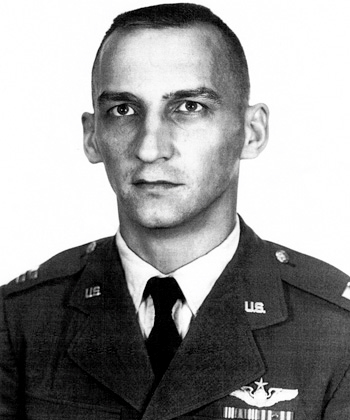 Captain Bernard F. “Luke” Lukasik, U.S. Air Force 1954-1964; Cold War 1954-1964; Vietnam War 1963-1964 (KIA)
[References can be found in letters dated 21 February 1964 and 13 March 1964.]
Bernard Lukasik was born on August 20, 1934, in Blakely, Pennsylvania. After completing 2 years of college at the University of Scranton, Pennsylvania, he enlisted in the Aviation Cadet Program of the U.S. Air Force. His first assignment was with the 87th Fighter Interceptor Squadron at Lockbourne AFB, Ohio, from June 1957 to August 1958, followed by an Air Force Institute of Technology assignment to complete his bachelor’s degree in Aeronautical Engineering from August 1958 to September 1960. Capt. Lukasik served as a Research and Development Officer and Project Officer in the Atlas Ballistic Missile Division with the 6565th 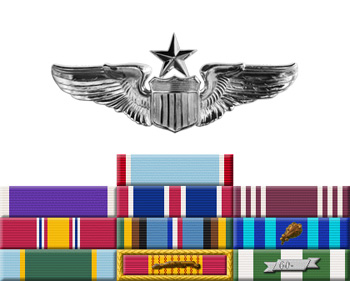 Test Wing at Vandenberg AFB, California, from September 1960 to March 1963, followed by service with the 319th Troop Carrier Squadron (Commando) at Eglin AFB, Florida, from April to June 1963.
His next assignment was with the 1st Air Commando Squadron at Bien Hoa AB, South Vietnam, from July 1963 until he was killed in action on February 19, 1964. Bernard Lukasik was buried at Arlington National Cemetery.
His Air Force Cross Citation reads:
The President of the United States of America, authorized by Title 10, Section 8742, United States Code, takes pride in presenting the Air Force Cross (Posthumously) to Captain Bernard Francis Lukasik (AFSN: 0-48211), United States Air Force, for extraordinary heroism in military operations against an opposing armed force while serving with the 1st Air Commando Squadron, 34th Tactical Group, Bien Hoa Air Base, Vietnam, as a Advisor-Pilot of a T-28D aircraft on 18 February 1964.
 On that date, Captain Lukasik provided airpower against advancing Viet Cong guerrillas who were intent on capturing a Vietnamese airman who had bailed out of his burning aircraft. Despite the danger of hostile gun fire, Captain Lukasik continuously flew his aircraft at extremely low level and remained in the area until he was satisfied that the safety of the downed airman was assured. Through his extraordinary heroism, superb airmanship, and aggressiveness in the face of hostile forces, Captain Lukasik reflected the highest credit upon himself and the United States Air Force.
North American T-28
(Full disclosure, this was an AI Google search.)
The North American T-28 Trojan was grounded from combat service in Vietnam in 1964 after a series of catastrophic wing failures and crashes in 1964, which revealed that the aircraft, originally designed as a trainer, was being pushed beyond its structural limits in a combat role.
 The two T-28D “Nomad” models suffered these wing failures on different strafing runs, leading to the deaths of four pilots and observers and necessitating the withdrawal of the remaining aircraft from combat.
On April 9, 1964, a T-28D lost both wings during a low-level strafing run near Mo Cay in Kien Hoa Province, crashing and killing Captain Robert N. Brumet and his South Vietnamese observer.
Two weeks prior, another T-28D, also performing a dangerous mission in support of ground troops, suffered the same fate near Soc Trang, claiming the lives of Captain Edwin G. Shank and a VNAF observer.
The series of back-to-back tragedies highlighted that the aging T-28s were being used far beyond their intended limits in a combat role. The clear evidence of structural failure led to the grounding and withdrawal of the remaining T-28Ds from combat service in Vietnam.
Although grounded in Vietnam, the T-28D continued to operate with the 60th Special Operations Squadron on missions over Laos and Cambodia.
Operation Farm Gate
Wikipedia
[This is a brief history of the unit in which Jerry Shank found himself in 1963.]
In the early 1960s, the U.S. armed forces were developing units specifically designed to counter guerrilla warfare. The first USAF unit of this nature was the 4400th Combat Crew Training Squadron, code named “Jungle Jim,” that were later renamed the 1st Air Commando Wing. The squadron specialized in tactics used to support friendly ground forces in small, ‘brushfire’ conflicts.
In October 1961, John F. Kennedy authorized the deployment of a detachment of Air Commandos to South Vietnam. The 4400th CCTS headed from their home at Eglin Air Force Base, Florida, to Bien Hoa Air Base in South Vietnam.
Their mission was to train the Republic of Vietnam Air Force (RVNAF) using older aircraft in support of the type of conflict they were facing. Crews were trained to fly the T-28 Trojan, C-47 Skytrain and B-26 Invader.
The code name for the 4400th CCTS and its mission was Farm Gate. The initial combat training sorties commenced on 19 December 1961.
In July 1963 the 19th Tactical Air Support Squadron was activated at the base, becoming operational on 15 September. Initially equipped with 4 O-1 Bird Dogs and 20 crew, it was tasked with training RVNAF pilots and observers in forward air control and visual reconnaissance. By the end of 1963 it had 16 0-1s at Bien Hoa and had flown 3,862 sorties.
By June 1963, the USAF presence in South Vietnam had grown to almost 5,000 airmen. As the buildup continued, USAF directed the activation of a more permanent organizational structure to properly administer the forces being deployed. On 8 July 1963 the Farm Gate squadrons at Bien Hoa were redesignated the 1st Air Commando Squadron (Composite) comprising two strike sections, one of 10 B-26s and 2 RB-26s and the other of 13 T-28s.
In early 1964 the USAF and RVNAF were only able to provide half of all requested air support. On 11 February a B-26 operating from Eglin Air Force Base lost a wing inflight and this led to the grounding of all B-26s in South Vietnam.
With the loss of the B-26s, CINCPAC and Military Assistance Command, Vietnam (MACV) proposed that they be replaced by B-57B Canberra tactical bombers operating under Farm Gate procedures with RVNAF markings and joint USAF/RVNAF crews.
At the end of March, 48 B-57s flow from Yokota Air Base in Japan to Clark Air Base in the Philippines. On 8 April the remaining B-26s at Bien Hoa flew to Clark Air Base for scrapping.
On 24 March a T-28 lost a wing during a bombing run near Soc Trang Airfield killing both crewman [including Captain Shank] and on 9 April another T-29 lost a wing during a strafing run and crashed.
Two officials from North American aviation, the manufacturers of the R-28, visited Bien Hoa and reviewed these losses and advised that the T-28 wasn’t designed for the stresses it was being subjected to as a close air support aircraft. As a result, 5 older T-28s were retired and 9 newer aircraft were borrowed by the RVNAF and operational restrictions imposed.
Despite this augmentation, accidents and aircraft transfers meant that by late May the 1st Air Commando Squadron had only 8 T-28s left but these were retired on 30 May and replaced by more capable A-1E Skyraiders.
Congressional Record May 11, 1964
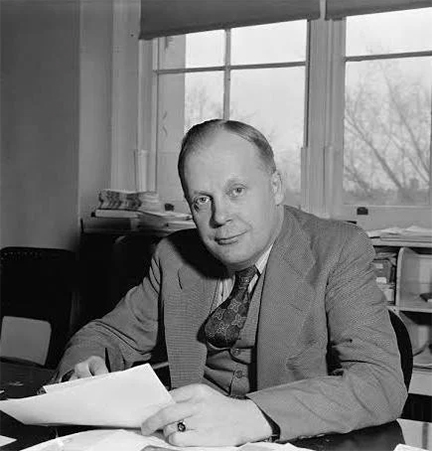 Karl Mundt: A Featured Biography
https://www.senate.gov/senators/FeaturedBios/Featured_Bio_MundtKarl.htm
From 1948 until his retirement in 1973, South Dakota senator Karl Mundt was known as a fierce opponent of communism. As a member—and eventually ranking member—of the Committee on Government Operations and its Permanent Subcommittee on Investigations, Mundt worked to expose communists in the government. In 1954 he chaired the Subcommittee on Investigations for the Army-McCarthy hearings, remaining loyal to Senator Joseph McCarthy. Mundt gained prominence with two major investigations into bribery allegations against officials at the Agriculture Department and the Pentagon. Mundt voted for cloture to end debate on the Civil Rights Act of 1964 after striking a deal with Republican Leader Everett Dirksen. [This means that Mundt voted to push the bill forward to a vote; he and Senator Dirksen supported the Civil Rights Act.] Mundt also became one of the leading conservationists in the Senate, which earned him an award from The World Wildlife Fund in 1969. After he suffered a debilitating stroke in 1969, Senate leaders took the unprecedented step of removing Mundt from his committee assignments.
On May 11, Senator Mundt entered this into the Congressional Record.
Mr. President, during the past weekend, which happily included a nonsession Saturday for the first time in many weeks, I, like many other Senators, had an opportunity to catch up on some back reading and to do a little independent study and research of my own.
Speaking for myself, I would just as happily have been on the Senate floor, because much of what I read, I did not like.
I had received a number of letters, as I suppose many other Senators have, from constituents concerning a disturbing article published in LIFE Magazine. The article is entitled, “We Fight and Die, But No One Cares,” and consists of a number of letters written by Capt. Edwin G. Shank, Jr. to his wife, describing the fighting conditions in Vietnam.
Several of my constituents have asked me whether I had read the article and could say whether it was true or false.
I had never read it, nor could I evaluate it. However, I read it over the weekend and was both shocked and distressed by what I read.
The contents of the letters are directly opposite to the reports that members of the Committee on Foreign Relations, of which I am a member, have been receiving in off-the-record briefings from both Secretary Rusk and Secretary McNamara. Obviously, I have no way of knowing whether there was truth in the letters or not. But I assume that a man fighting on the ground in Vietnam and writing to his wife, an expectant mother, would not be writing in terms of falsification. Other evidence also indicates the veracity of Captain Shank’s heart-rending reports. But if in fact Americans are actually fighting this war they surely are entitled to our most up-to-date equipment in fully adequate supply. Our Secretary of Defense has said we are now far stronger than Russia militarily. If that be true, let us start proving it in Vietnam.
Regardless, the American public is entitled to an explanation from the highest authority as to whether these letters are wrong, and how they are misleading, if in fact they are, because we have been told in the Committee on Foreign Relations that American boys are not fighting in Vietnam; that they are there to engage in reconnaissance flying, and in the training of Vietnamese personnel. But the general public is led to believe by the letters published in LIFE, a great magazine having a wide circulation, that the fighting in the air is being done almost exclusively by American pilots with inadequate equipment and obsolete planes. Obviously, that is either true or false. I do not know which. But the public should be told whether this information is true or false. Surely if Americans are actually fighting the air war in Vietnam with inadequate, inappropriate, and obsolete planes in far from sufficient numbers at that, this sort of maladministration of that conflict should be exposed and eliminated now.
I understand that Secretary McNamara is now enroute to Vietnam. I hope he will make a careful investigation of conditions described in the Shank letters and will place all the facts on the record.
Mr. President, I ask unanimous consent that the portions the letters of Captain Shank, published in LIFE Magazine, may be printed at this point in the Record.
There being no objection, the letters were ordered to be printed in the Record, as follows:
[At this point of the record, the letters, including the end paragraph from LIFE Magazine, were entered as they were printed in LIFE Magazine. The entry starts midway in the first column on page 2 and continues to the second column on page 4.
[Note: Secretary Rusk and Secretary McNamara were aware of – and were involved in the planning of – Operation Farm Gate.]
Go to Congressional Record here: Shank Edwin Congressional Record
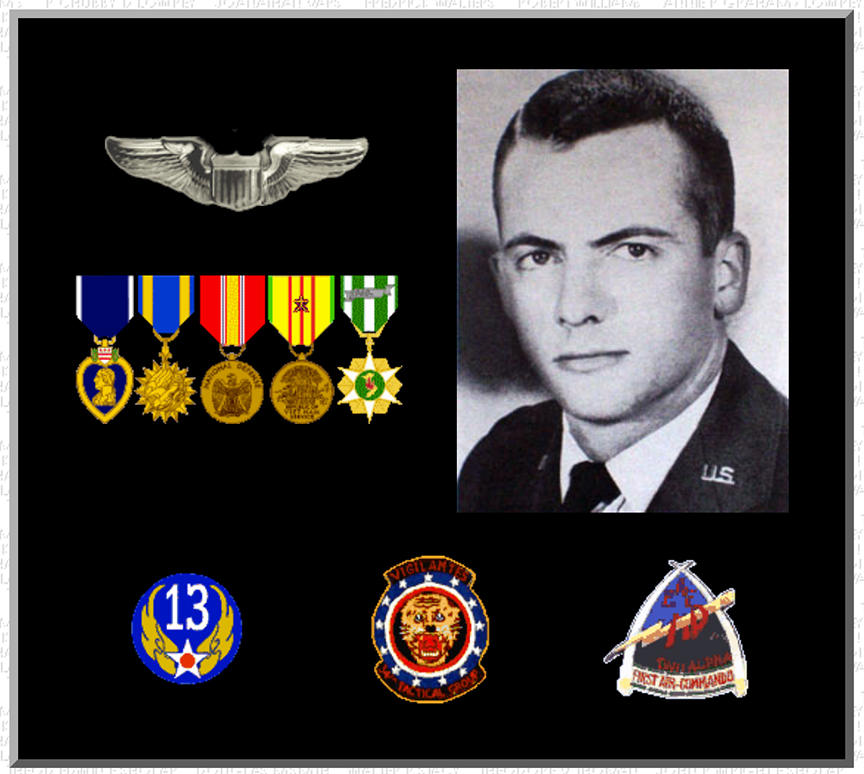
CAPT Edwin G. Shank Jr. was a United States Air Force pilot assigned to 1st Air Commando Squadron, Tactical Air Command (TAC), 13th Air Force. On March 24, 1964, CAPT Shank was flying a USAF T-28D (#53-8362) with a VNAF observer when his T-28 lost a wing during a dive bombing run near Soc Trang. Both Shank and the observer were killed.