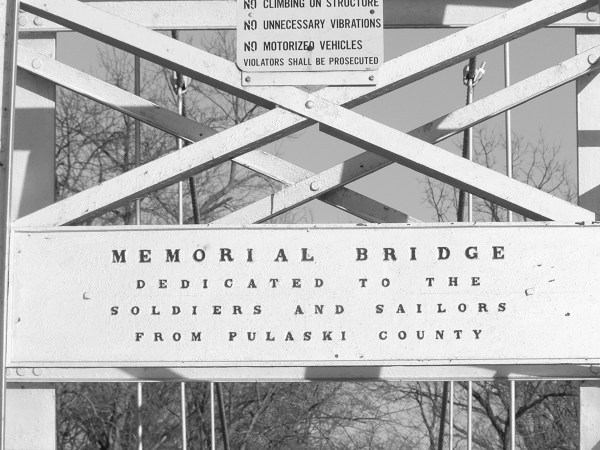
Memorial, a suspension footbridge, spans the Tippecanoe River, linking two parks from the Winamac Town Park system: the Artesian Well Park and the Winamac Town Park. Memorial is the only bridge from the Bridgemeister suspension bridge inventory to cross the Tippecanoe River.

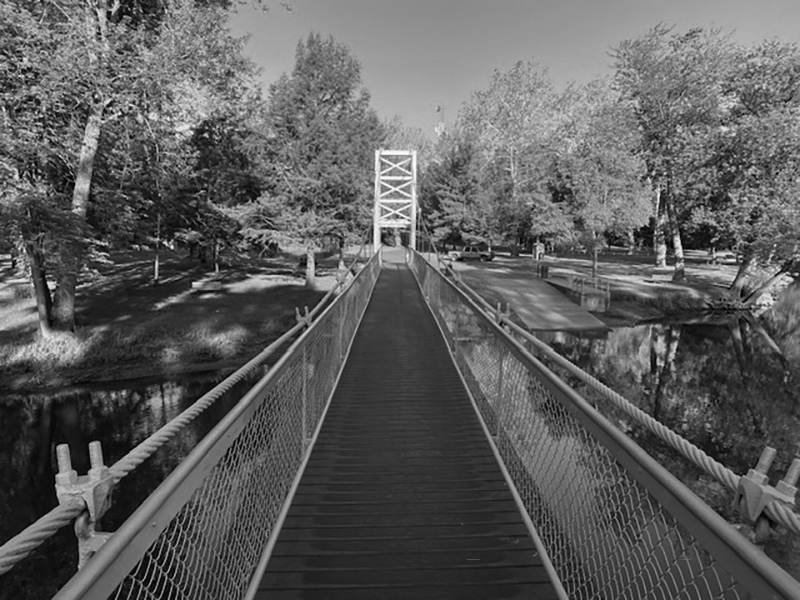
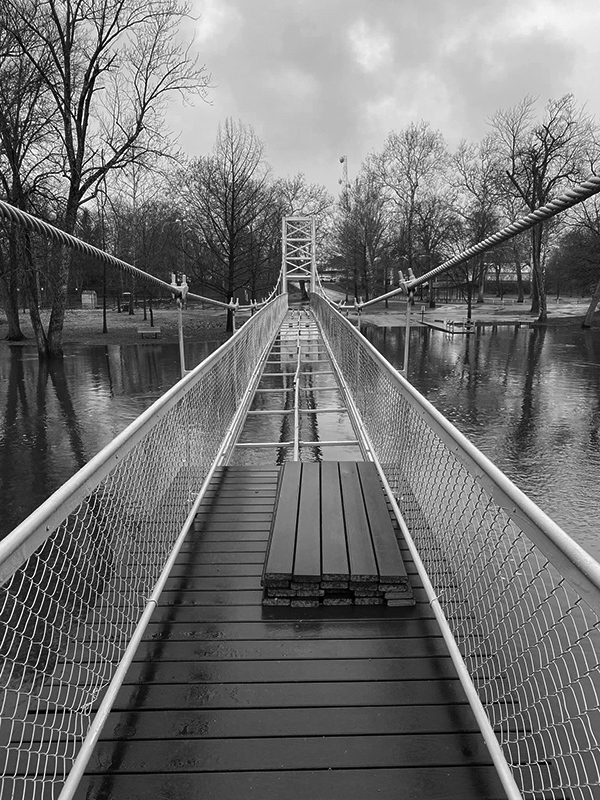
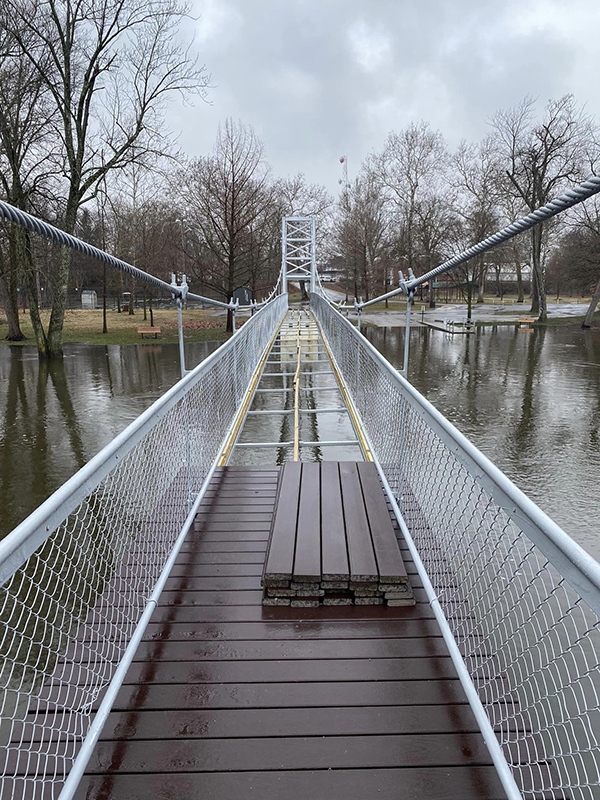
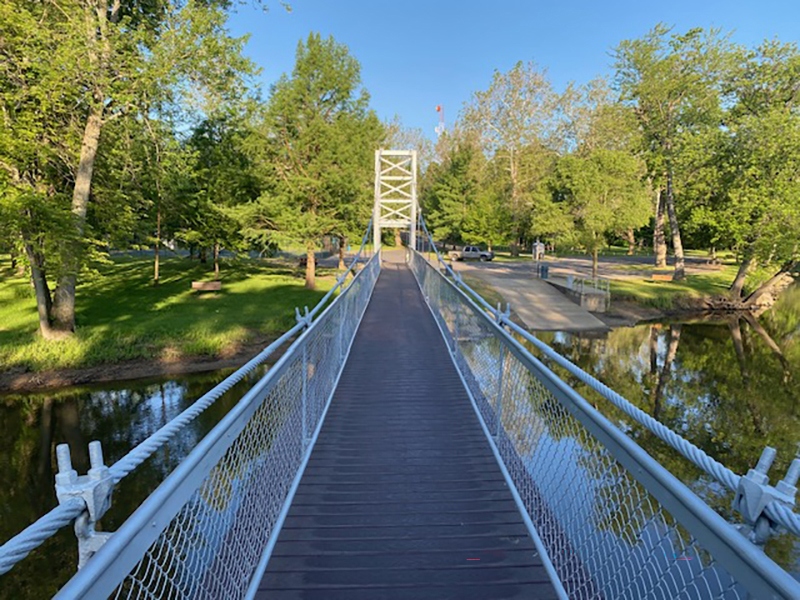
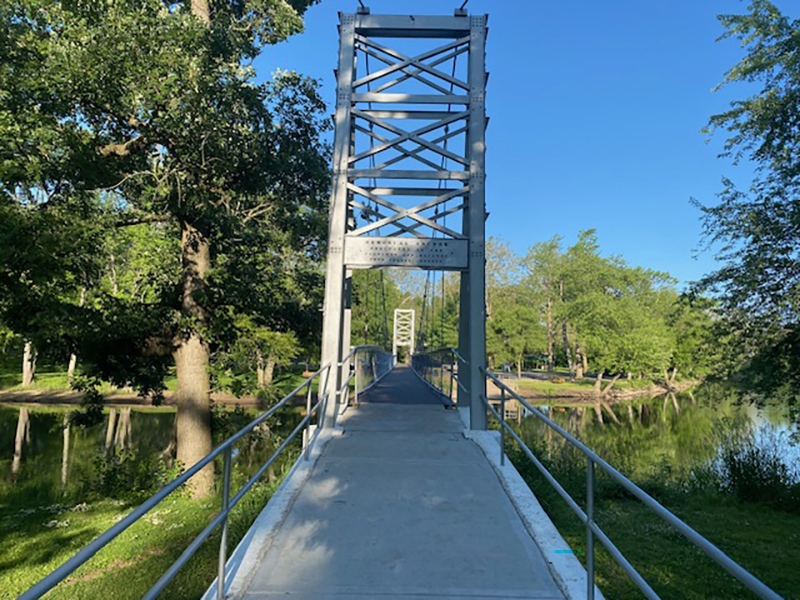
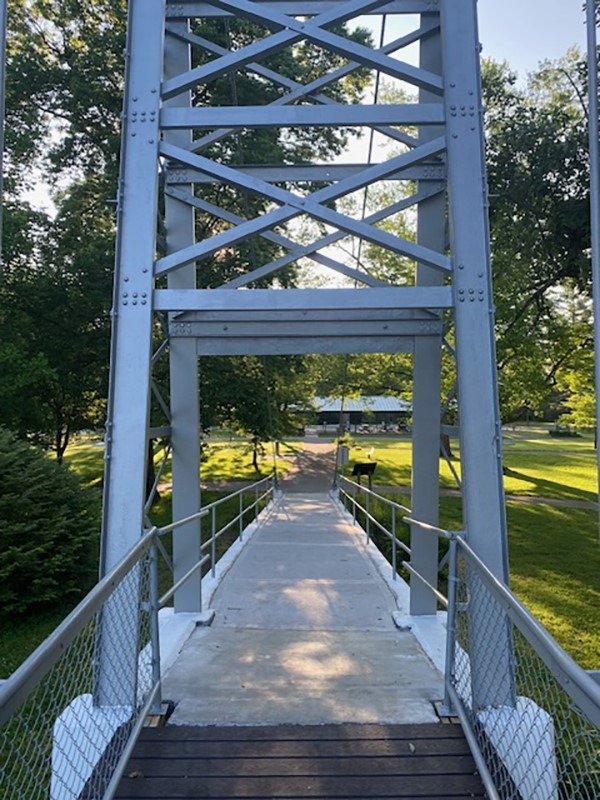
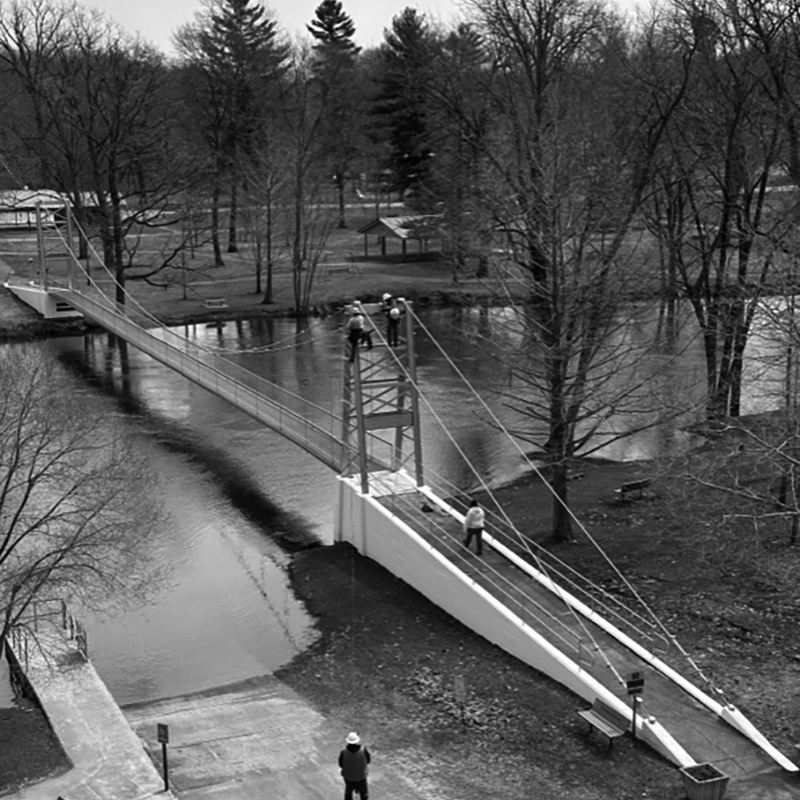
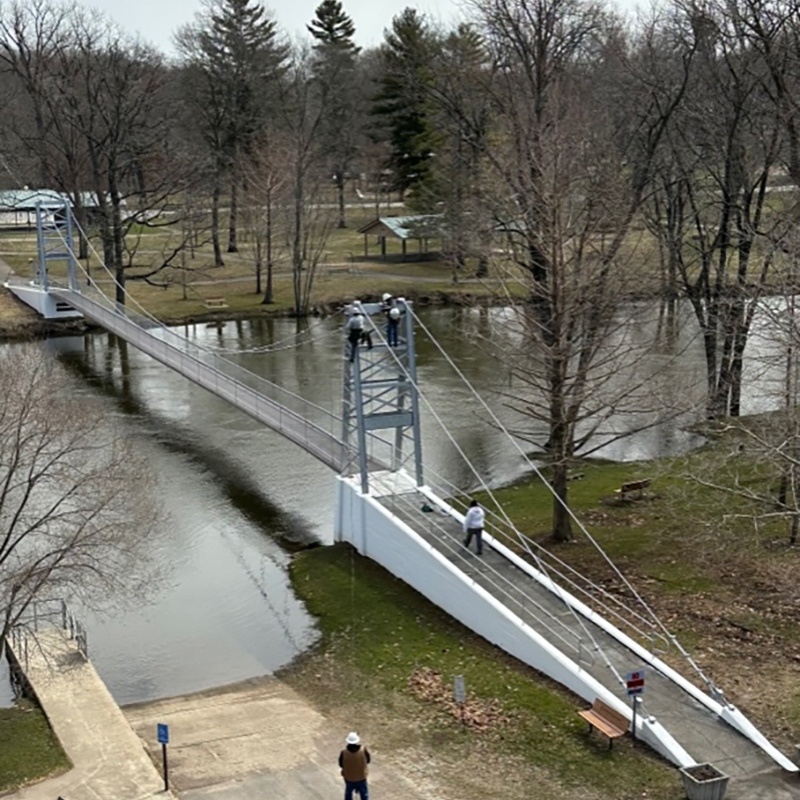
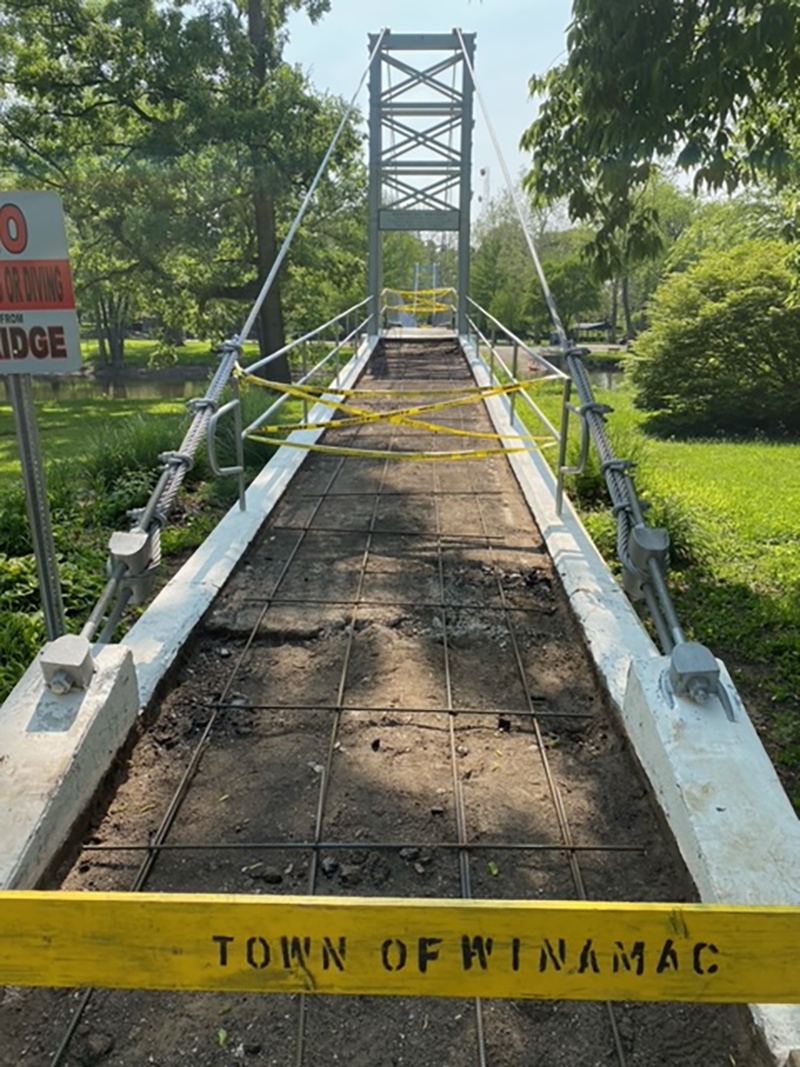
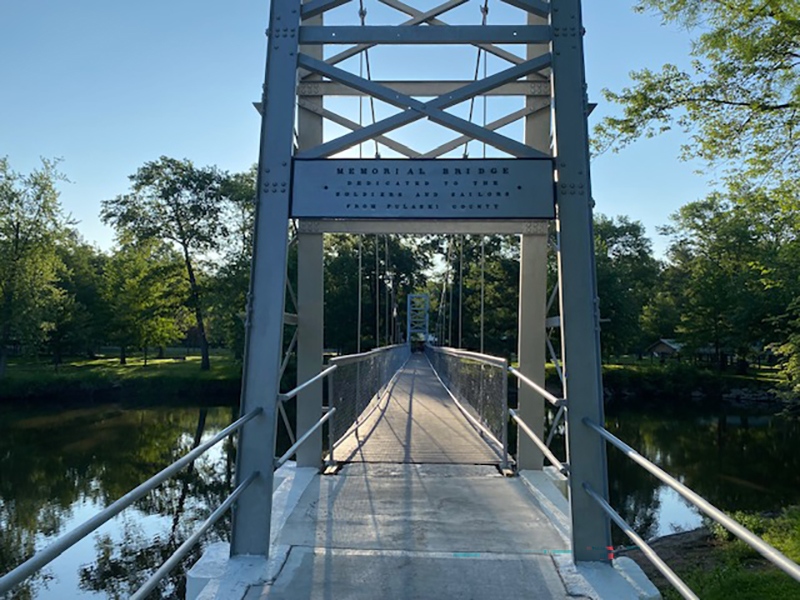
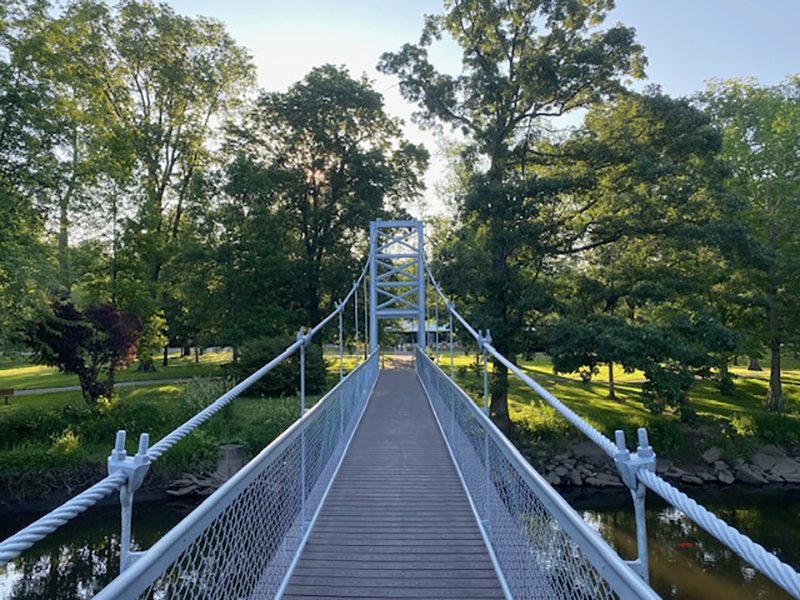
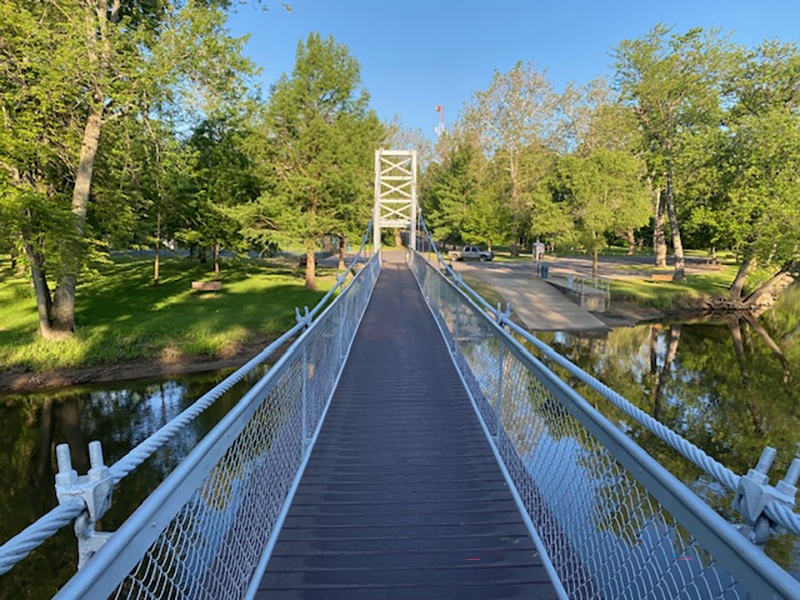
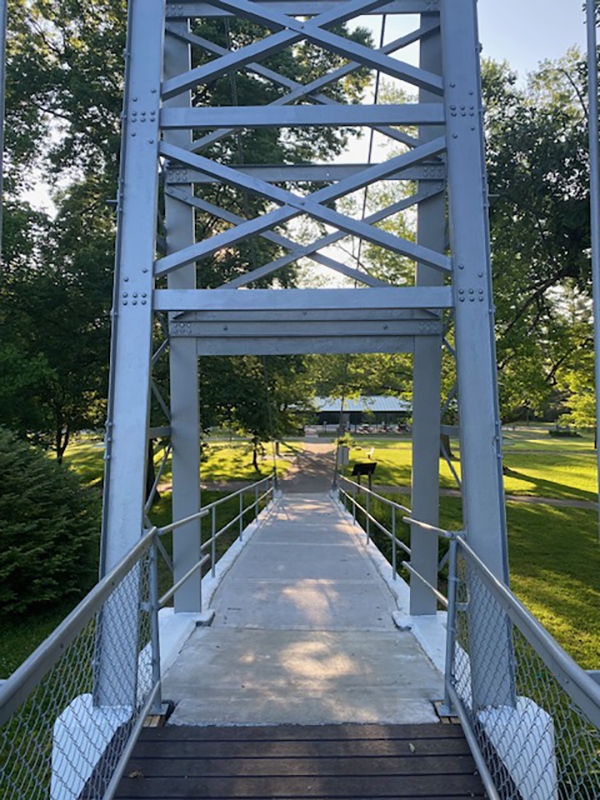
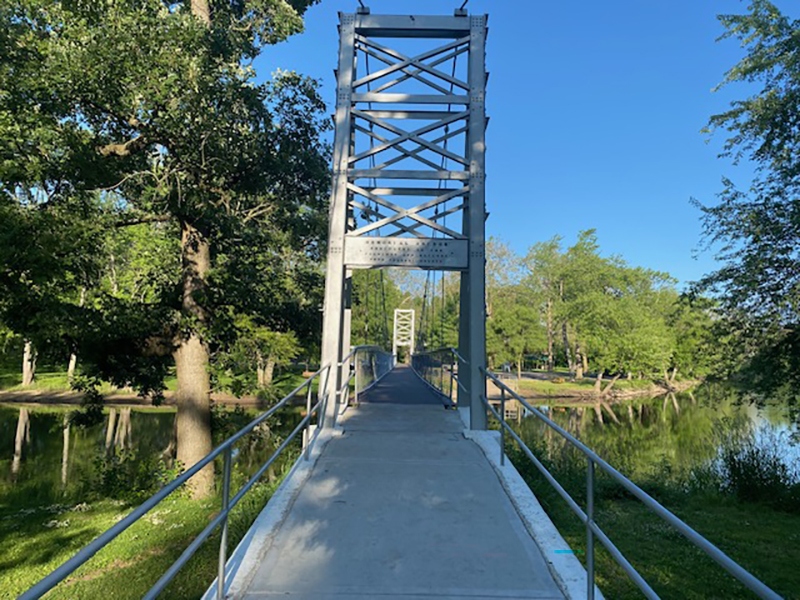
Memorial is a single-span suspension-type bridge, 200 feet long and five feet in width. On each side of the river are steel towers, approximately thirty feet high and embedded in concrete bases. Two steel suspension cables, each one and one half inches in diameter, stretch from tower to tower. The ends are attached to concrete anchors embedded in the earth about fifty feet behind each tower. The deck is suspended from vertical steel suspender cables, each one inch in diameter. The deck, originally made of creosote material, is suspended at a height presumed to be well above danger from high water. The deck is attached to the steel cables above by steel rods. “Stay” cables on each side of the bridge prevent erratic swaying. Long inclines to afford easy access on each side are held in place by concrete walls reaching back as far as the cable anchors.

This bridge, from historical references to the builder going to Chicago after receiving the bid and receiving parts via railroad train, and from a review of metal parts of the bridge, appears to have been a kit bridge from the Chicago South Works, a now-closed subsidiary of US Steel.
Application for National Register (written 2022, not turned in)
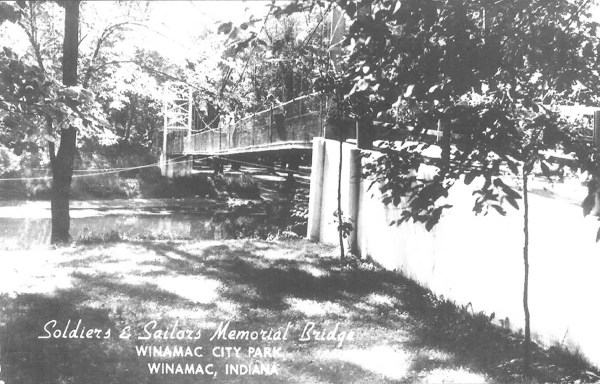
Memorial spans the Tippecanoe River connecting the main area of the Town Park (on the peninsula) with the smaller section of the park. Vehicular bridges have spanned the river south and north of that area, replaced on occasion when they lost their battle with the river, but solutions for pedestrians took a back seat. Temporary pedestrian bridges were placed in the vicinity of Memorial’s location until 1886. An iron footbridge was erected that year, but it did not outlast the river. Another “permanent” footbridge was placed in 1892. That bridge had to be moved immediately, as the sand on the river bottom caused the walk to settle unevenly. When that bridge was eventually destroyed, the Town resorted to their original solution, temp orary wooden bridges placed “in season.”
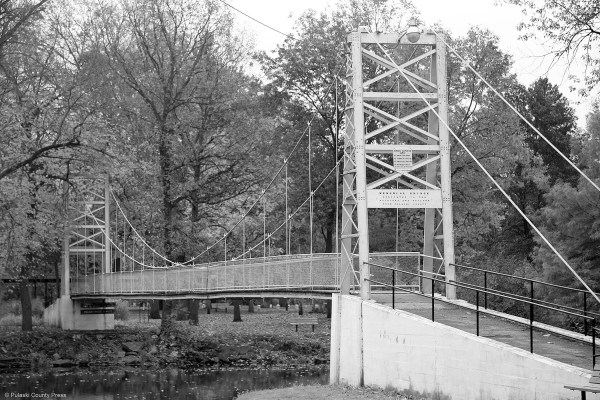
The Tippecanoe River floods every year. Some years, flooding is severe, particularly at the area of the horseshoe bend surrounding the park. R. E. Nutt, the engineer and eventual contractor for Memorial, developed specifications to place the bridge well above danger from high water. He designed a single span suspension bridge, 200 feet long and five feet wide, with steel towers embedded in concrete. Steel suspension cables stretch from tower to tower, and suspender cables hold the deck in place.
Research into Mr. Nutt’s background unearthed campaign materials as he ran for and secured election to the office of Pulaski County Surveyor. In those materials, he touted his experience as a bridge builder. Research did not ascertain for whom he worked to gain that experience, but an investigation into his family history found a brother-in-law, John W. Frain, who was partial owner of the Winamac Bridge Company.
The Winamac Bridge Company was known for several bridges. Local bridges that survive, although no longer used for vehicles, include the Woodruff Bridge south of Winamac, and the only surviving Stearns Truss Bridge, now in use as a pedestrian bridge at a historic park in Delphi. No amount of research could find Mr. Nutt as a named employee of the Winamac Bridge Company. However, the 1910 U.S. Census placed R.E. Nutt and family in the home of John W. Frain in Iowa. Newspaper accounts place Mr. Frain in Iowa during that period of time, selling and building bridges for the Winamac Bridge Company in that area of the country.
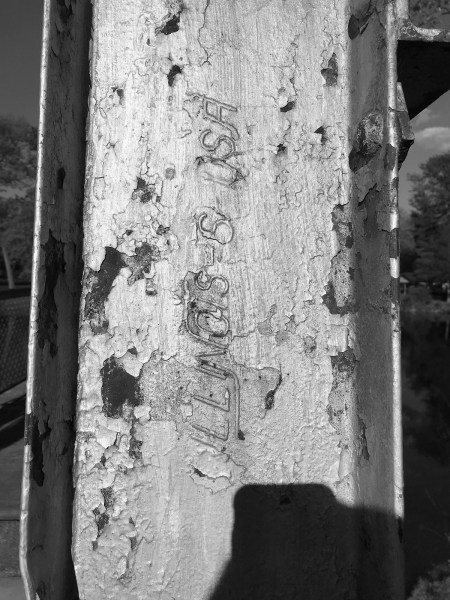
Markings on bridge supports show them to come from Chicago’s South Works, a subsidiary of Illinois Steel.
Working on a theory that the bridge was a “kit bridge,” much like a Sears home, an inspection was made of the bridge towers. Markings on the eight legs of the towers indicate they were constructed by the Chicago South Works, a subsidiary of Illinois Steel. The markings are consistent with steel markings in the 1910-20 timeframe. The South Works was located at the mouth of the Calumet River, just over the Indiana State line. The company would have been well known to a bridge engineer from Winamac.
From this information, it was determined the towers were shipped as a prefabricated set. One railroad car would have contained the surprisingly few number of parts.
We received research assistance from a former employee of the Indiana Department of Transportation. He opined that Mr. Nutt would have done the site layout, determined the span length, determined the necessary height above potential flood waters, and determined the footing depths. Mr. Nutt would then have placed an order with the South Works, who more than likely had an appropriate prefabricated kit on hand.
Mr. Nutt signed a contract in April, guaranteeing a completion date of July 1. He met his deadline, validating the supposition that the bridge was a kit, as materials were quickly and easily obtained.
Mr. Nutt selected Winamac Cement Products Company to do the significant concrete work. That company, founded in 1921, manufactured tile for field drainage. In 1923, they had branched out to bridges, buildings, and other public works projects. According to minutes from the Town of Winamac, in 1922 and 1923, Winamac Cement Products Company and Mr. Nutt bid on a variety of projects, including sewage and sidewalk upgrades and the replacement of town water mains.
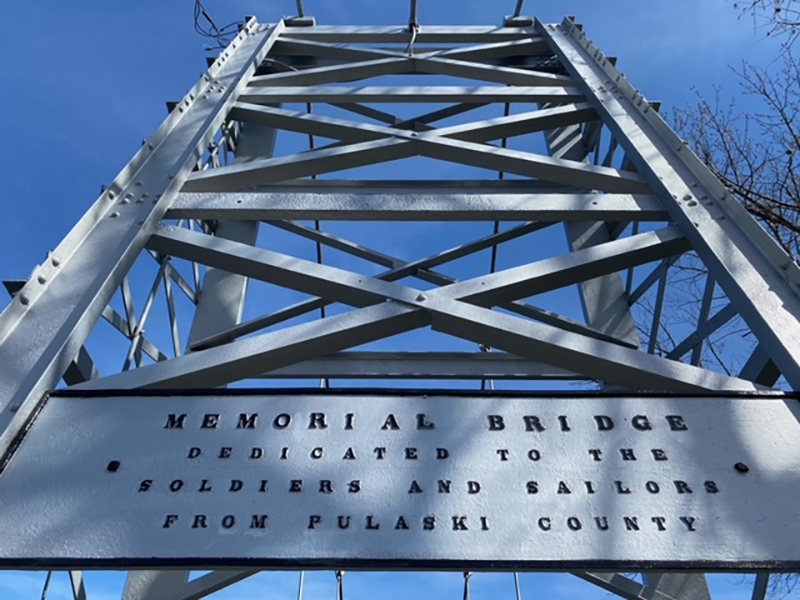
According to two databases, national and international, Memorial is the only suspension-type bridge traversing the Tippecanoe River. It is one of twenty-one suspension bridges constructed in the State of Indiana and one of twelve still standing and in use. It appears to be the third oldest bridge that is still standing. (Some bridges in the databases are not dated.) Originally planned for community development and recreation, by the time the contract was let to Mr. Nutt on April 6, 1923, local leaders had decided to dedicate the bridge to Pulaski County soldiers of all wars, thus the name, Memorial.
While Memorial was under construction, the Kiwanis Club put their members to work. The new town park was given a general clean-up and put in shape for use by auto tourists. “Combination dining tables and seats for the use of picnic parties” were constructed. These were rather a new idea. They may have been around for a while, but the first patent for a picnic table was filed in 1903. The Kiwanis Club was on the cutting edge with this installation. Two camp stoves were erected and a cinder walk from the well to the footbridge was installed.
On the “river park” side, the Park Association made additional improvements. A twenty-foot-wide graded cinder drive from the road entrance to the park was installed to enable two rows of cars to pass. It extended through the park as far as the bathing bench. Another band stand was erected with lumber remaining from the previous footbridge, and a permanent refreshment stand was built that contained kitchen conveniences and refrigerator. An additional bath house was built containing eighteen private compartments, an office, and separate sections for men and women. Bathing suits were purchased for rental for men, women, and children. This bath house was for persons who could afford to pay. The bathhouses erected the year before were still available to the public at no charge. Gravel and stones were dredged from the beach, and depths on the now-sandy bottom were marked for bathers. Two additional diving boards at various depths were added. Steps were built to the water’s edge and a number of seats were placed on the bank for visitors to watch water sports.
Memorial was dedicated on July 4, 1923, on schedule.
Suspension-type bridges are rare in the State of Indiana, especially of this age. Three suspension bridges in Indiana are listed on the Indiana Sites and Structures Inventory. The Turkey Run Suspension Bridge, built in 1917-18 is listed as outstanding. The Foster Park Footbridge in Fort Wayne, built in 1920, is listed as a contributing resource to the park. Indiana State Highway Bridge Number 154-77-06536, the Sullivan-Hutsonville suspension bridge, was built in 1939 but has been demolished. Based on research of the Bridgemeister.com and BridgeHunter.com websites, Memorial could be the third oldest suspension bridge in Indiana still in operation. (Several are undated.)
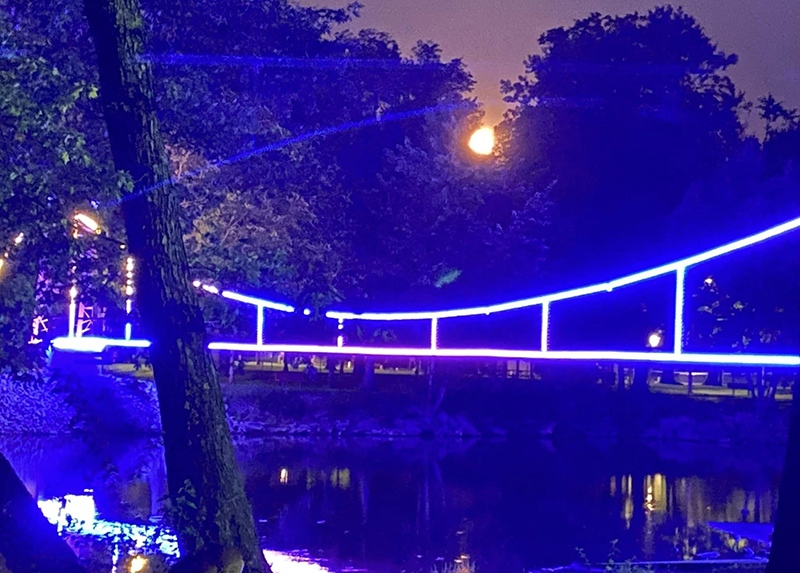
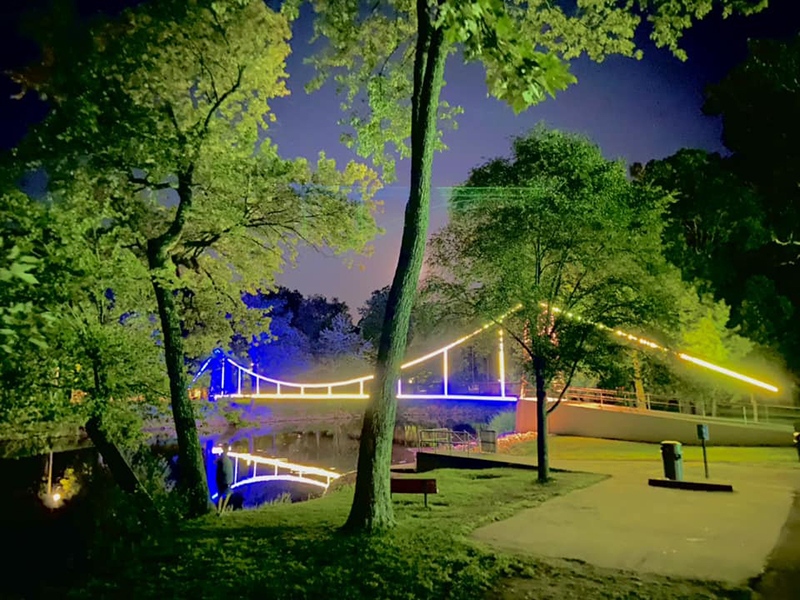
The Bridge is Bathed in Light
In 2019, a group of residents gathered together to start a project that would culminate on the 100th anniversary of the dedication of the bridge, on July 4, 2023.
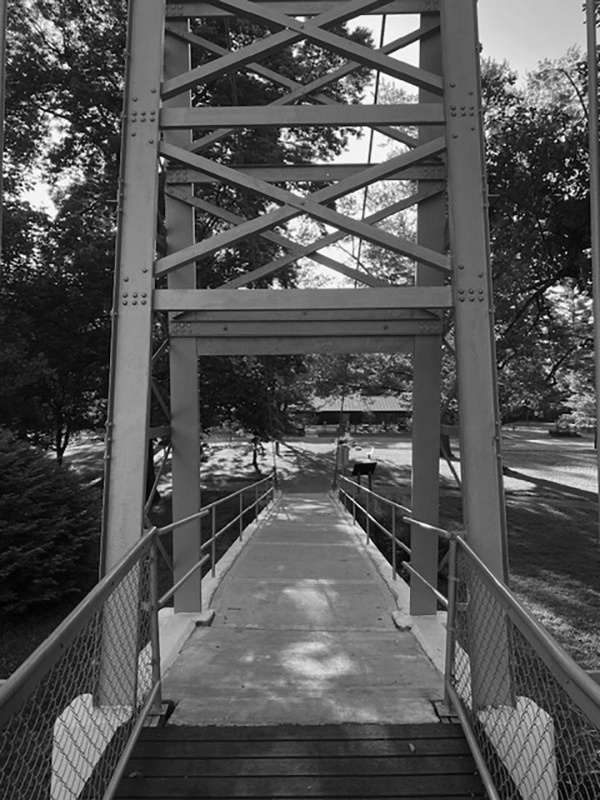
To honor the bridge and to honor the veterans for whom it stands in honor, a $300,000 fundraising project was undertaken. The results are shown in photos below. Click on individual photos to see them full-size.






All Tour Stops
YOU BEGAN THE TOUR ON THIS PAGE
-
- First Brick Block Building in Winamac
- Courthouse (1894-95)
- Vurpillat’s Opera House (1883)
- Winamac Freight Depot
- Panhandle Pathway
- St. Peter Catholic Church
- Location of First Frame House
- First United Methodist Church (1901)
- ISIS Theatre (1936)
- Pulaski County Public Library (a Carnegie library, 1916)
- Log Cabin Replica
- Artesian Well (1887)
- Memorial Swinging Bridge (1923)
- Winamac Town Park (former hunting and fishing ground of the Potawatomi)
- Park Pavilion (1891)
- Kelly Hardware (1898)
You’re back where you started!